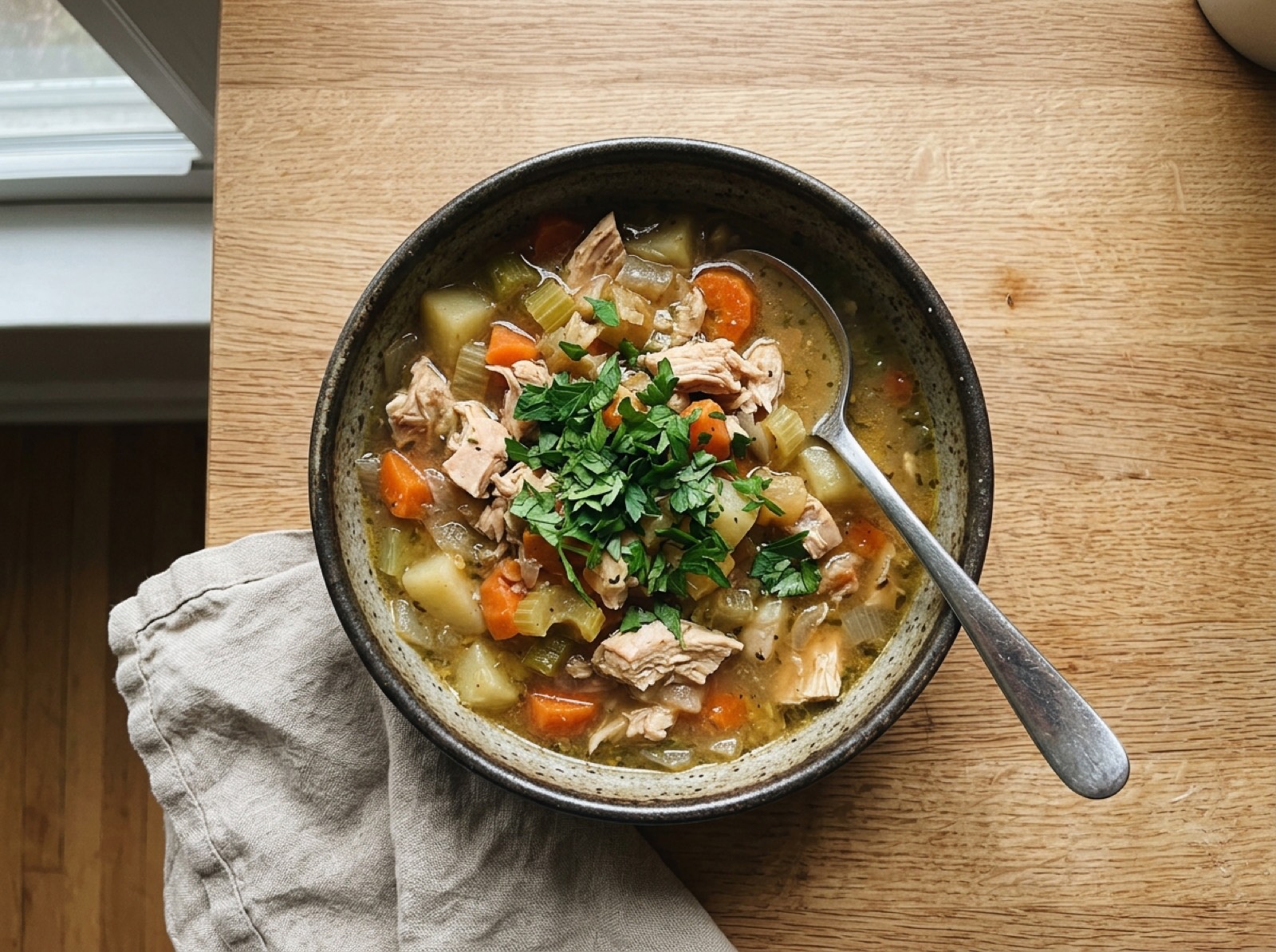
Soup is the one thing a slow cooker cannot really ruin — except in the four ways it reliably does: split dairy, dissolved pasta, grainy potato, and stringy chicken. All four are timing, not recipe.
Quick answer: Most crockpot soups are done in 6–8 hours on LOW or 3–4 on HIGH in a 6-quart pot. Dairy, pasta, rice and fresh greens go in during the last 15–30 minutes, never at the start. Chicken breast comes out at 3 hours on LOW; leave it in for eight and it shreds into threads.
We read the top-ranking pages for ten crockpot searches this month — 76 pages across 54 sites. In the soup set, eight pages, not one gave the time both ways. You get LOW or you get HIGH, and if you are standing in the kitchen at two in the afternoon with a pot of cold ingredients, the setting you need is the one that is missing. Two of the eight said what size pot they were using.
So here is the table those pages did not print.
6-quart programmable slow cooker
Every time in the table below is written for a 6-quart pot filled halfway to three-quarters. That is the variable most soup recipes leave out, and the reason the same recipe behaves differently in two kitchens.
See 6-quart pots →12 Crockpot Soups: LOW, HIGH, and What Goes In Late
All times are for a 6-quart pot filled between half and three-quarters. A pot filled to the brim runs slower; a pot barely covered runs hotter and reduces.
| Soup | LOW | HIGH | Add in the last 15–30 min |
|---|---|---|---|
| Chicken noodle | 6 h | 3 h | Noodles, parsley |
| Potato soup | 7 h | 4 h | Cream, cheese |
| Beef and barley | 8 h | 4 h | Nothing — barley goes in at the start |
| Broccoli cheddar | 5 h | 3 h | Cheese, cream; broccoli at 4 h |
| Lentil | 6 h | 3 h | Lemon, spinach |
| Split pea and ham | 8 h | 4 h | Nothing |
| Minestrone | 6 h | 3 h | Pasta, greens, basil |
| Tomato basil | 6 h | 3 h | Cream, basil |
| Chicken tortilla | 6 h | 3 h | Lime, coriander, tortilla strips |
| Butternut squash | 6 h | 3 h | Cream after blending |
| Cheeseburger soup | 6 h | 3 h | Cheese, milk |
| White chicken chili | 6 h | 3 h | Cream cheese, lime |
How to Read the Two Settings
LOW and HIGH are not two temperatures. Both settings climb to roughly the same simmer — HIGH just gets there faster and holds harder. That has one practical consequence worth memorising: HIGH is about half the LOW time, but the result is not identical. Anything that depends on collagen breaking down slowly — beef, ham hock, dried beans — comes out better on LOW even when the clock says it is done on HIGH.
The reverse is also true. A vegetable soup on LOW for eight hours has no texture left. If the ingredients are soft to begin with, HIGH for three is the better run.
The Four Things That Ruin Crockpot Soup
 Pin it
Dairy added at the start
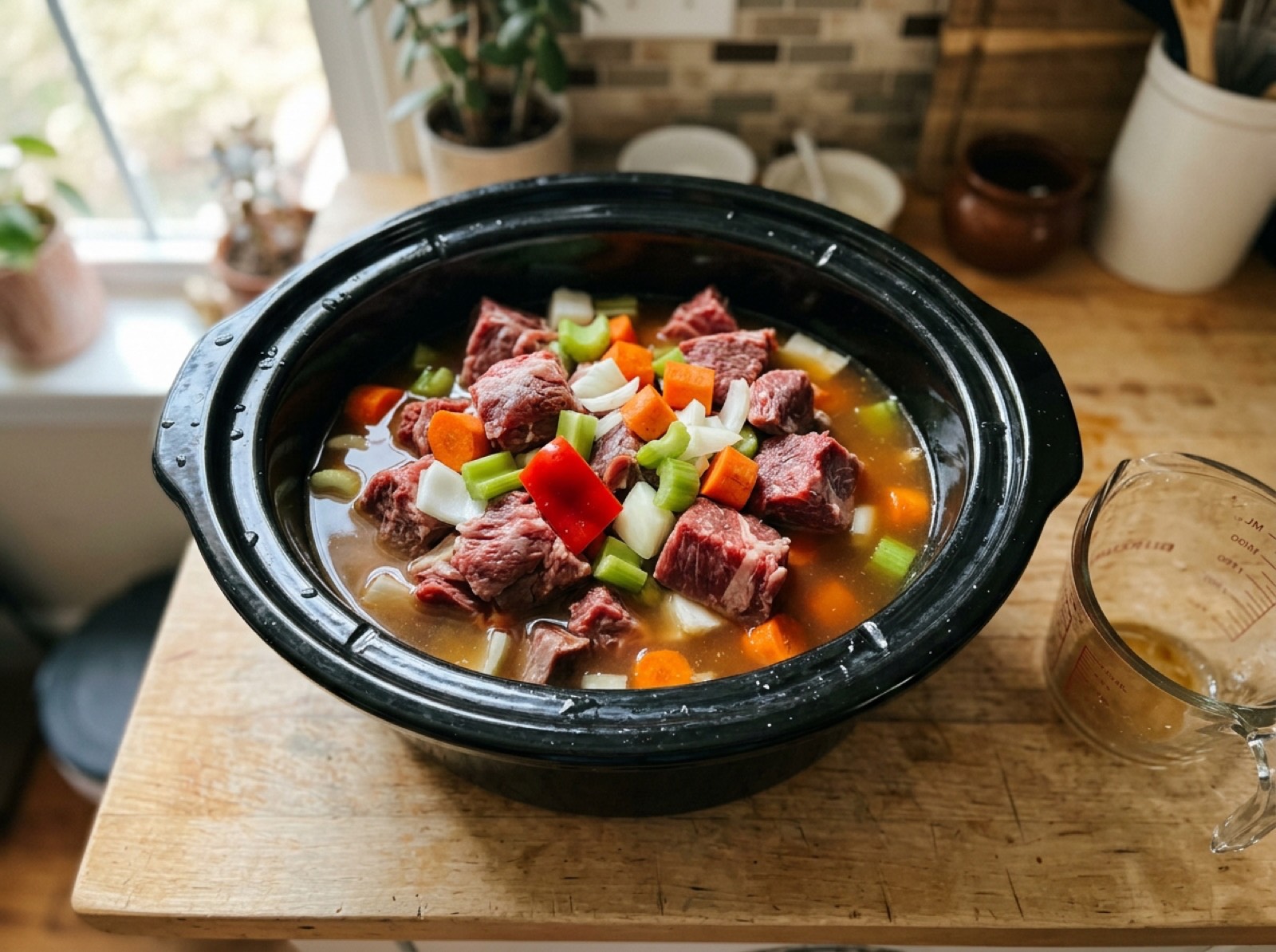
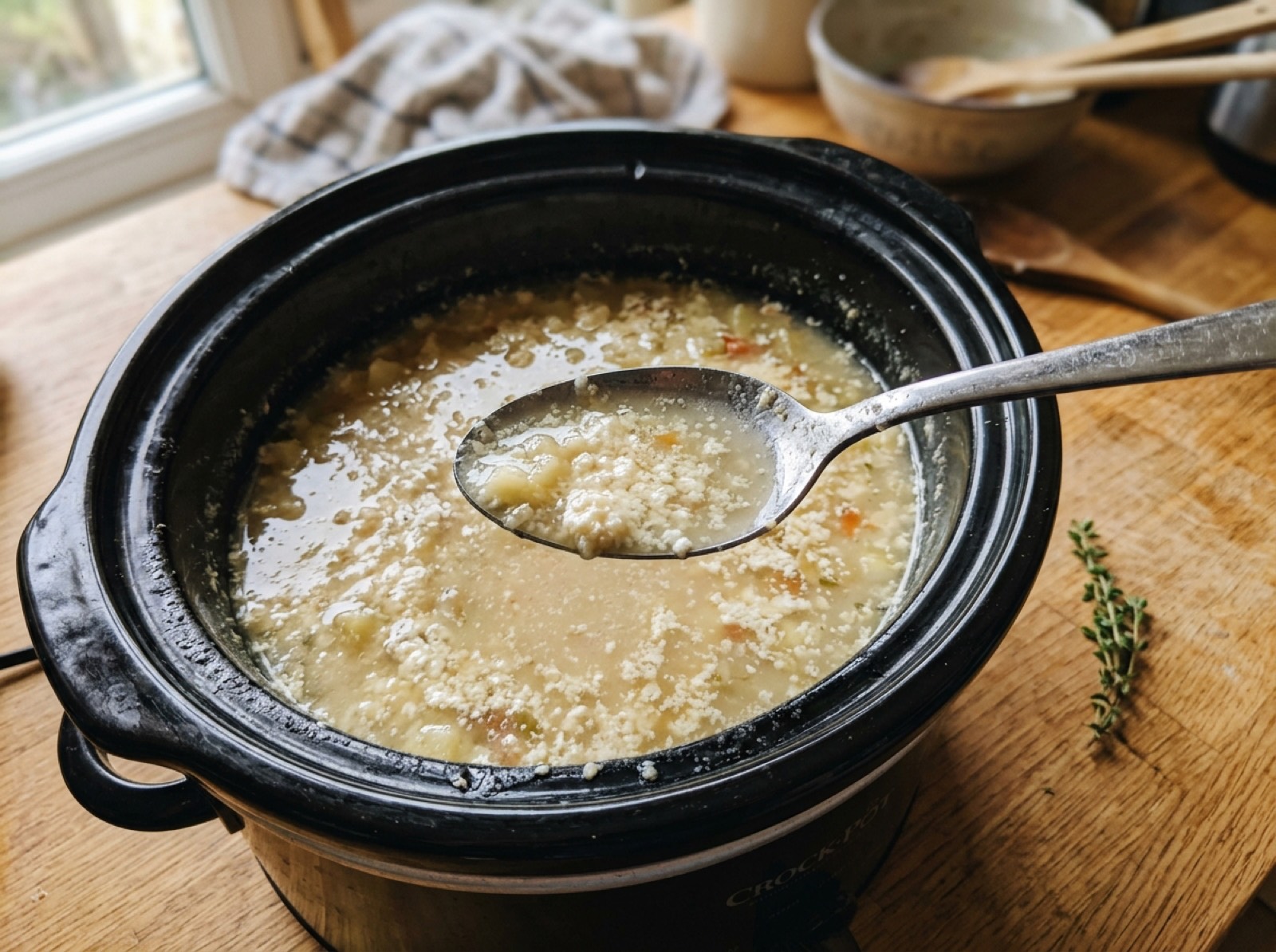
Milk, cream, sour cream and cheese all split under hours of heat — the fat separates and the soup goes grainy. Stir them in off the boil at the end. Full-fat splits less than low-fat; cream cheese and evaporated milk hold better than either, which is why a shelf of tins is worth keeping if creamy soups are the ones your house actually eats.
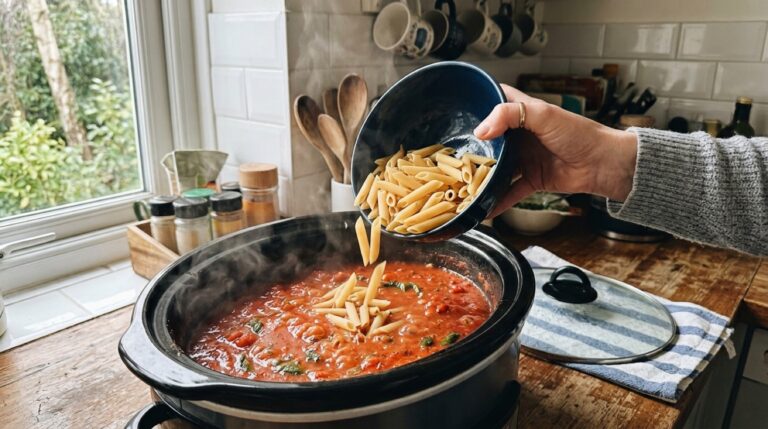
Pasta and rice added at the start
 Pin it
 Pin it
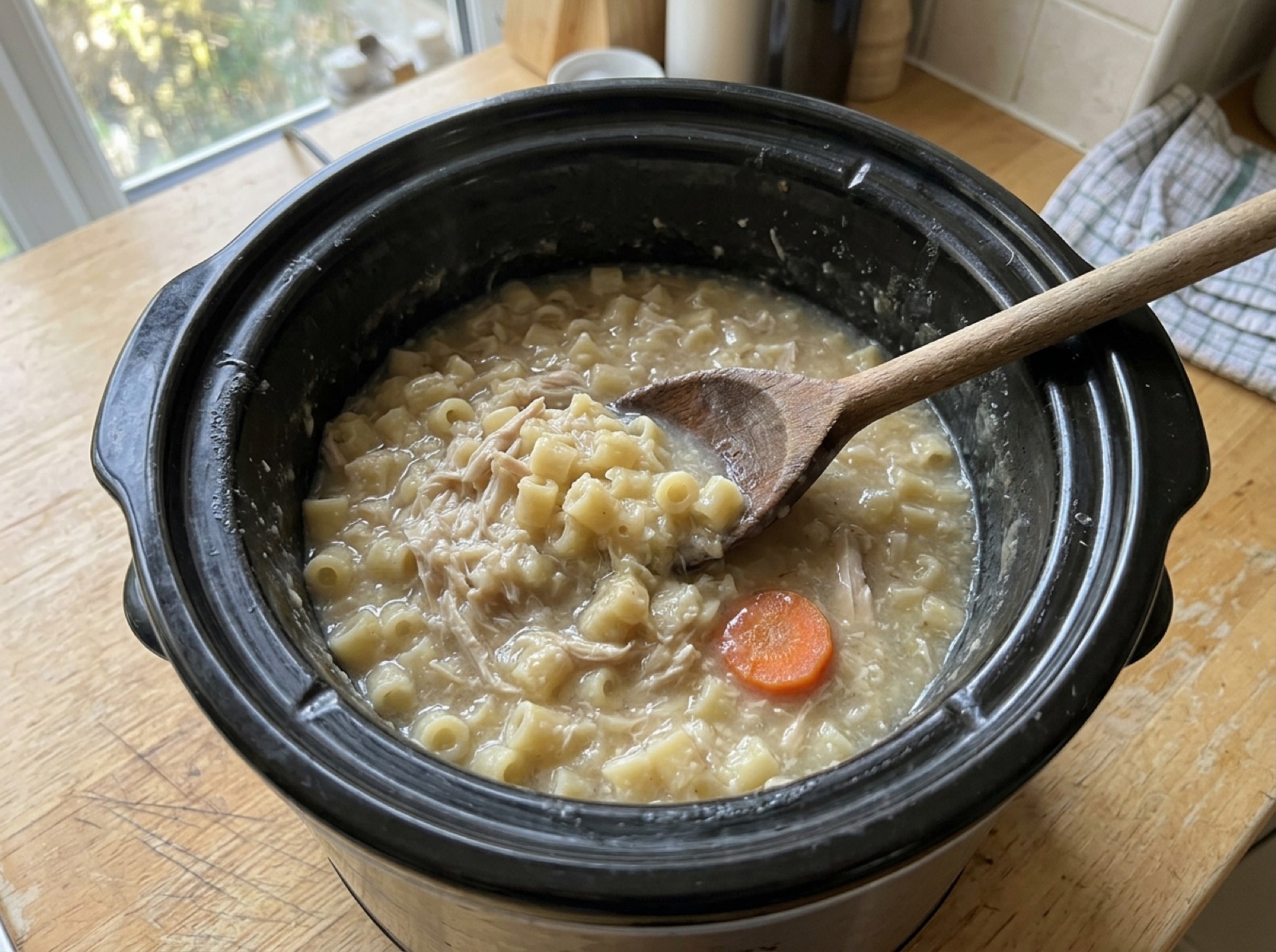
Both keep absorbing liquid for as long as they sit in it. Six hours later there is no soup, only a thick starch. Cook them separately and add at serving, or stir dry pasta in for the final 20 minutes on HIGH.
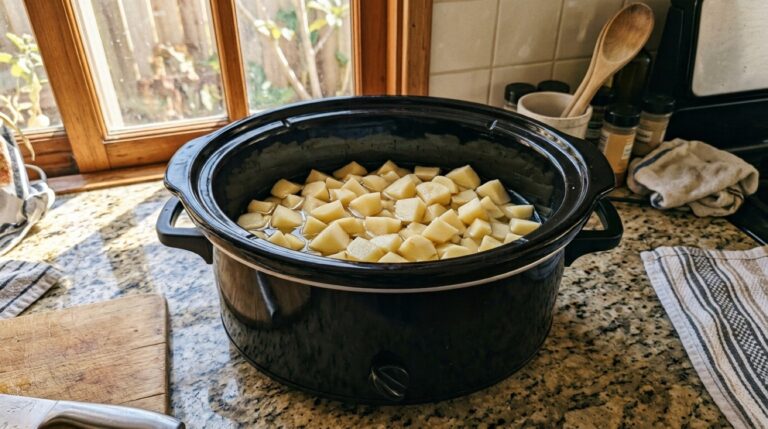
Potatoes cut too small
Diced potato in a long cook collapses and makes the soup grainy rather than creamy. Cut chunks at least the size of a walnut, and use waxy potatoes rather than floury ones if you want them to hold.
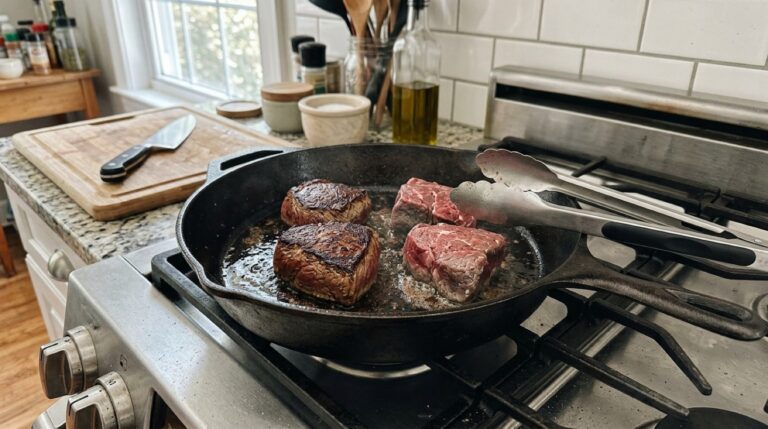
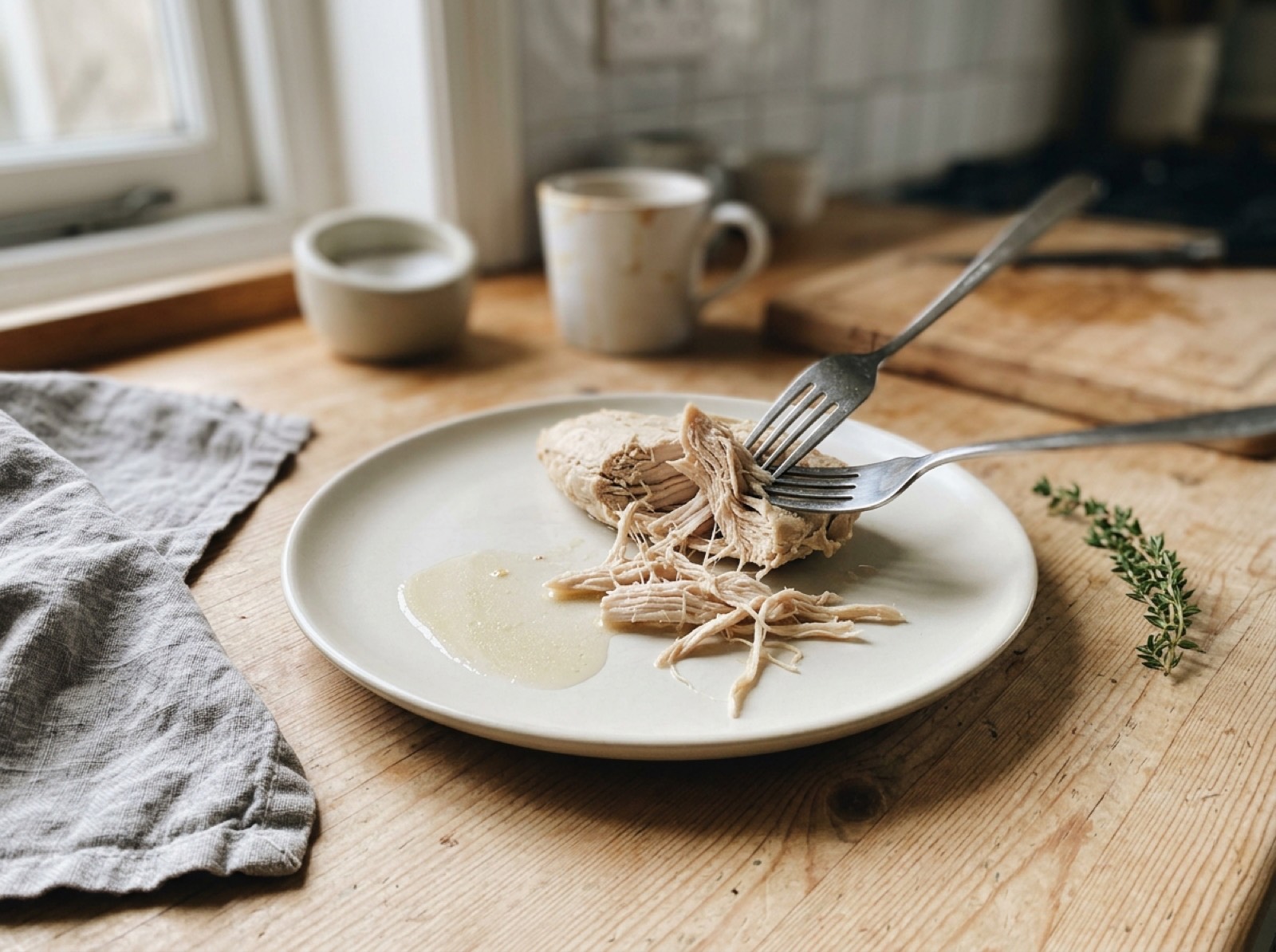
Chicken breast left in all day
 Pin it
Chicken breast in soup is a three-hour ingredient in an eight-hour pot. Either use thighs or take the breast out — there is no setting that splits the difference.
Breast is done at about 3 hours on LOW — three hours, read on an instant-read thermometer at 165°F rather than guessed at. Past that the muscle fibres tighten and squeeze out their water, and no amount of extra time softens them again — that is the stringy, thready texture people blame on the pot. Thighs are far more forgiving and are the right choice for a soup that runs all day.
The Liquid Rule Nobody Prints
A slow cooker loses almost nothing to evaporation. The lid seals, the steam condenses on it and drips back. Whatever you put in is what you get out, plus the water that comes out of the vegetables and meat.
So use roughly two-thirds the liquid a hob recipe asks for. If it comes out thin, take the lid off and run HIGH for the last 30–45 minutes, which is the only way to reduce a slow cooker soup. Adding flour or cornflour to thicken works, but it wants to be a slurry stirred in at the end, not sprinkled in. For a soup you want smooth rather than thickened, an immersion blender works straight in the crock and skips ladling hot soup into a jug.
What Freezes and What Does Not
 Pin it
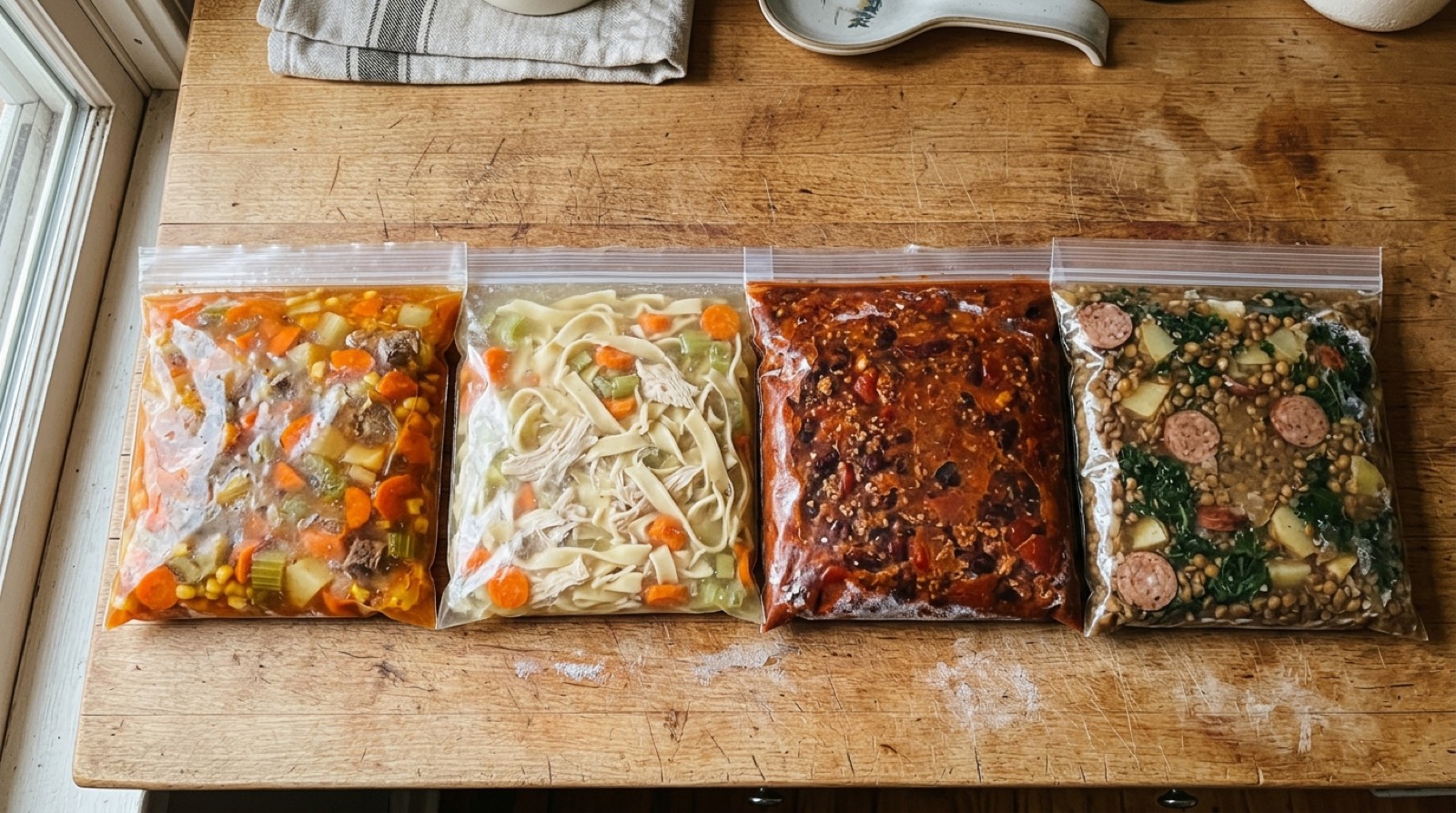
| Freezes well | Freeze the base only |
|---|---|
| Lentil, split pea, minestrone base, beef and barley, tortilla, tomato | Potato soup, broccoli cheddar, cheeseburger, anything creamy |
Frozen flat is the part that makes this work in a real freezer: heavy-duty gallon bags laid down on a tray stack on edge afterwards and thaw in about an hour, where a tub thaws overnight.
Creamy soups split on thawing for the same reason they split during a long cook. Freeze the soup before the dairy goes in and finish it after reheating, and it is indistinguishable from fresh.
Crockpot Soup FAQ
 Pin it
Can I put raw chicken in soup in a crockpot?
Yes. Raw chicken cooks safely in the liquid and gives a better broth than pre-cooked meat. Use thighs for a long cook and shred them in the pot at the end; use breast only if you are cooking for about 3 hours on LOW.
How long does soup take in a crockpot on HIGH?
Roughly half the LOW time — 3 to 4 hours for most soups in the table above. Soups built on beef, ham or dried beans are the exception and are better with the full run on LOW.
Why is my crockpot soup watery?
Nothing evaporates under a sealed lid, and vegetables release their own water on top of what you added. Start with about two-thirds of the liquid a stovetop recipe calls for, and reduce with the lid off on HIGH at the end if it is still thin.
Can I leave soup in the crockpot overnight?
On LOW, for a soup built on tough meat or beans, yes — that is what the setting is for. On warm, do not use it as storage: warm holds temperature, it does not cook, and soup should be in the fridge within two hours of finishing.
Should I sauté the onions first?
It is optional and it does change the result. Sautéed onions give a rounder, sweeter base; raw onions in the pot stay slightly sharp. If skipping the pan is the reason you are using the slow cooker at all, skip it and add a spoon of tomato paste instead for depth.
For the chicken-specific version of the timing above, see crockpot chicken recipes. If you want the same soups portioned into the freezer instead of the fridge, start with crockpot freezer meals. The pasta timing above is worked out shape by shape in crockpot pasta recipes. The same warm-setting math — holds temperature, does not cook, two-hour fridge rule — runs the party table in crockpot meatballs.
See 6-quart slow cookers →