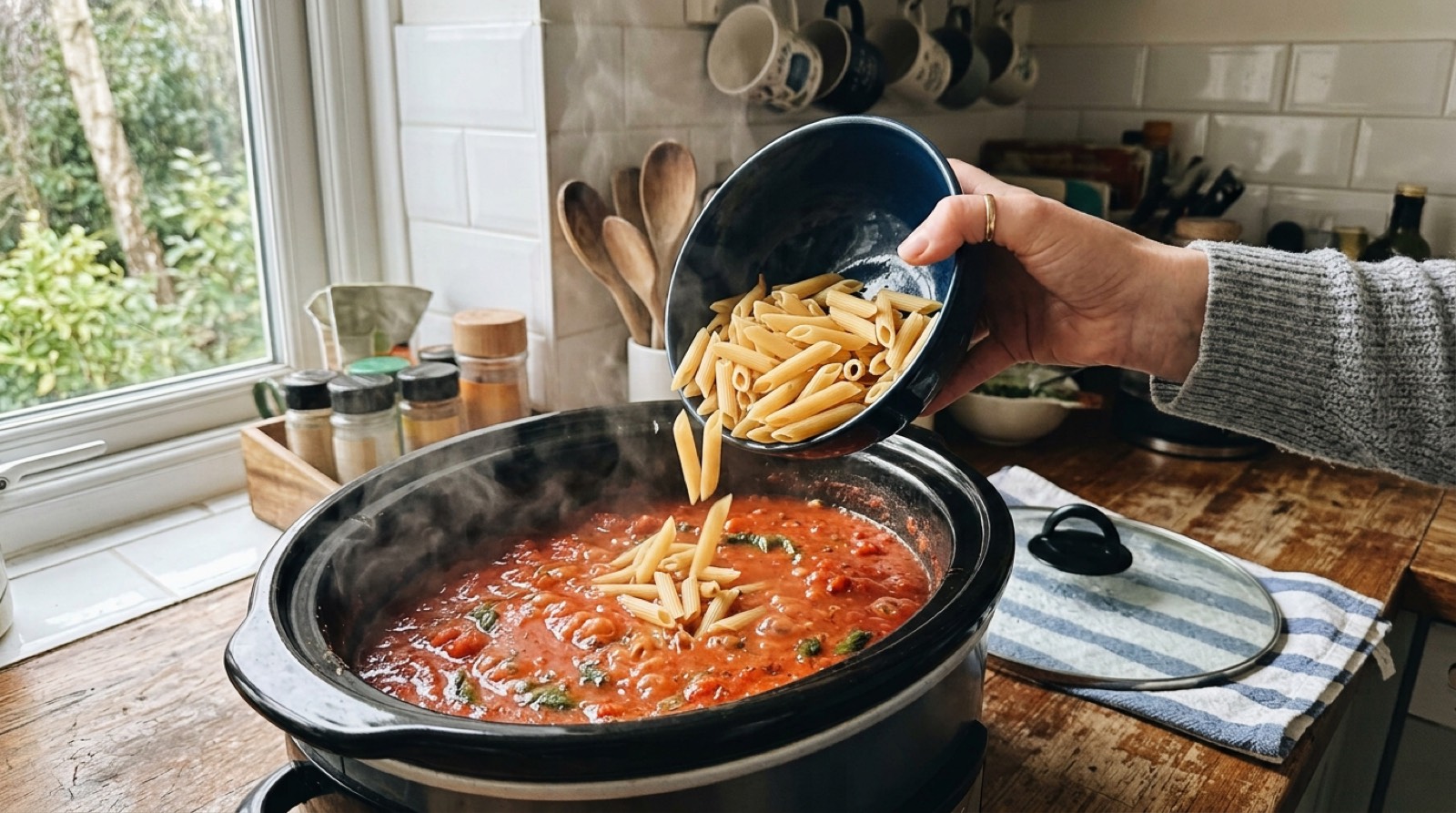
Pasta is the one ingredient a slow cooker cannot be trusted with for eight hours. Everything else on this page can wait for you; the pasta cannot, and the whole method is built around that single fact.
Quick answer: Dry pasta goes into a 6-quart crockpot for the last 20–30 minutes on HIGH, in enough liquid to cover it. Mac and cheese is the exception at LOW 2 hours from raw elbows. Lasagna sheets and frozen ravioli are the other exception, LOW 3 hours, because they cook inside a sauce rather than in it. Anything longer and you are making paste.
6-quart programmable slow cooker
Every time on this page is calculated for a 6-quart pot, and the step-down to warm is what stops mac and cheese from cooking on past the point it was ready. A pot that just runs until switched off is the wrong tool for pasta specifically.
Across the 76 top-ranking pages we read for ten crockpot searches this month, the hours quoted for LOW ran from three to ten, with a median of six, over 91 separate mentions of a cooking time. That spread is survivable for a chuck roast, which just gets softer. Pasta has a window of about fifteen minutes, so a recipe that is vague about time is a recipe that will hand you mush.
The Three Ways Pasta Cooks in a Crockpot
They are not variations on one method. They are three different things, and mixing them up is what goes wrong.
- In the liquid, at the end. Spaghetti, penne, tortellini, gnocchi. The sauce cooks all day, the pasta goes in for the last 20–30 minutes on HIGH. Add half a cup of extra stock when it goes in, because the pasta will drink it.
- As the whole dish, from raw. Mac and cheese. Raw elbows, evaporated milk, stock and cheese together from the start, LOW 2 hours, stirred twice. The starch that leaves the pasta is what thickens the sauce, so draining it separately breaks the recipe.
- Inside a stack. Lasagna sheets, frozen ravioli, layered with sauce and cheese. LOW 3 hours. The sheets steam between wet layers rather than boiling, which is a slower and much more forgiving process.
All three want the sauce already hot when the pasta meets it, which in a pot that has been on LOW all day means switching to HIGH twenty minutes early — a programmable pot is the one that will still be at temperature when you get to it rather than an hour into warm.
 Pin it
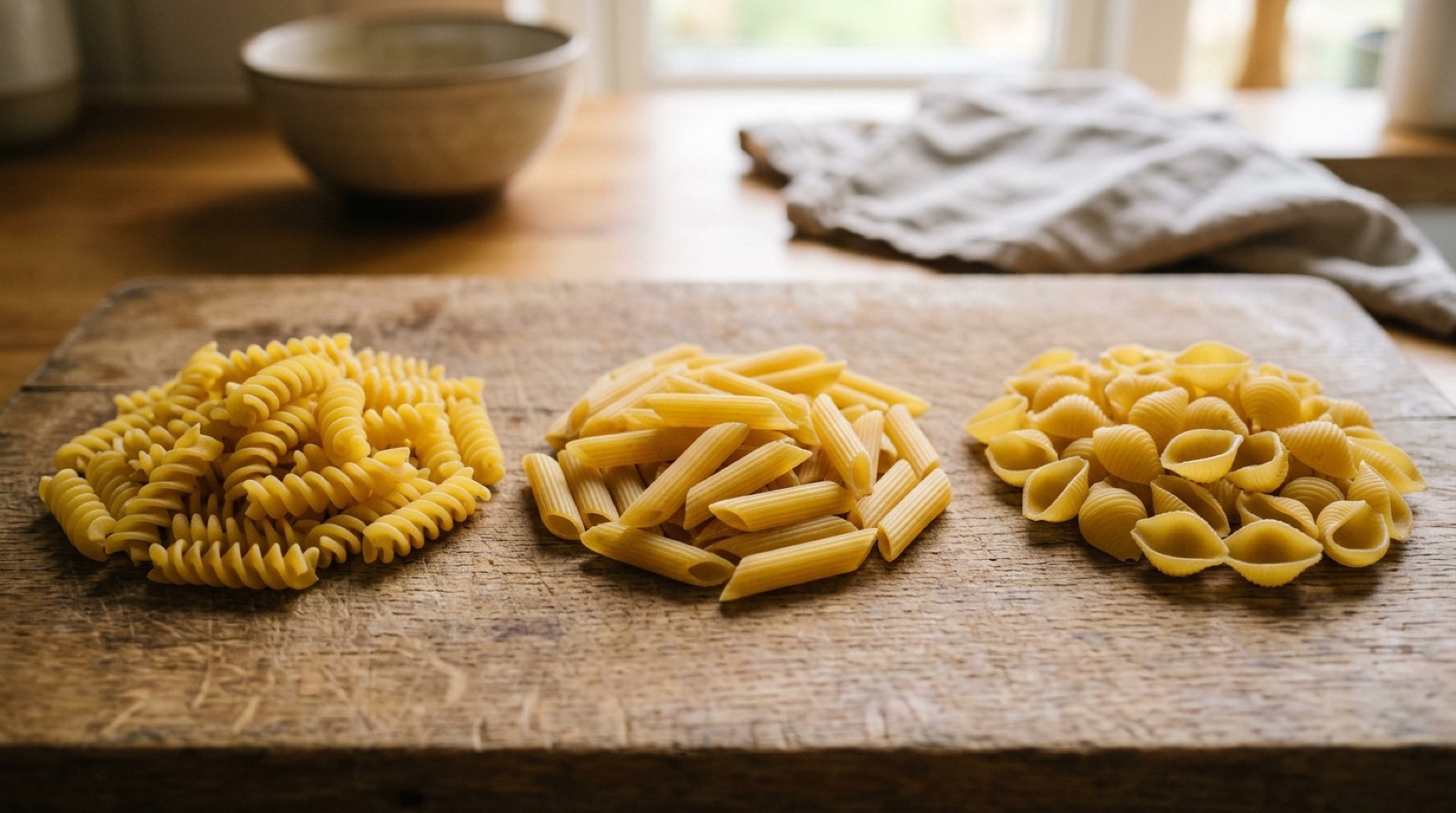
Times, by Shape
| Pasta | Added when | Setting and time | Extra liquid |
|---|---|---|---|
| Spaghetti, broken in half | Last 25 min | HIGH | 1 cup |
| Penne, rigatoni, shells | Last 30 min | HIGH | 1 cup |
| Elbow macaroni, raw, as mac and cheese | At the start | LOW 2 h | Per recipe |
| Fresh or frozen tortellini | Last 20 min | HIGH | Half a cup |
| Frozen ravioli, layered | At the start | LOW 3 h | None |
| Oven-ready lasagna sheets | At the start | LOW 3 h | None |
| Gnocchi | Last 20 min | HIGH | Half a cup |
| Long-grain rice | Last 90 min | LOW | 2 cups per cup of rice |
Set a timer for the pasta, not for the dish. The recipe’s total hours are for the sauce; the pasta has fifteen minutes of margin and no recipe knows what your pot runs at.
Every line is for a 6-quart pot. In an 8-quart pot the pasta sits in a shallower layer and cooks a little faster, so check five minutes early the first time.
 Pin it
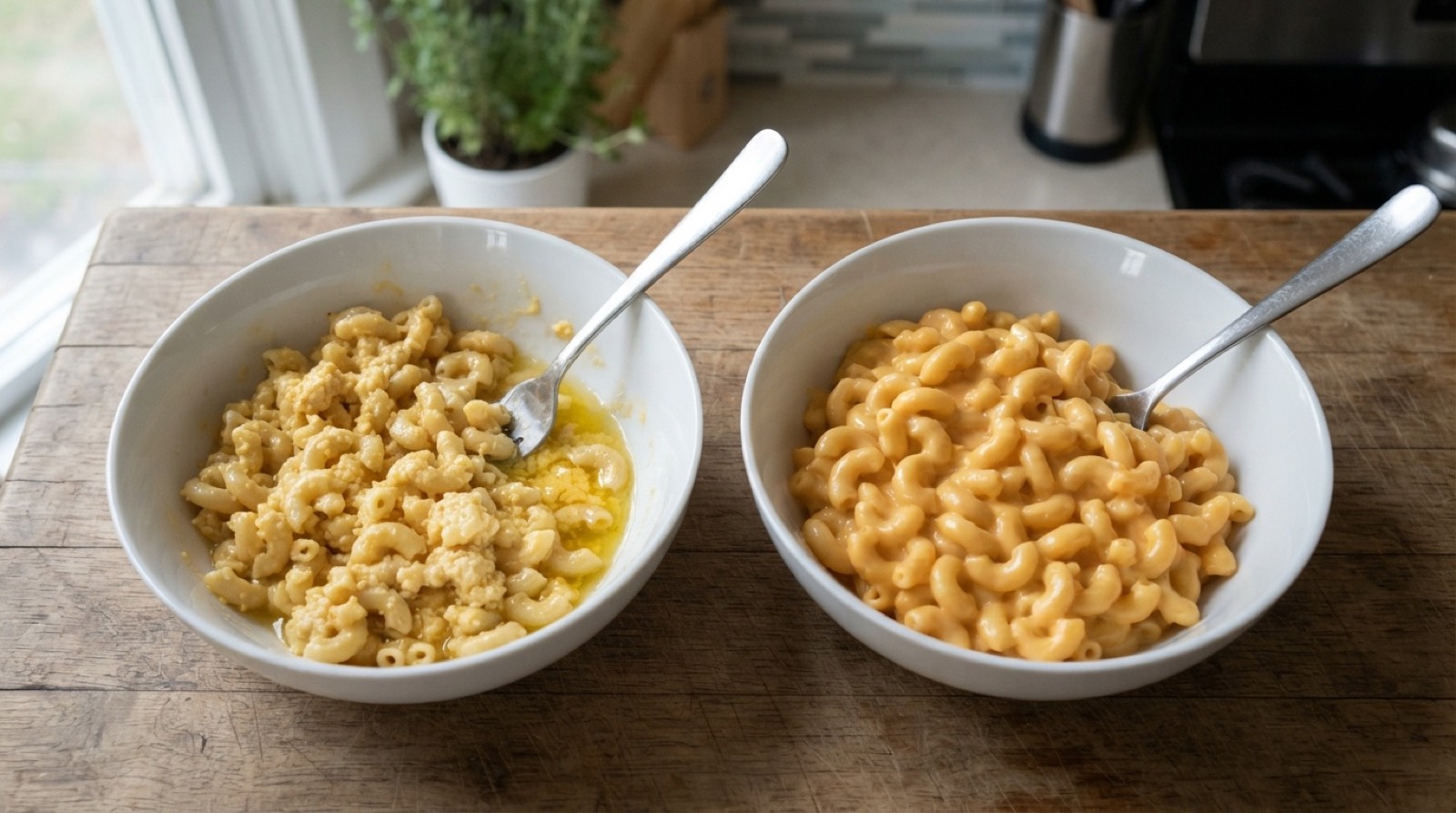
Why Crockpot Mac and Cheese Goes Grainy
This is the most common failure in the whole category, and it is not the pasta. It is the cheese.
Cheddar splits when it is held above about 180°F for a long stretch: the fat separates out and the proteins tighten into grains. A slow cooker on LOW sits right at that line for two hours, so the cheese has to be protected rather than simply added.
Three things that hold it together:
- Evaporated milk instead of ordinary milk. It has less water and more stabilised protein, and it is the single biggest difference between a smooth pot and a grainy one.
- A handful of the cheese held back. Stir it in during the last ten minutes with the pot switched off. It melts in the residual heat without ever reaching splitting temperature.
- Block cheese, grated yourself. Pre-grated cheese is dusted with starch to stop it clumping in the bag, and that starch goes chalky in a wet sauce.
A spoon of cream cheese does the same job as a safety net, which is why so many recipes that never explain themselves include it.
The grating point is the one that costs money to ignore: pre-grated cheese is cheaper per bag and ruins the pot, so a box grater pays for itself over about three pots of mac and cheese.
 Pin it
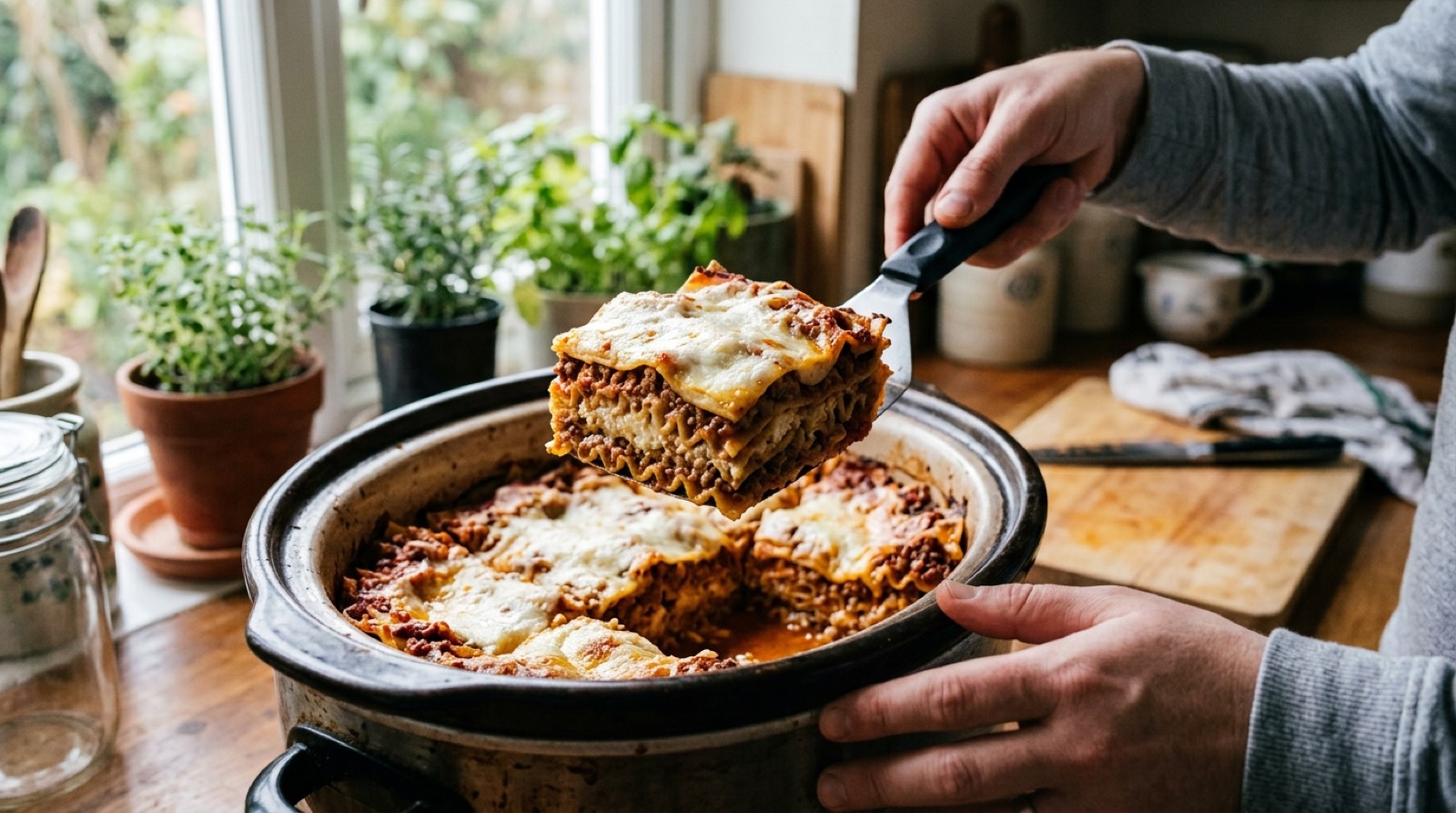
Lasagna Without the Watery Bottom
A crockpot lasagna comes out with a puddle under it for one reason: nothing evaporates under a lid, and both ricotta and courgette release water as they heat.
What fixes it, in the order that matters:
- Use a thicker sauce than you would in the oven. If it pours easily, it is too thin for this method.
- Drain the ricotta in a sieve for twenty minutes and mix it with an egg. The egg sets and holds the layer together.
- Lay a folded strip of baking paper under the stack with the ends up the sides, and the whole lasagna lifts out in one piece instead of being spooned out.
- Take the lid off for the last twenty minutes on HIGH. That is the only chance the dish gets to lose water.
The paper strip works, and it is also the step people skip. A liner does the lifting and the washing-up in one: cheese and starch weld to a ceramic insert harder than anything else in this niche.
Four Dinners That Work on This Schedule
All four lean on starch for volume rather than portioned protein — for the other end of the spectrum, the healthy crockpot recipes are built the opposite way, with a stated portion and dairy stirred in only at the very end.
Crockpot spaghetti, LOW 6 h plus 25 minutes
Sauce with minced beef browned first, since raw mince dumped in steams grey. Spaghetti broken in half goes in at the end with an extra cup of stock.
Mac and cheese, LOW 2 h
Raw elbows, evaporated milk, stock, mustard powder, grated block cheddar. Stir at the hour mark and again at ninety minutes, and hold back a handful of cheese for the end.
Ravioli lasagna, LOW 3 h
Frozen ravioli, jarred marinara, mozzarella, layered straight from the freezer. No boiling, no sheets to break, and it is the version that survives being reheated the next day.
Tortellini and sausage, LOW 5 h plus 20 minutes
Smoked sausage, passata, stock and peppers cook all day. Tortellini and a handful of spinach go in for the final twenty minutes on HIGH.
All four are twenty-minute finishes on a dish that cooked itself, which is the whole argument for a timer you can hear from another room: pasta is the one crockpot ingredient that will not wait for you.
Rice, Which Behaves Differently
Rice does not turn to paste the way pasta does; it turns to porridge, and it does it more slowly. Long-grain white rice needs about ninety minutes on LOW with two cups of liquid to one of rice, added towards the end of the cook rather than at the start.
Brown rice needs closer to three hours and holds its shape far better, which makes it the safer choice when the timing is loose. Instant or par-cooked rice belongs in the last twenty minutes only. Stirring rice while it cooks releases starch and makes it gluey, so the rule is the opposite of the mac and cheese rule: leave it alone.
Your Pot Is Probably Hotter Than the Recipe Assumes
Pasta is the dish that exposes a hot pot immediately, since fifteen minutes is the whole margin.
Test yours once: fill it halfway with water, lid on, LOW for four hours, then read the temperature with an instant-read thermometer. Around 190°F is normal. Over 205°F and every pasta time here comes down by about five minutes, and mac and cheese wants checking at ninety minutes rather than two hours.
Running late and want the sauce done in under an hour instead: the pasta step above still goes in at the end, but the sauce itself converts to a pressure cooker by dividing the slow-cook hours by roughly twelve, as covered in the Instant Pot conversion guide.
Kit
Slow cooker liners
Cheese and starch weld to a ceramic insert harder than anything else in this niche, and a lasagna lifted out on a liner leaves a pot that needs a rinse rather than a soak.
Crockpot Pasta FAQ
Can you put dry pasta in a slow cooker?
Yes, at the end. Twenty to thirty minutes on HIGH with an extra cup of liquid for most shapes. Raw elbow macaroni is the exception and goes in at the start of a two-hour mac and cheese.
Why is my crockpot mac and cheese grainy?
The cheddar split. Use evaporated milk rather than ordinary milk, grate a block yourself instead of buying it pre-grated, and stir the last handful of cheese in with the pot switched off.
Do I need to boil lasagna sheets first?
No. Oven-ready sheets steam between the sauce layers over about three hours on LOW. They need a thicker sauce than an oven lasagna, and the lid comes off for the last twenty minutes.
How do I stop crockpot pasta going mushy?
Add it late and set a timer rather than relying on the recipe’s total hours. Pasta has a window of roughly fifteen minutes, which is nothing next to the three-to-ten-hour spread these recipes are written with.
Can I cook rice in a crockpot?
Yes. Long-grain white rice takes about ninety minutes on LOW with two parts liquid to one part rice; brown rice takes nearer three hours and holds up much better. Do not stir it.
Can I leave crockpot pasta on warm?
For about half an hour. Unlike meat, pasta keeps absorbing liquid on warm and goes soft, so this is the one crockpot dish to serve when it is done rather than when everyone is ready.
For the same schedule applied to a whole weeknight menu, see easy crockpot dinners. The baked-dish version of the same problem is in crockpot casserole recipes. For the bags that make this a weeknight instead of an evening, see crockpot freezer meals.
See programmable slow cookers →