Freezer meals fail for one boring reason: the bag comes out of the freezer as a solid brick, and a brick does not cook the way a bowl of loose ingredients does. Everything else — the shopping, the labelling, the recipes — is the easy part.
Quick answer: Freeze each meal flat, in a bag that fits your pot when it is lying down. Move tomorrow’s bag to the fridge tonight. In the morning, drop it in, add the liquid the recipe asks for, and set LOW for 7–8 hours. A fully frozen brick needs the extra 2 hours and should never go in on HIGH from frozen.
We read the top results for ten common crockpot searches this month — 76 pages across 54 different sites — and counted what they actually tell you. Every single one of the nine freezer-meal guides in that set explains how to fill and freeze the bag. Two of them say anything about how the bag gets into the pot: whether it is thawed, what shape it is, whether a liner is involved. Across all 76 pages, four mention a liner at all.
That gap is the whole difference between a freezer plan that survives three weeks and one that quietly stops.
Gallon freezer bags
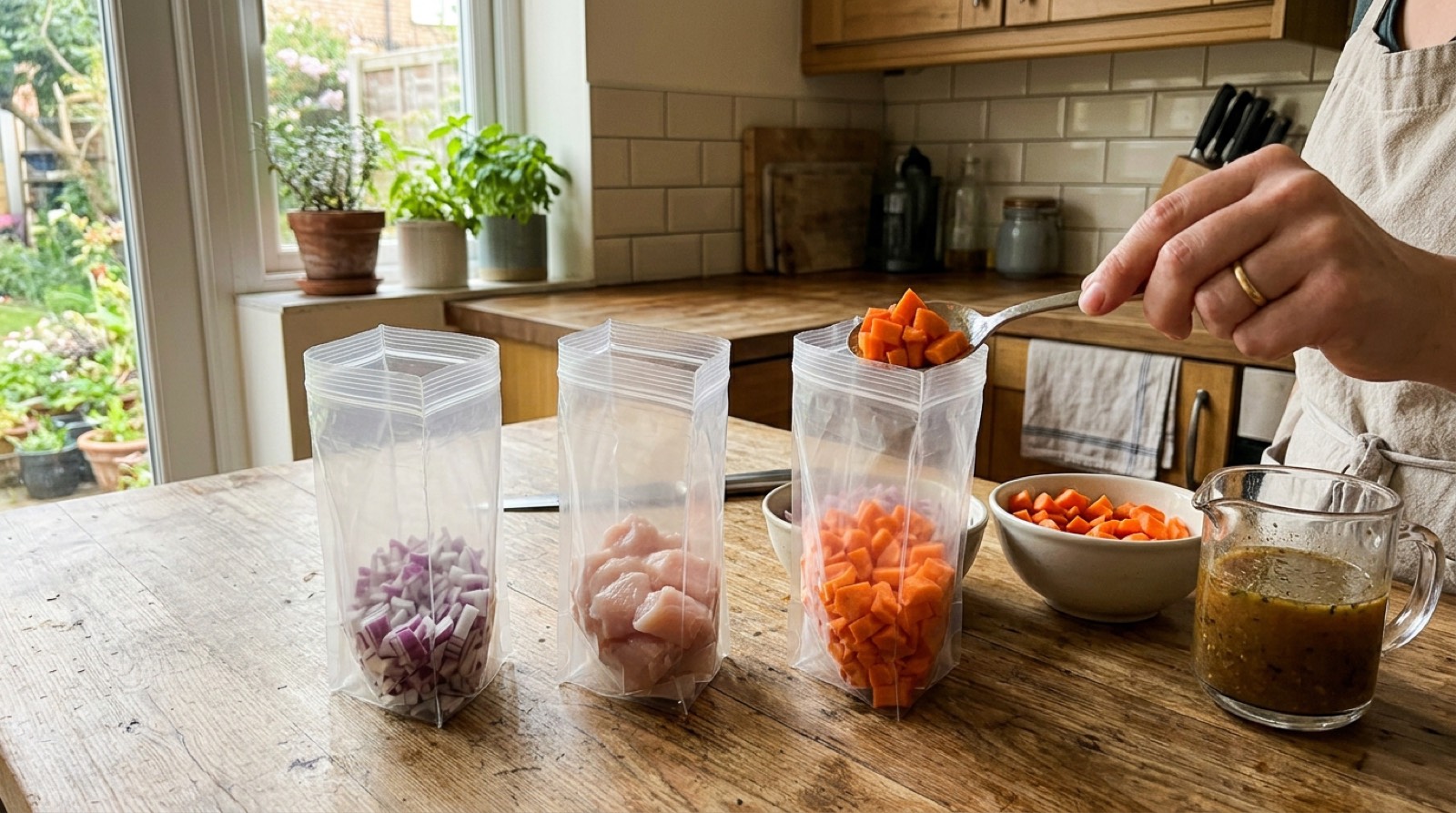
The whole system rests on one thing: a bag that freezes flat, stands on edge in the drawer and does not split at the seam when it is handled frozen. Heavy-duty gallon bags hold a family-of-four portion and lie down inside a 6-quart pot; sandwich bags and thin store-brand ones are where the leaks come from.
See gallon freezer bags →Why the Frozen Brick Changes the Cooking
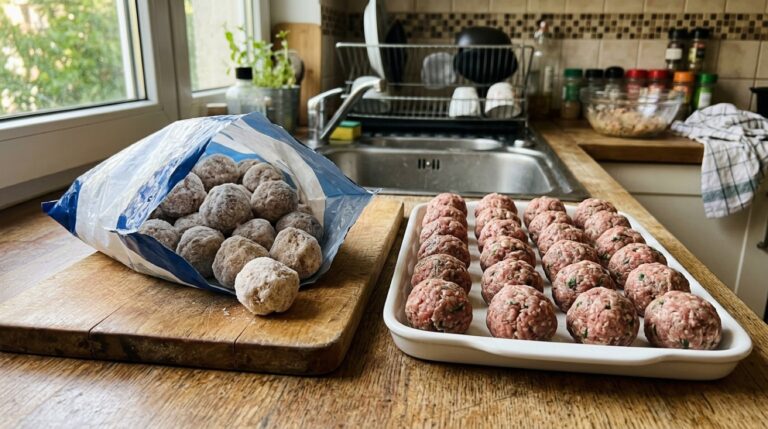
A slow cooker does not blast heat. It brings food up to a low simmer and holds it there. A frozen block sits in the middle of the pot absorbing energy for the first two hours before anything starts to cook, which means the outside of the block is at a food-safe temperature long before the middle is.
Two consequences follow, and they are the ones nobody writes down:
- From frozen, cook on LOW, never HIGH. HIGH cooks the outer edge of the block to shreds while the centre is still cold.
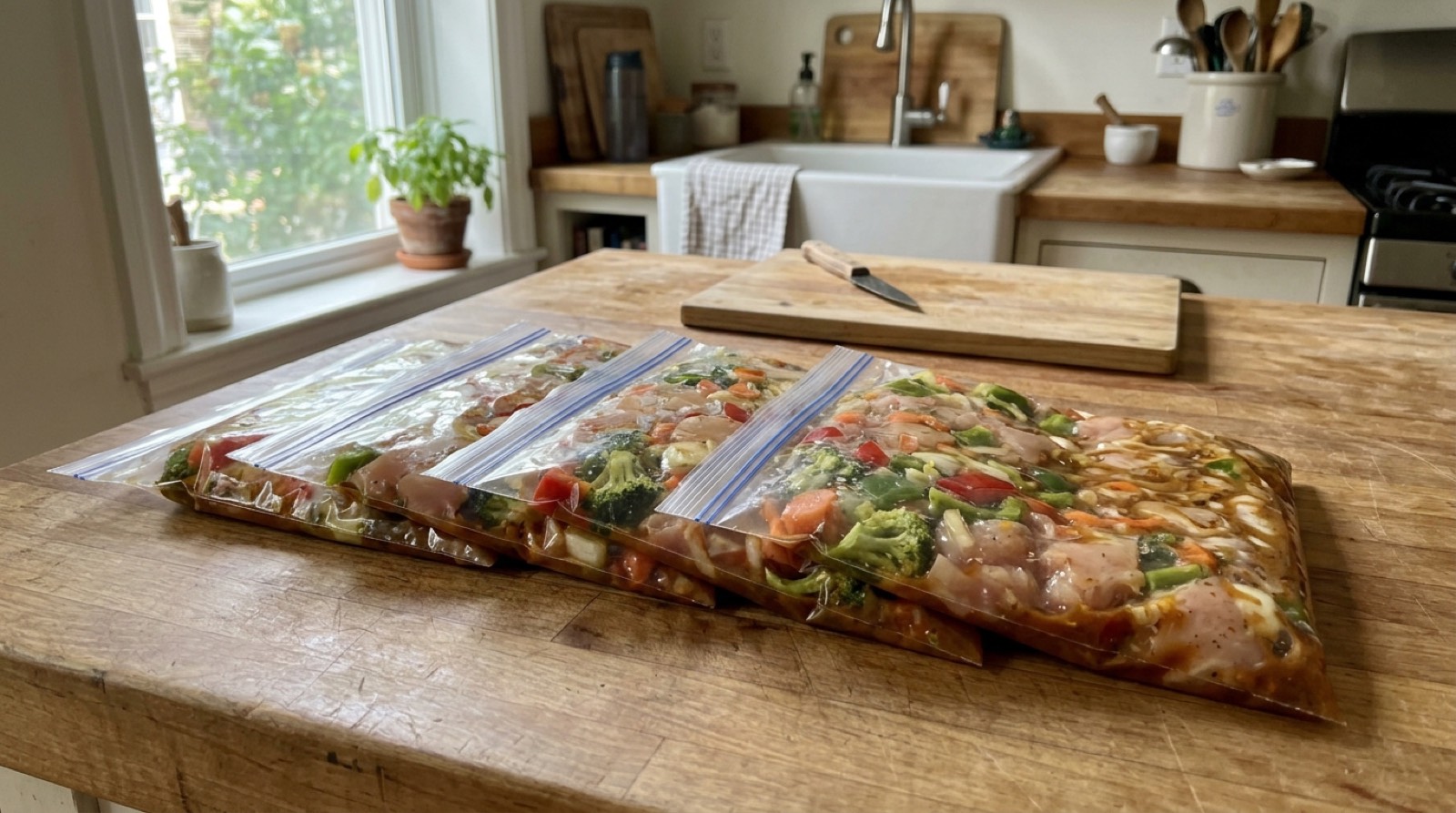
- Flat beats lumpy. A bag frozen flat is roughly two fingers thick and comes up to temperature evenly. A bag frozen in a ball has a cold core for hours.
From frozen, cook on LOW and never HIGH. HIGH cooks the outer edge of the block to shreds while the centre is still cold.
Both of those are arguments for the pot doing the arithmetic instead of you: a programmable pot set for eight hours on LOW drops to warm by itself, which is what stops the extra two hours a brick needs from becoming an extra four.
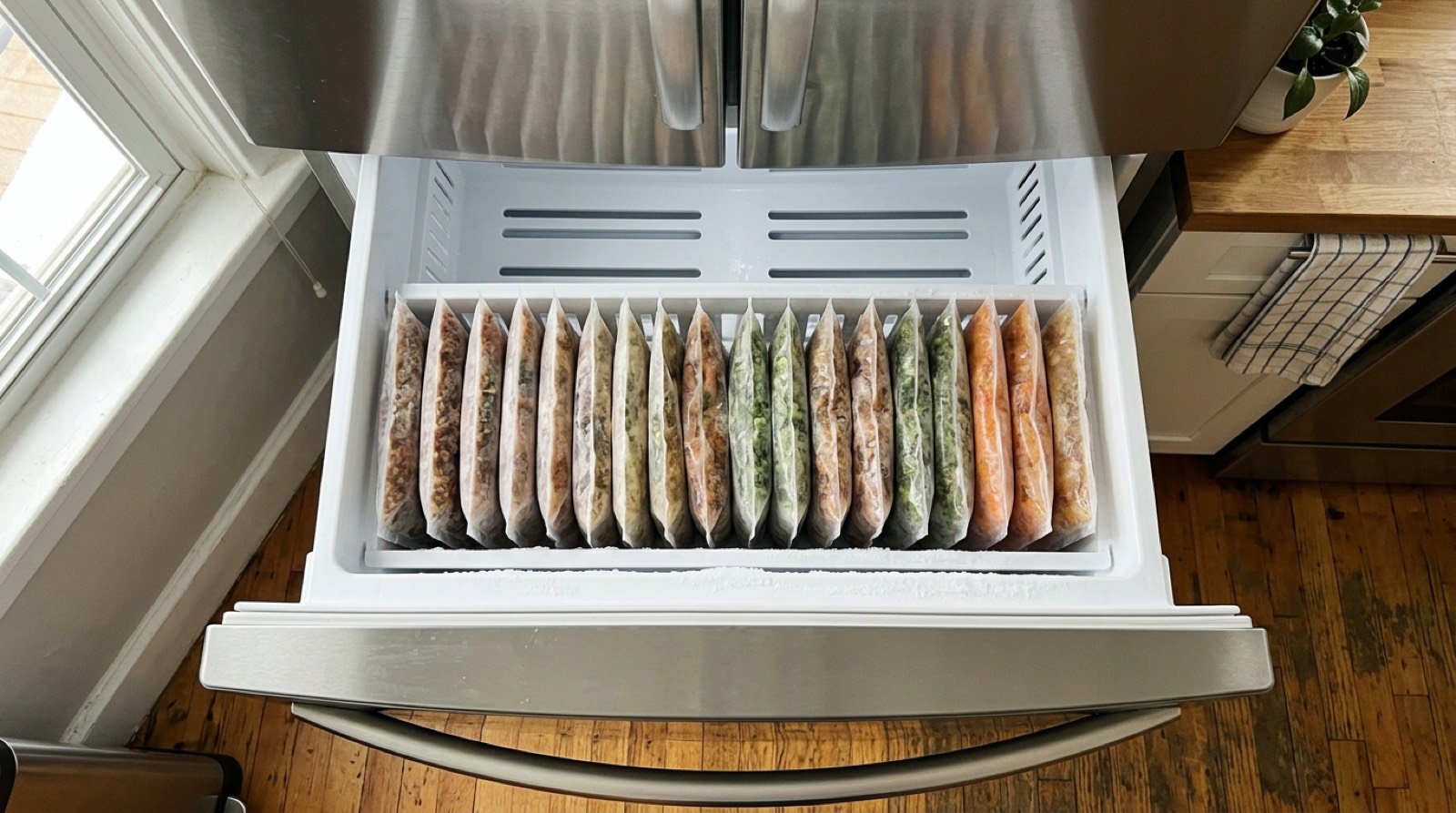
The simplest fix costs nothing: freeze the bags lying flat on a tray, then stand them up like files once solid. The second fix costs one evening habit — move tomorrow’s bag from the freezer to the fridge before bed. A thawed bag cooks on the normal schedule with no guesswork.
 Pin it
The Six-Bag Month
Six bags is the number that survives. It is one shopping trip, one afternoon, and roughly one crockpot dinner a week for a month and a half. Twelve bags sounds better and is how most freezer plans die: too much chopping in one go, and the last four bags sit in the freezer until they are unrecognisable.
Build the six around a repeating shape rather than six unrelated recipes:
| Bag | Protein | What makes it different | LOW from thawed |
|---|---|---|---|
| 1 | Chicken thighs | Salsa and black beans — shreds for tacos or bowls | 5–6 h |
| 2 | Chicken thighs | Coconut milk, curry paste, sweet potato | 5–6 h |
| 3 | Chuck roast, cubed | Onion, carrot, tomato paste — stew base | 7–8 h |
| 4 | Chuck roast, cubed | Soy, garlic, ginger — shreds for rice bowls | 7–8 h |
| 5 | Ground beef, browned | Chili beans and peppers | 5–6 h |
| 6 | Pork shoulder, cubed | Smoked paprika and cider vinegar — pulled pork | 7–8 h |
Bag 5 freezes down to the same dump chili timed fresh, and bags 3 and 4 are the cubed version of the chuck roast used whole in Mississippi pot roast.
Six bags is also six gallon bags and one afternoon, which is the honest cost of the plan. Two proteins, three flavour directions each. You buy chicken thighs once, chuck once, and you are not chasing eleven ingredients you will use a spoonful of. Ground beef is the only one that needs browning before it goes in the bag — raw ground beef freezes into a single grey lump and stays that way.
 Pin it
What Goes in the Bag and What Never Does
Some things freeze, cook, and come out fine. Some things come out as texture you would not serve. Sorting them once saves you from re-learning it six times.
| Freezes and cooks well | Add at the end instead |
|---|---|
| Chicken thighs, chuck, pork shoulder, sausage | Chicken breast in cubes — goes stringy |
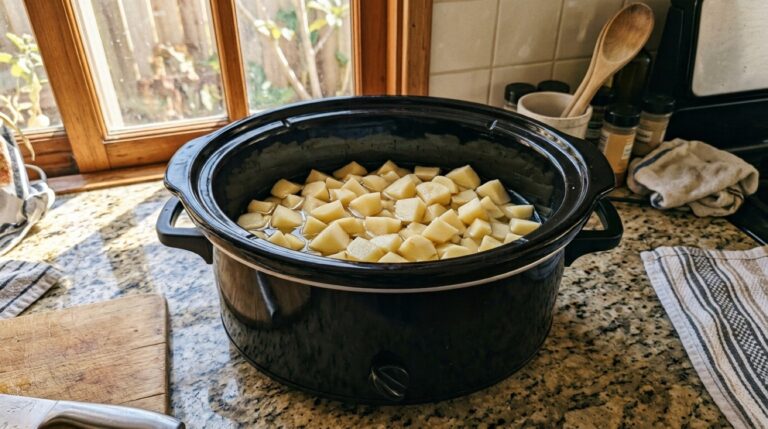
| Onion, carrot, celery, peppers, sweet potato | Regular potato — turns grainy after freezing |
| Dried herbs, tomato paste, stock concentrate, soy, vinegar | Cream, milk, sour cream, cheese — splits |
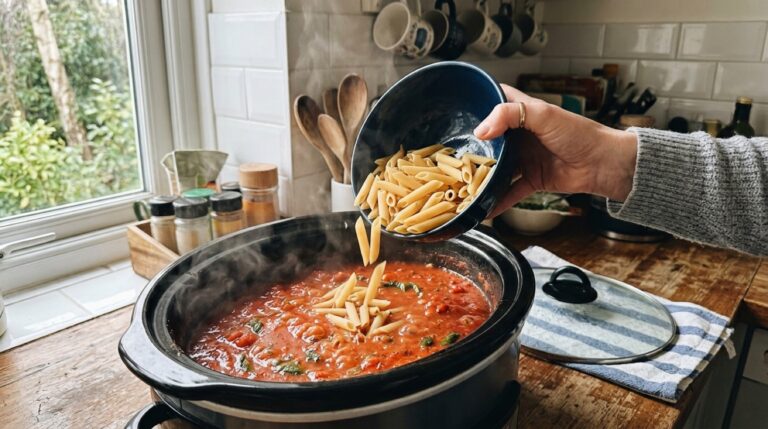
| Canned beans, drained; canned tomatoes | Pasta, rice, noodles — mush |
| Frozen corn, peas straight from the pack | Fresh herbs, lemon, lime — flavour dies |
The right-hand column is not a compromise. Dairy, starch and fresh acid all go in during the last fifteen minutes, and the difference between a bagged dinner and a cooked-tonight dinner is mostly that last fifteen minutes.
If a bag is going in the freezer with something liquid already in it — a marinade, a sauce base — flat freezer containers are the safer carrier, because a bag full of liquid freezes into a shape that will not stack and splits along the seam when it is moved cold.
Assembly: The Afternoon That Makes Six Dinners
1. Line the bags before you fill them
Stand each bag in a bowl or a large measuring jug, cuff the top over the rim, and it stays open with both hands free. This is the step that turns a two-person job into a one-person job. If six bags an afternoon becomes a monthly habit, a bag holder stand does the same job without occupying every mixing bowl in the kitchen.
2. Load dense to light
Meat first, then hard vegetables, then seasonings, then anything canned and drained. When the bag thaws, the meat is at the bottom where it needs to be.
3. Leave the liquid out
Water and stock make the bag heavy, slow to freeze, and prone to splitting at the seam. Write the liquid on the label and add it in the morning. The exception is a marinade you actively want soaking into the meat — that goes in.
4. Press flat and label on the flat side
Squeeze the air out, lie the bag down, and write on the wide face: name, date, the liquid to add, LOW time. A label on the zip strip is unreadable once frosted.
5. Freeze on a tray, store upright
Tray for the first night so the bag sets flat; upright in a box afterwards so you can read the labels like file tabs.
6. The night-before move
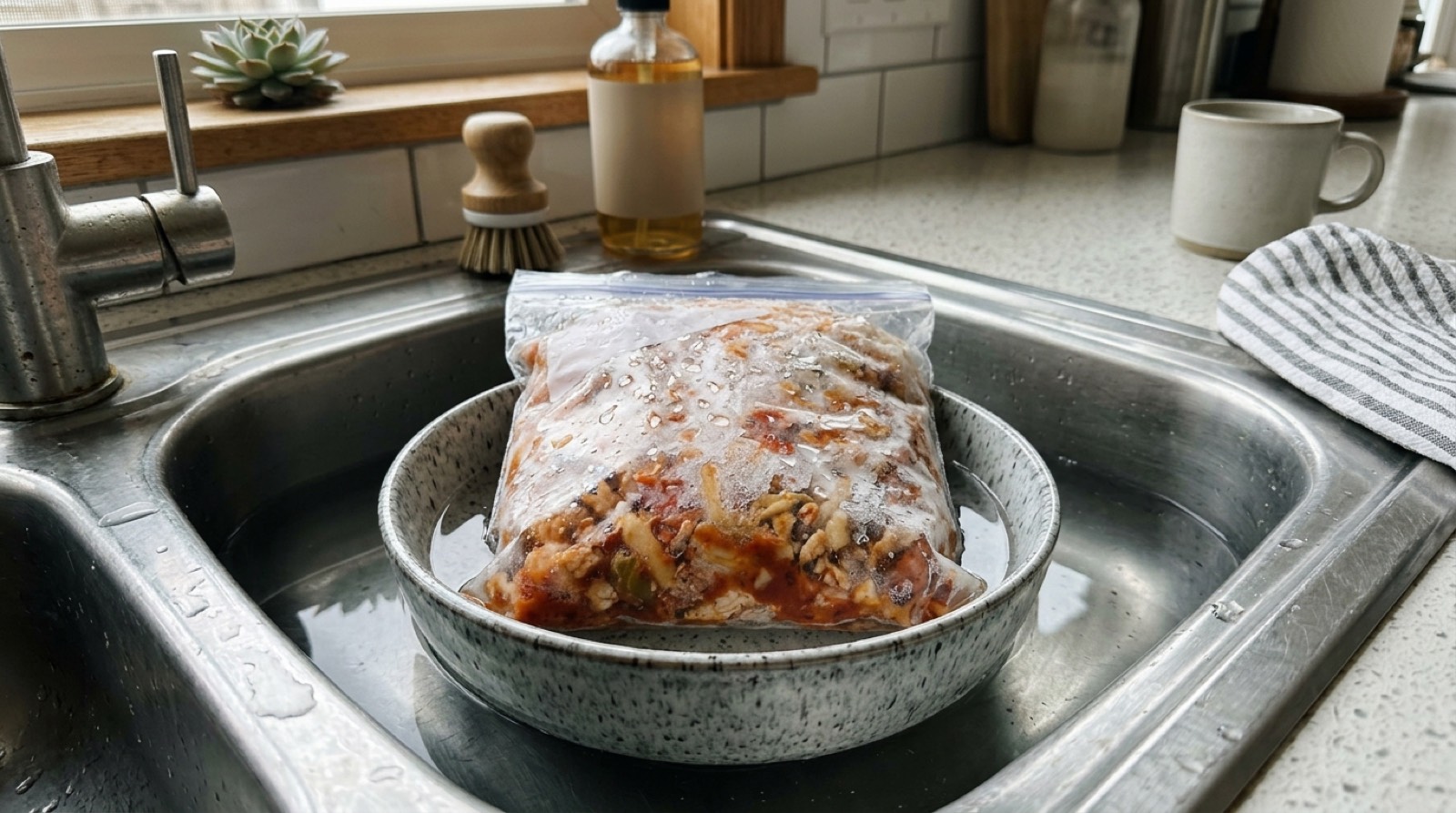
Bag to the fridge before bed. This single habit is what keeps the morning at ten minutes instead of a decision.
 Pin it
The Morning, in Order
Liner in the pot if you use them. Bag in, contents out, empty bag straight in the bin. Add the liquid written on the label. Lid on, LOW, go. That is under three minutes for a thawed bag and the reason the whole system holds: nothing in the morning requires a knife, a decision, or a pan.
Kit That Earns Its Space
Freezer meals need almost nothing beyond the pot, but two things do real work.
Slow cooker liners
The frozen-bag routine leaves a pot coated in sauce that has cooked on for eight hours. A liner turns the clean-up into lifting it out, which matters on a weeknight far more than it sounds.
See liners that fit a 6-quart pot →6-quart programmable slow cooker
Programmable means it drops to warm when the time runs out. With freezer meals you are usually not home at the end, and a pot that keeps cooking past the eight-hour mark is what turns a good bag into shredded, dry meat.
See 6-quart pots →Freezer Meals FAQ
Can I put a frozen bag straight into the crockpot?
Yes, if you cook it on LOW and add about two hours to the time. Do not do it on HIGH: the outside overcooks long before the centre is up to temperature. Thawing overnight in the fridge is the more reliable route and lets you use the times on the label as written.
How long do crockpot freezer meals keep?
Three months is the practical limit for taste and texture, not safety. Beyond that the meat starts to dry at the surface and dried herbs lose most of what they were doing. Label with the date and rotate the oldest to the front.
Do I have to brown the meat first?
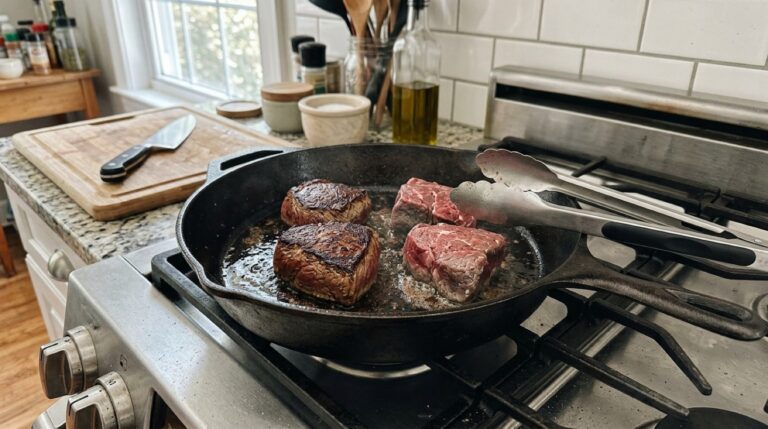
For whole cuts — thighs, chuck, pork shoulder — no. For ground beef, yes: raw mince freezes into a solid grey lump and never breaks up properly in the pot. Browning it before bagging is the one pan you cannot skip.
What size bag fits a 6-quart pot?
A gallon freezer bag holds a family-of-four portion and lies flat inside a 6-quart pot with room for the liquid you add in the morning. Two smaller bags stack better in the freezer if you cook for one or two.
Why did my freezer meal come out watery?
Vegetables release liquid as they thaw and nothing evaporates from a covered pot. Add less liquid than the recipe says — roughly half — and take the lid off for the last half hour if it is still thin.
Once six bags are in the freezer, the natural next step is the weeknight rotation that uses them: see cheap crockpot dinners for a family for meals built on the same two proteins, and easy crockpot dinners with no second pan for the nights when even a bag feels like too much.
See programmable 6-quart pots →