Ask the internet how long a pot roast takes in a slow cooker and you get an answer somewhere between three hours and ten. Both numbers exist in the top results. Only one of them makes a roast you can pull apart with a fork.
Quick answer: A 3–4 lb chuck roast wants 8 hours on LOW in a 6-quart pot, sitting in liquid that comes a third of the way up — not covered. Eight hours is not a maximum to creep up on; it is the point where the connective tissue has finished melting. At 6 hours it will be firm and dry, and it will look done.
We read the top-ranking pages for ten crockpot searches this month — 76 pages across 54 sites — and pulled every cook time stated on LOW. Ninety-one of them. The range runs from 3 hours to 10, with a median of 6. That spread is not a difference of opinion about doneness; it is different cuts, different pot sizes and different amounts of liquid, all published as the same instruction.
Here is one roast, fully specified, so the numbers mean something.
6-quart programmable slow cooker
Every time below is written for a 6-quart pot with a 3–4 lb roast. Programmable matters here because eight hours is the target, not a floor — a pot that keeps going after you are late home takes the roast past the point where it slices.
Classic Crockpot Pot Roast — The Full Recipe
Prep 20 minutes · Cook 8 hours on LOW · Serves 6, with leftovers for a second meal.
Ingredients
- 3–4 lb boneless chuck roast
- 1½ tsp kosher salt
- ½ tsp black pepper
- 2 tbsp neutral oil, for searing
- 2 yellow onions, halved
- 4 carrots, cut into thick batons
- 4 celery stalks, cut into large pieces
- 1 to 1½ cups beef stock or dry red wine
- 1½ lb waxy potatoes, in large chunks (optional)
- 2 tbsp cornstarch mixed with 2 tbsp cold water, for the gravy (optional)
Instructions
- Pat the roast dry, then salt and pepper it on all sides.
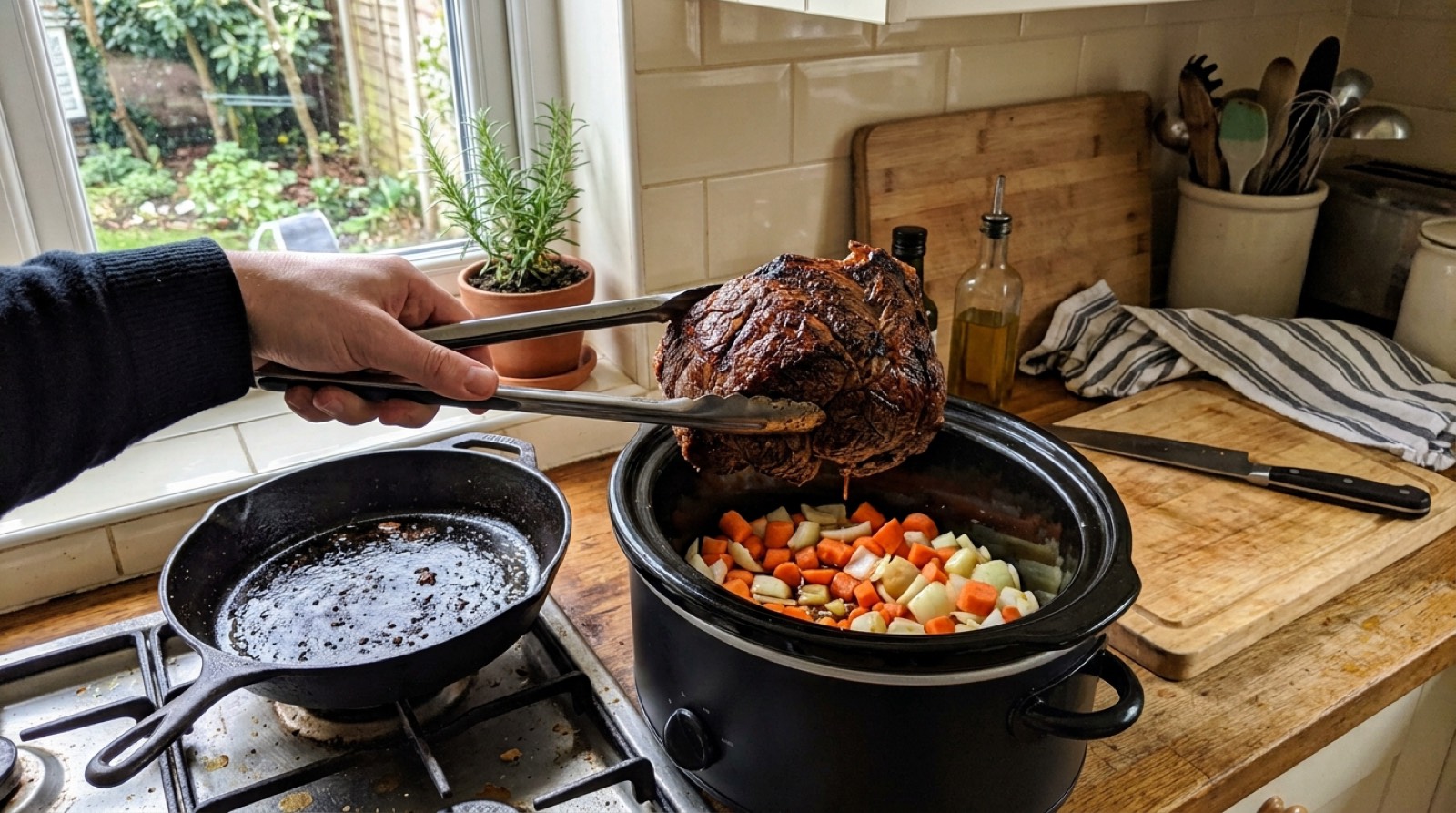
- Sear it in hot oil in a heavy pan, three to four minutes a side, until every face is dark.
- Lay the onions, carrots and celery in large pieces on the bottom of the pot.
- Set the roast on top of the vegetables, not buried in them.
- Deglaze the searing pan with the stock or wine, scrape up the browned bits, and pour it around the roast — liquid should reach about a third of the way up.
- Cover and cook on LOW for 8 hours. Add the potatoes at the 4-hour mark if using.
- Lift the roast out and rest it for 10 minutes before shredding or slicing.
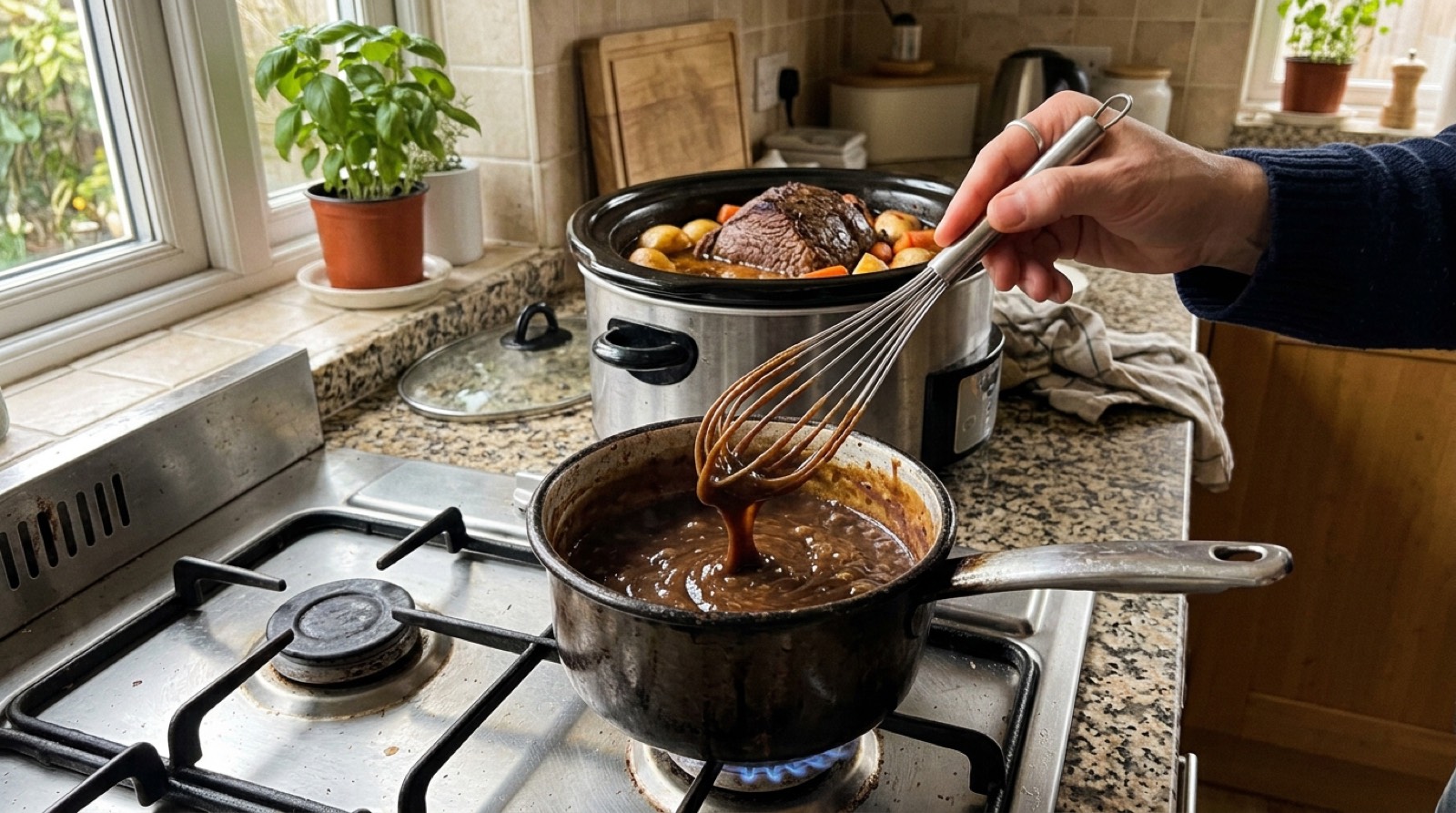
- Skim the fat, then reduce the liquid on HIGH with the lid off, or stir in the cornstarch slurry, for a thickened gravy.
The Cut Decides Everything Else
| Cut | What it is | In a slow cooker |
|---|---|---|
| Chuck roast | Shoulder — heavily worked, full of collagen | The right answer. Shreds at 8 h on LOW. |
| Brisket | Chest — lean and grainy, needs long slow heat | Works, 9–10 h, slice across the grain |
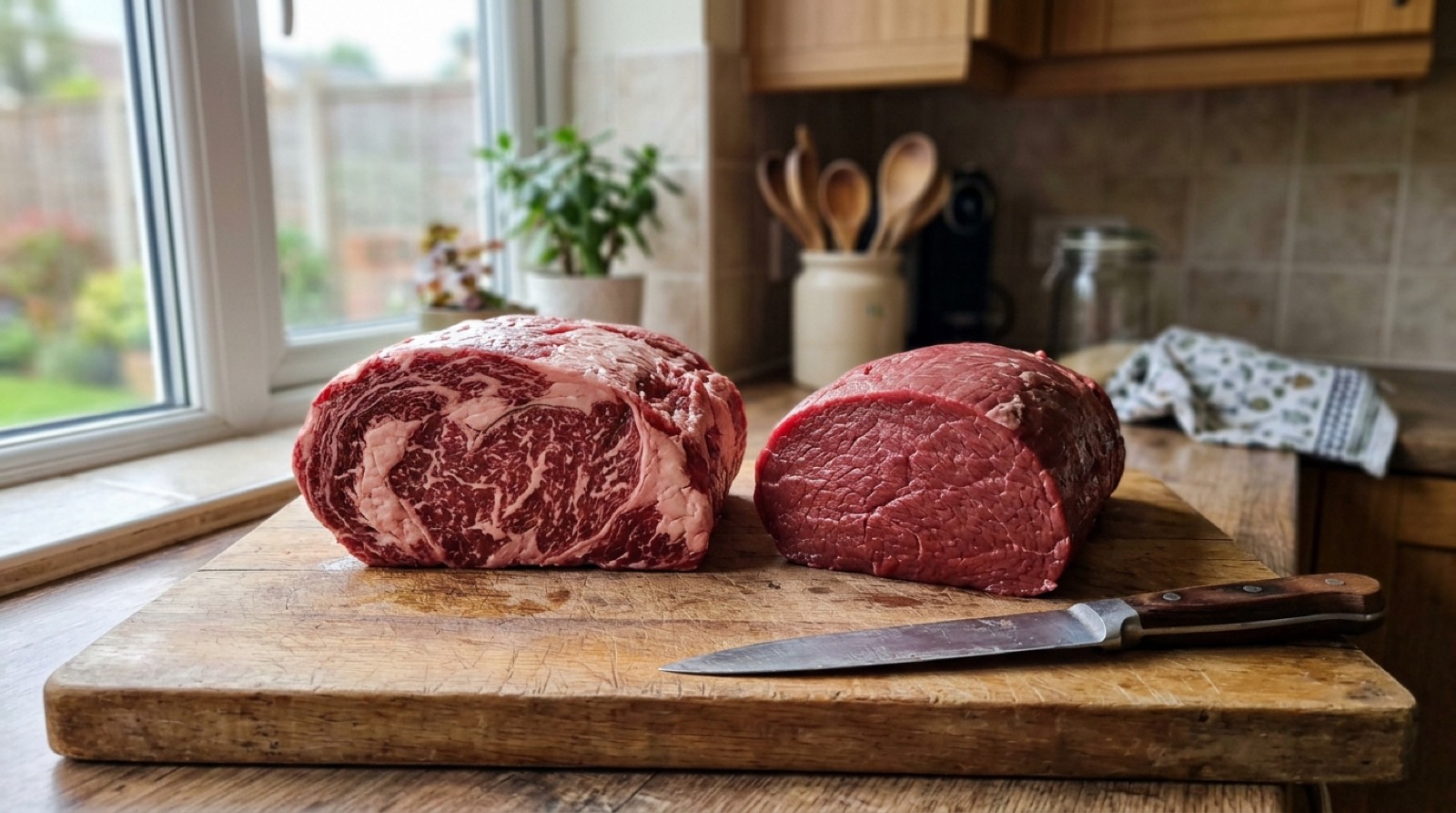
| Bottom round / rump | Lean back leg | Never shreds; comes out dry however long you run it |
| Sirloin tip | Lean | Same problem — good roasted, wrong here |
Eight hours is not a maximum to creep up on. It is the point where the collagen has finished melting, and there is no shortcut to it.
Lean cuts are not wasted, they just want a shorter, gentler run: pork loin cubed with apples and cabbage holds up at LOW 4 hours, and chicken thighs stay moist at LOW 5–6 hours, both from the healthy crockpot recipes built around cuts that do not have collagen to convert.
Chuck is the cheap one and the right one, so buy it whole and cut nothing: a length of butcher’s twine round a roast that wants to fall open keeps it in one piece for the first six hours, which is when it still needs to be a roast.
If a roast came out dry after eight hours, the cut is the first thing to check. Lean beef has nothing to convert into gelatin, so hours only remove moisture. Chuck is the cheap, well-marbled one, and it is the one worth buying.
 Pin it
The Method
1. Dry the meat and salt it
Pat the roast dry with kitchen paper and salt it on all sides. Wet meat will not brown, and salt applied at the start seasons the muscle rather than the sauce.
2. Brown it — the one pan worth washing
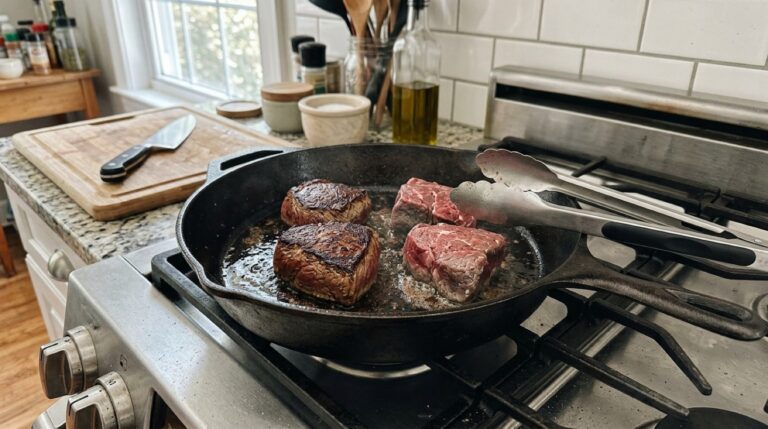
Hot pan, a film of oil, three to four minutes a side until each face is properly dark. This is not about sealing in juices, which is a myth; it is about the browning reaction that produces the deep, roasted flavour a slow cooker cannot generate on its own, because it never gets hot enough or dry enough.
Four cold faces of beef will drop a thin pan to steaming temperature, which is why a heavy cast-iron skillet is the pan for this step — it holds its heat and gives you the dark crust in four minutes rather than ten.
Skipping it is legitimate — the roast will still be tender. It will taste like braised beef rather than roast beef. Half the pages we read call for browning, so it is worth knowing what you trade. Chili runs the same split — the genuine dump version goes in raw and is done in 6–8 hours on LOW, while browning the beef first in the crockpot chili recipe adds about eight minutes and a deeper pot, the same trade as searing a roast.
3. Build the base
Halved onions, thick carrot batons, celery in large pieces at the bottom of the pot — over a liner if the pot is going to sit dirty until morning, because eight hours of reduced beef stock is the hardest thing in this niche to scrub off ceramic. Large is deliberate: eight hours turns small vegetables into a sludge, and the base is also what keeps the roast off the hot floor of the pot.
4. Deglaze and pour
Splash stock or wine into the hot pan, scrape everything loose, and pour it over. All the flavour from step two is stuck to that pan; leaving it there wastes the step.
5. Liquid: a third of the way up, no more
This is the instruction most often left out. A roast submerged in liquid boils. Boiled beef is grey, and the flavour ends up in the liquid instead of the meat. A third of the way up means the top of the roast steams while the bottom braises, which is what makes a pot roast a pot roast.
6. LOW for 8 hours. Lid stays on.
Not HIGH for four. Both settings reach a similar temperature, but collagen conversion is a function of time as much as heat, and the four-hour version comes out noticeably firmer. Every lift of the lid costs 20–30 minutes of recovery.
7. Potatoes at the halfway mark, if you want them whole
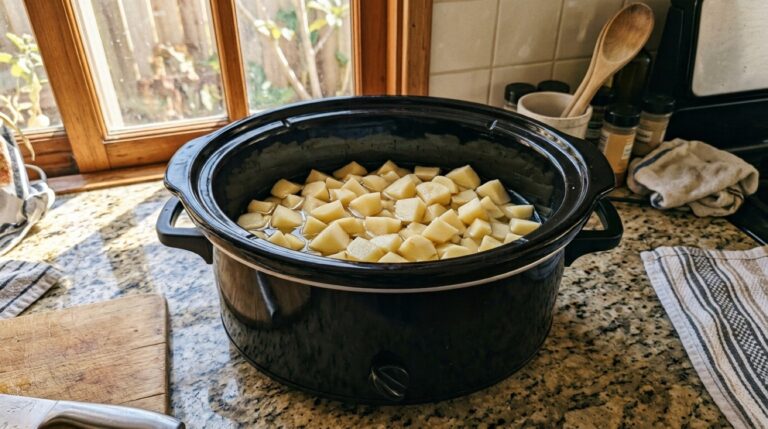
Waxy potatoes in large chunks, added at 4 hours, hold their shape. Added at the start they will be soft and grainy — still edible, no longer potatoes.
8. Rest the meat, thicken the liquid
Lift the roast out and let it sit for ten minutes. Meanwhile, skim the fat and reduce the liquid with the lid off on HIGH, or stir in a cornflour slurry for a quicker gravy. Shred or slice after resting, not before.
 Pin it
How to Tell It Is Actually Done
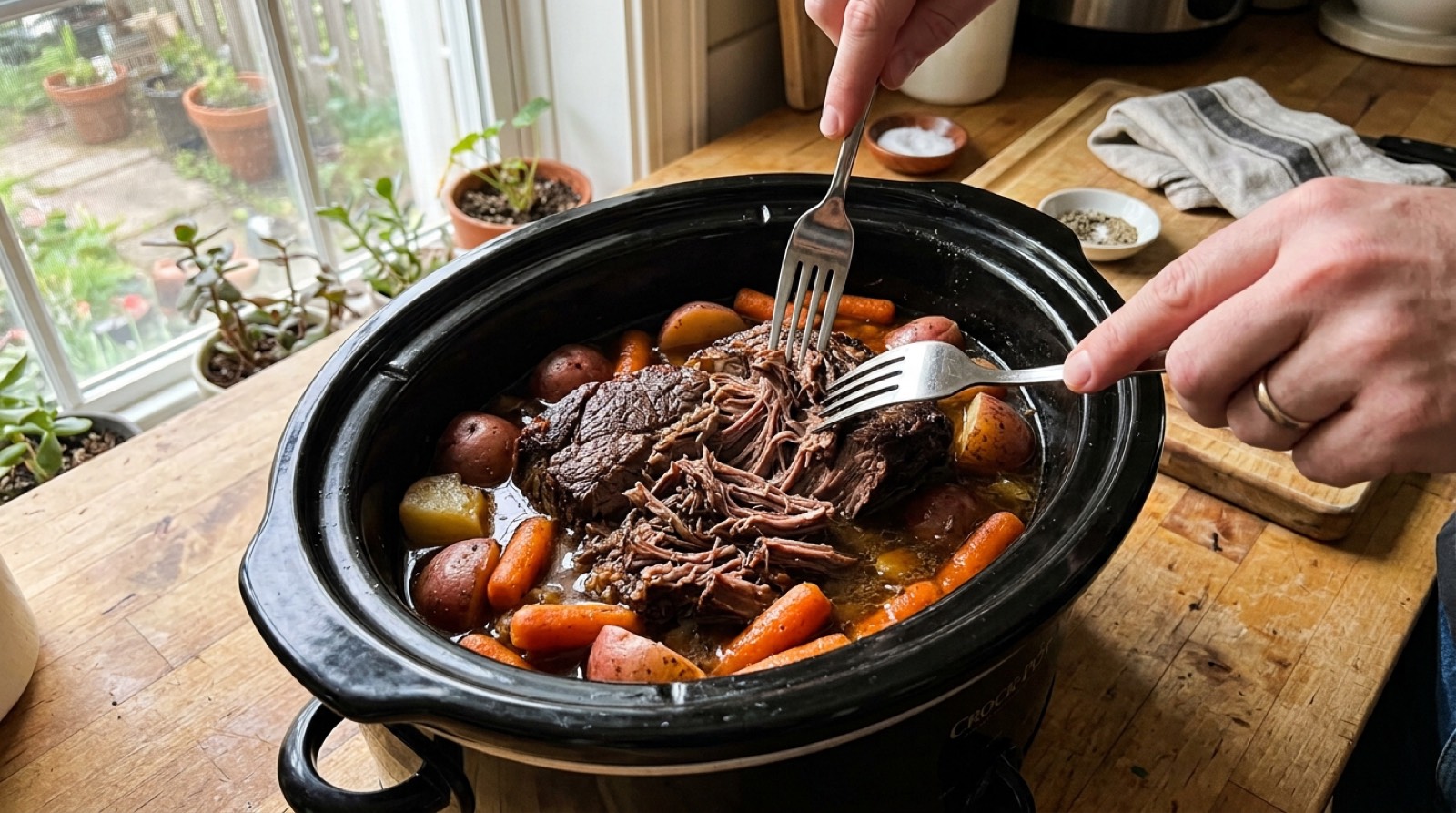
Not by temperature the way a steak is judged — a pot roast passes 165°F hours before it is ready. The test is mechanical: push a fork into the thickest part and twist. If it turns freely and the meat falls apart along the grain, it is done. If it resists, it needs more time, and more time is the only thing that will fix it.
This is why the “3 hours” answers in the search results are misleading. At three hours the beef is cooked, safe, and tough. If you want the number behind the fork test, it is 195–205°F on an instant-read thermometer — well past safe, and the range where collagen has become gelatin. The ranch-and-pepperoncini version runs the same test a few degrees further, to 200–205°F, in Mississippi pot roast.
 Pin it
What Goes Wrong, and Why
| Problem | Cause | Fix |
|---|---|---|
| Dry and crumbly | Lean cut, or a small roast run 10 hours | Chuck, and match the time to the weight |
| Tough at 6 hours | Collagen has not finished melting | Put the lid back on and give it 2 more |
| Grey and flavourless | Submerged in liquid; boiled not braised | Liquid a third of the way up |
| Watery gravy | Nothing evaporates under a sealed lid | Reduce with the lid off on HIGH, or a slurry |
| Mushy vegetables | Cut too small, in from the start | Large chunks; potatoes at the halfway point |
Timing by Weight
| Chuck roast | LOW | HIGH (acceptable, not ideal) |
|---|---|---|
| 2–3 lb | 7 h | 4 h |
| 3–4 lb | 8 h | 4.5 h |
| 4–5 lb | 9 h | 5 h |
A roast much over 4 lb needs an 8-quart oval pot. Cramming it into a 6-quart one means it sits against the lid, the lid does not seal, and the times stop applying.
Weight decides the roast; thickness and a thermometer decide a chop. Bone-in pork chops about an inch thick want 4–5 hours on LOW and come off the pot at 145°F, not by the clock — the full table is in the crockpot pork chops guide.
Crockpot Pot Roast FAQ
How long does pot roast take in a crockpot?
A 3–4 lb chuck roast takes 8 hours on LOW in a 6-quart pot. HIGH for 4–4.5 hours works but gives a firmer result, because the connective tissue needs time as well as heat.
Should I brown a pot roast before slow cooking?
It is optional for tenderness and significant for flavour. Browning creates the roasted taste the pot cannot produce on its own. If you skip it, add a spoon of tomato paste and a splash of soy or Worcestershire for depth.
How much liquid does a pot roast need?
Enough to come about a third of the way up the meat — usually one to one and a half cups. Covering the roast boils it. Nothing evaporates under the lid, so more liquid at the start just means thinner gravy at the end.
Why is my pot roast tough after 8 hours?
Almost always the cut. Bottom round, rump and sirloin tip are lean and never shred, no matter the time. If it was chuck, give it another hour — under-done pot roast is firm, and firm is fixed by more time.
Can I put the potatoes in at the start?
You can, and they will be very soft. For potatoes that hold their shape, use waxy varieties in large chunks and add them at the halfway mark.
For the version of this cut cubed into a weeknight stew, see cheap crockpot dinners for a family. To run the same roast at pressure instead, the conversion is in Instant Pot vs crockpot. The potatoes that go under it are timed in crockpot potatoes.