You pulled the beef, piled it on a roll, spooned the juice over the top, and by the second bite the bread had gone to wet paper. Or the juice itself was thin as water and tasted like a pickle jar.
So you searched how to make italian beef sandwiches in crock pot, and every card told you the same thing: chuck, pepperoncini and a seasoning packet for eight to ten hours, then dip. None of them tells you how long the roll can sit in that juice, how much brine the pot can take, or what to do when the liquid at the bottom is mostly water.
Those three numbers are the whole sandwich. The beef is the easy part.
Quick Answer: Cut, Hours, and How the Roll Takes the Juice
Quick answer: Use a 3 to 4 lb chuck roast with 1 cup of low-sodium broth and ½ cup of pepperoncini brine, cook it 8 to 10 hours on LOW or 4 to 5 hours on HIGH, and pull it when the thickest part reads 195 to 205°F. Toast the roll, squeeze the meat, and dip the sandwich for 2 to 3 seconds.
- Your cut: chuck roast. Round and rump dry out and shred into strings.
- Your finish line: 195 to 205°F in the thickest part, read through the closed lid with a probe thermometer.
- Your liquid: 1 cup broth and ½ cup brine for 3 lb. One seasoning packet, not two.
- Your roll window: toast it 2 to 3 minutes, dip 2 to 3 seconds, eat inside five minutes.
- Thin juice: lift the meat out, skim the fat, reduce the liquid, return the beef.
Meat squeezed, roll toasted, juice reduced and served on the side. The crockpot does the beef. The last ten minutes decide whether you get a sandwich or a bowl of soup with bread in it.
Italian Beef Sandwiches Crock Pot Style: The Recipe
This is the weeknight version of slow cooker italian beef sandwiches. It starts in the pot in the morning and asks nothing of you until the roll goes under the broiler.
Read the steps once before you start. The order of the last four is what keeps the bread intact, and a 7-quart cooker gives a 4 lb roast room to sit in one layer.
Crockpot Italian Beef Sandwiches With Juice That Does Not Drown the Roll
Course: Main CourseDifficulty: Easy8
servings15
minutes9
hoursChuck roast cooked to 195 to 205F in broth and pepperoncini brine, the juice skimmed and reduced, the roll toasted and dipped for two or three seconds.
Ingredients
3 lb beef chuck roast, left whole or halved
1 cup low-sodium beef broth
1/2 cup pepperoncini brine, from the jar
8 to 10 pepperoncini peppers, stems removed
1 packet Italian dressing seasoning mix
1 tsp dried oregano
1 tsp garlic powder
Black pepper, to taste
8 hoagie or sub rolls
8 slices provolone, optional
Giardiniera or sweet peppers, to serve
Directions
- Set the chuck in the crockpot. Sprinkle the seasoning packet, oregano, garlic powder and pepper over the top.
- Pour the broth and the brine around the beef, not over it, so the seasoning stays on the meat. Scatter the pepperoncini on top.
- Cover and cook on LOW for 8 to 10 hours, or on HIGH for 4 to 5 hours. Leave the lid alone.
- Read the thickest part with a probe. It is ready at 195 to 205F, when it gives no resistance at all.
- Lift the beef onto a board. Pour the liquid into a wide pan or a fat separator and skim the fat off the top.
- Reduce the skimmed juice for 10 to 15 minutes on the stove, or 20 to 30 minutes on HIGH with the lid off, until it coats a spoon lightly. Taste before adding salt.
- Shred the beef and press it between two forks to squeeze out the loose liquid. Return it to the pot with only a ladle of the reduced juice.
- Toast the rolls cut side up for 2 to 3 minutes under the broiler or in a dry skillet.
- Pile the beef on the rolls, top with cheese and peppers, and serve with the remaining juice in a bowl. Dip each sandwich for 2 to 3 seconds.
Notes
- The probe reading in step 3 is the doneness test, and the hour count is only a guide. The roll step is the only one with no slack: a toasted roll and a 2 to 3 second dip keep the crumb intact, while a soft roll dipped for ten seconds is gone.
What Cut of Meat Makes Italian Beef
A sandwich that gets shredded or sliced after a wet cook needs a cut with connective tissue to melt. That points you at one answer.
Your default for crockpot Italian beef is chuck roast. It carries enough collagen to turn silky and enough fat to flavour the juice you will dip in.
- Chuck roast: best all round, shreds cleanly and stays moist.
- Rump or bottom round: workable and leaner, so it needs the full liquid and comes out drier.
- Brisket flat: slices well, but it asks for more time and less brine.
- Top round and eye of round: the cuts to skip. Lean with little collagen, they turn grey and stringy.
The traditional Chicago sandwich is thin-sliced roast beef, not shredded. A crockpot gives you the pulled version, and that is what most people mean when they search for crockpot Italian beef.
I buy the roast by thickness, not just by weight, and I check the thickest part with a probe before I trust any hour count.
Pro tip: leave the chuck whole. Cubes expose more surface to the brine and come out saltier than a single roast of the same weight.
How Long on Low and High, and How to Know It Is Done
LOW is not a lower temperature.
Both settings climb to the same ceiling. LOW gets there slowly, HIGH gets there in about half the time, and what changes is how long the connective tissue has to dissolve.
| Setting | 3 to 4 lb chuck roast | Finish line |
|---|---|---|
| LOW | 8 to 10 hours | 195 to 205°F in the thickest part |
| HIGH | 4 to 5 hours | Same reading, same spot |
The reading is 195 to 205°F in the thickest part of the roast. Below that the collagen is still tight and the meat pulls apart in clumps. Well past it the meat is soft but dry, and no amount of juice puts the moisture back.
A fork test is a guess through a hot lid, and every time you lift the lid you lose the heat you were counting on. A probe answers from the counter, the same way it does for pot roast crock pot recipes and crockpot beef stroganoff.
Pro tip: cookers run hot or cool by a surprising margin. If your first batch finished two hours early, write that on the lid and plan around it.
What sits on my counter for this sandwich
Three things earn the space, and each one answers a question the card leaves open. Left off: any cooker with a timer that drops to WARM, because WARM keeps shredded beef sitting in salty juice for hours past done.
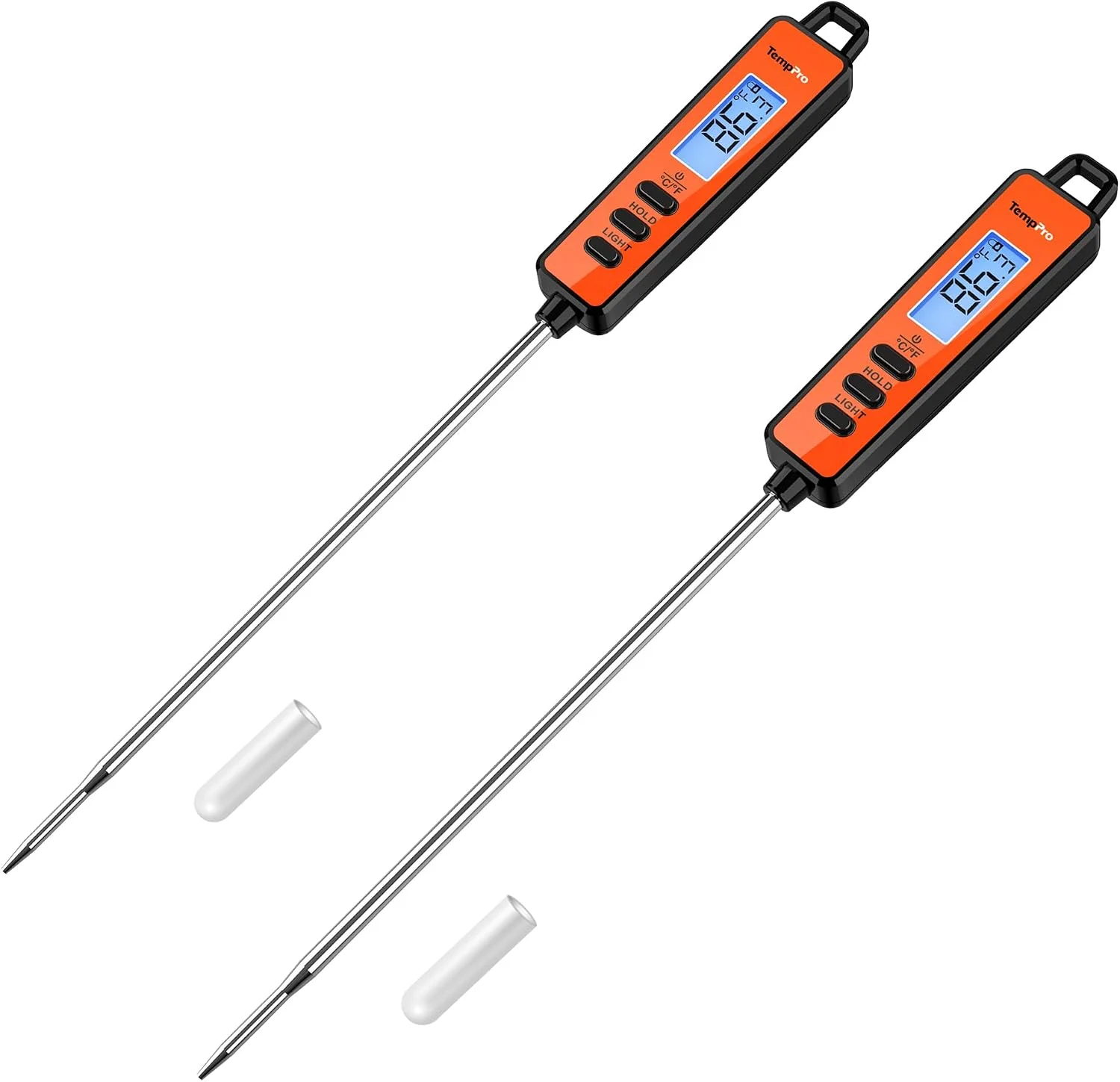
TempPro TempSwif Instant Read Meat Thermometer
For the cook who keeps guessing whether the chuck is at 195°F yet. Not for anyone happy to cook strictly by the hour and take the odd dry batch.
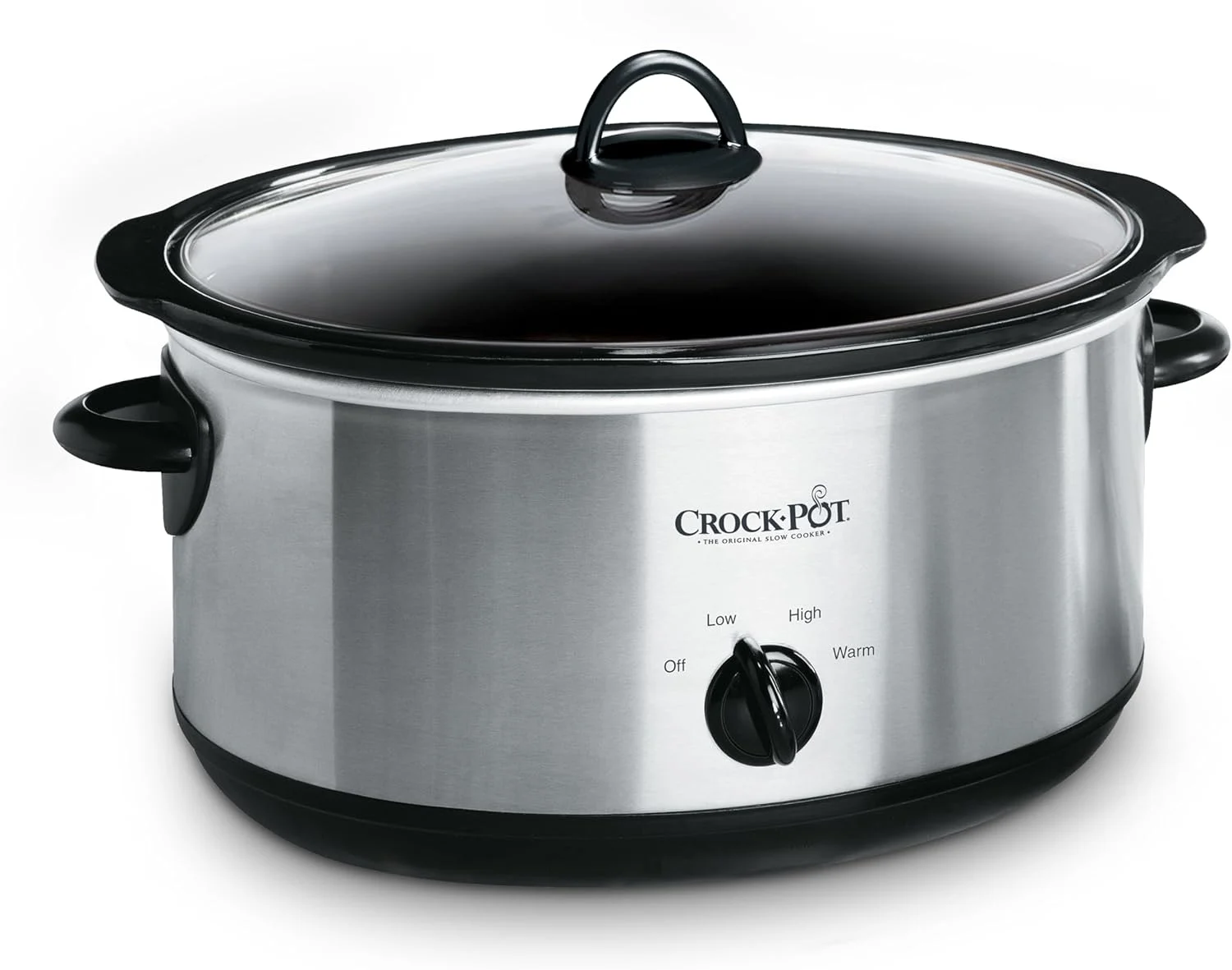
Crock-Pot 7-Quart Manual Slow Cooker, Family Size
For a 4 lb roast that sits in one layer with the liquid at the right depth, on a dial that stays where you set it. Too much pot if you cook for two.

Reynolds Kitchens Slow Cooker Liners, Regular Size
For a brined, fatty juice that bakes onto the crock wall over ten hours. Skip them if you cook plain broth dishes that rinse out with a soak.
Juice That Soaks Without Soaking: The Roll Window
Bread is a sponge with a short memory. Wet crumb holds a few seconds of juice, then your roll gives way.
The fix is not less juice. You need a roll that is dry enough on the surface to take the juice slowly, and a dip that is shorter than you think.
| Step | Number | What it does |
|---|---|---|
| Toast the roll | 2 to 3 minutes, cut side up | Dries the crumb and builds a crust that works as a barrier |
| Squeeze the meat | Press between two forks | Removes the loose liquid that soaks the bottom half |
| Dip the sandwich | 2 to 3 seconds, one side | The crust takes juice, the inside stays bread |
| Serve the juice on the side | Hot, in a bowl | Each person decides how wet the roll goes |
Fat matters here too. A slick of beef fat on the juice sits on the surface of the roll and makes it greasy instead of moist, so skim it off first. A fat separator does this in a minute, and a spoon works when you have the patience.
I pour the skimmed juice into a wide pan rather than back into the 7-quart cooker, because more surface means faster reduction and a bowl you can see into.
The roll type shifts the numbers. A crusty Italian roll or a hoagie gives you the window above, and a soft grocery sub roll needs a shorter dip and a heavier toast.
My own rule is to taste the juice with a piece of bread, not a spoon, because bread is what it has to season.
Pro tip: wrap the assembled sandwiches in foil and rest them for two minutes in a warm oven. The crust softens just enough to take the juice and the centre stays firm.
Why the Juice Turns Salty, and What to Cut It With
Three sources of salt go into one pot: the packet, the brine, and the broth. Over eight hours the beef gives back its own juice, and the liquid reduces and concentrates.
You taste it at the end and it is a salt lick. The fix is arithmetic at the start, and I do that sum before I open the jar.
| Source | For 3 lb of chuck | Note |
|---|---|---|
| Broth | 1 cup, low-sodium | Regular broth plus brine plus a packet is where most pots go wrong |
| Pepperoncini brine | ½ cup | The peppers carry flavour of their own |
| Seasoning packet | One, not two | Two packets plus brine is the usual cause of a salty pot |
| Added salt | None until the juice is reduced and tasted | Reduction concentrates what is already there |
If you already went too far, dilute rather than fight it. I do this with a splash of water, never with potato or sugar.
Add ½ cup of unsalted water or low-sodium broth to the skimmed juice before you reduce it, and serve the beef with a mild cheese like provolone, which softens the edge.
Salty, fatty liquid also bakes onto the crock wall. This is where slow cooker liners earn their place, since the pot comes clean without a scrubbing session.
I never add salt at the start of this dish. I add it at the end, to a juice I have already tasted.
Pro tip: keep the pepperoncini brine jar. If the finished juice tastes flat, a teaspoon of brine adds acid back without adding much salt.
Watery Juice, Fixed: Skim, Reduce, Return
Your sealed pot has no evaporation. Whatever water the beef releases stays in the bowl, and a roast of that size gives up a lot of it.
So the liquid you end with is thinner than the liquid you put in, and flour is the wrong answer. It clouds the juice and turns it into gravy, and a dip made of gravy makes a different sandwich.
Do this instead, in this order:
- Lift the beef onto a board.
- Skim the fat from the liquid.
- Reduce it in a wide pan 10 to 15 minutes, or on HIGH with the lid off for 20 to 30 minutes, until it coats a spoon lightly.
- Taste. Add salt only now, and only if it needs it.
- Shred the beef, squeeze it, and return it with a ladle of juice, not the whole pot.
You are aiming for a juice closer to a thin jus than a sauce, and you can tell by how it coats the back of a spoon. If you reduce it by about a quarter, the flavour comes up and the salt does too, which is why you taste at the end instead of at the start.
The same skim-and-reduce step runs through roast beef crock pot recipes, where a thin pan liquid is the usual complaint.
With a liner in the pot, I can lift the whole mess out and do the reduction without a scrubbing session afterwards. I pull the beef first, every time.
Pro tip: chill the liquid in the freezer for 15 minutes. The fat sets on top and lifts off in one piece.
Chicago Style, Dipped, and Sweet Peppers: What Is Different
An Italian beef sandwich is thin-sliced seasoned roast beef on an Italian roll, served with its own juice and a pepper topping. It is a Chicago sandwich first, and a crockpot version borrows the idea.
| Style | What happens | Roll result |
|---|---|---|
| Dry | Beef on the roll with almost no juice | Cleanest, eaten on a plate |
| Wet | A ladle of juice over the meat | Roll gets damp, survives a few minutes |
| Dipped | Whole sandwich goes into the juice | Use the roll window above |
| Hot or sweet | Giardiniera for heat, roasted sweet peppers for mild | Topping only, no change to the roll |
The crockpot version shreds where a Chicago stand slices. If you want slices, chill the roast overnight in its juice and cut it cold across the grain, then reheat the slices in the reduced liquid.
I slice mine only when I have a day to chill it, and I cut it cold, across the grain, once a probe reading told me it was cooked right.
Provolone is common, and so is a handful of sauteed peppers and onions. To taste the beef itself, leave off both.
Three-Ingredient, No-Packet, and No-Crockpot Versions
You do not need a long list, but you do need to know what each shortcut costs you.
- Three ingredients: chuck, a jar of pepperoncini with its brine, and the seasoning packet. Skip the broth and cut the brine to ½ cup plus ½ cup of water. It works, and the result is saltier and less beefy.
- No packet: 1 tsp each of oregano, garlic powder and onion powder, ½ tsp black pepper, plus salt only at the end. Lower in salt, and you control all of it.
- No crockpot: a Dutch oven in the oven for 3 to 4 hours, or an Instant Pot at pressure. The doneness reading does not change.
- Healthier: you trim the fat cap, use low-sodium broth, and serve on a whole wheat roll or over rice.
The oven version follows the same logic as Dutch oven pot roast, and pressure timing is covered in pot roast in the Instant Pot.
I keep the finish line the same on every route: a reading from a probe, not a clock. That is the one rule I do not bend.
Pro tip: making a double batch for the freezer? Freeze the beef and the reduced juice in separate bags. Beef frozen in its own un-reduced liquid thaws watery.
What to Serve With Italian Beef, and Storing It Without Drying the Meat
A sandwich this wet wants you to keep the side plain.
- Coleslaw or a sharp salad: the cold crunch against hot juice.
- Oven fries or kettle chips: for dipping in what is left.
- Roasted vegetables: peppers and onions from the same pan.
- Over rice or potatoes: no roll at all, and no window to manage. This is also how easy crockpot dinners usually get stretched.
Store your beef in its juice, not dry. Dry shredded beef in the fridge turns to cotton by the next day.
- Fridge: beef and juice together in one sealed container, 3 to 4 days.
- Freezer: up to 3 months, with the juice. This is the sort of batch that fills a freezer meals day.
- Reheat: low and covered, in a pan or in the crock, until warm through. A boil toughens shredded beef.
- Rolls: never stored with the beef. Toast fresh every time.
| Where | How long | How |
|---|---|---|
| Fridge | 3 to 4 days | Beef and juice together, sealed |
| Freezer | Up to 3 months | Beef with its juice |
| Reheat | Until warm through | Low and covered, no boil |
If you reheat in the crock, a probe in the pile tells you when it is hot enough at 165°F, and it stops you from cooking it again.
Pro tip: leftover juice makes a good base for a soup. Add it to crockpot soup recipes in place of half the broth.

Italian Beef Sandwiches Crockpot FAQ
| Chuck weight | LOW | HIGH | Broth | Brine |
|---|---|---|---|---|
| 2 lb | 6 to 8 hours | 3 to 4 hours | ¾ cup | ⅓ cup |
| 3 lb | 8 to 10 hours | 4 to 5 hours | 1 cup | ½ cup |
| 4 lb | 9 to 10 hours | 5 hours | 1 cup | ½ cup |
How to make Italian beef sandwiches in the crock pot?
Put a 3 lb chuck roast in the pot with 1 cup low-sodium broth, ½ cup pepperoncini brine, the peppers and one seasoning packet. Cook 8 to 10 hours on LOW, pull at 195 to 205°F, shred, and serve on toasted rolls with the juice on the side.
What are the best Italian beef sandwiches in a crock pot?
The best ones come from three controls, not extra ingredients: beef pulled on a reading, juice reduced and skimmed, and a roll that is toasted and dipped for seconds.
What is the best crockpot Italian beef sandwich recipe?
The one in the card above. It cooks a 3 lb chuck roast in a measured amount of broth and brine, in a 7-quart cooker if you scale up, and gives the sandwich a roll window instead of a wet roll.
What kind of beef is used for Italian beef sandwiches?
Chuck roast for a crockpot. Rump or bottom round work with a little more liquid, and a brisket flat slices well. Top round and eye of round dry out in a long cook.
What is the best beef for Italian beef sandwiches?
Chuck. It has connective tissue that melts at the finish-line reading and fat that flavours the juice, the same way it does in Mississippi pot roast.
What cut of meat do you use for Italian beef sandwiches?
A chuck roast of 3 to 4 lb, trimmed of its thickest fat cap and left whole so it takes less salt from the brine. Read the thickest part with a probe before you pull it.
| Cut | Result after 8 to 10 hours LOW | Verdict |
|---|---|---|
| Chuck roast | Silky, shreds cleanly | Default |
| Rump or bottom round | Leaner, drier | Needs the full liquid |
| Brisket flat | Slices well | Less brine, more time |
| Top or eye of round | Grey and stringy | Skip |
How do you make an Italian beef sandwich?
You slow cook seasoned beef until it shreds, skim and reduce the juice, pile the beef on a toasted roll, add peppers and cheese, and serve with the juice to dip in.
How to make Italian beef for sandwiches without it going soggy?
Squeeze the meat, toast the roll, dip for 2 to 3 seconds and eat inside five minutes. Skim the fat first so the juice soaks instead of coating, and a liner makes that cleanup quick.
What is an Italian beef sandwich?
Thin-sliced, seasoned roast beef on an Italian roll, served with its own juice and topped with giardiniera or sweet peppers. It comes from Chicago, and the crockpot version shreds the meat instead of slicing it.
Where can I get an Italian beef sandwich?
Chicago beef stands and Italian delis are the usual places. If you do not live near one, you can still get most of the way there at home with this crockpot version.
What to make with Italian beef sandwiches?
Coleslaw, oven fries, roasted peppers and onions, or a green salad. A plain side keeps the plate from getting heavy with so much juice.
Italian beef sandwiches in the crockpot with the juice too salty, what now?
You dilute it with ½ cup of low-sodium broth or water, reduce it, and add provolone to the sandwich. Next time you cut the brine to ½ cup and use one packet; a probe will not fix salt, but it keeps you from overcooking while you dilute.
Can you cook Italian beef on HIGH?
Yes. 4 to 5 hours on HIGH for 3 lb of chuck, with the same probe reading at the end. LOW is a little more forgiving if you are not home.
Do I need a thermometer, or will the hours do?
The hours get you close and a reading gets you the finish. A probe answers through the closed lid, without letting the heat out.
More Crockpot Beef Worth the Hours
Same cut, same window, different dish. If you came here from a board of crockpot Italian beef recipes, these are worth reading next, and each one ends on a probe reading rather than a fork test.
- Roast beef crock pot recipes
- Pot roast crock pot recipes
- Crockpot beef stroganoff
- Short ribs in the slow cooker
- Braised short ribs in a dutch oven
- Mississippi pot roast
- Easy crockpot dinners
- Crockpot soup recipes