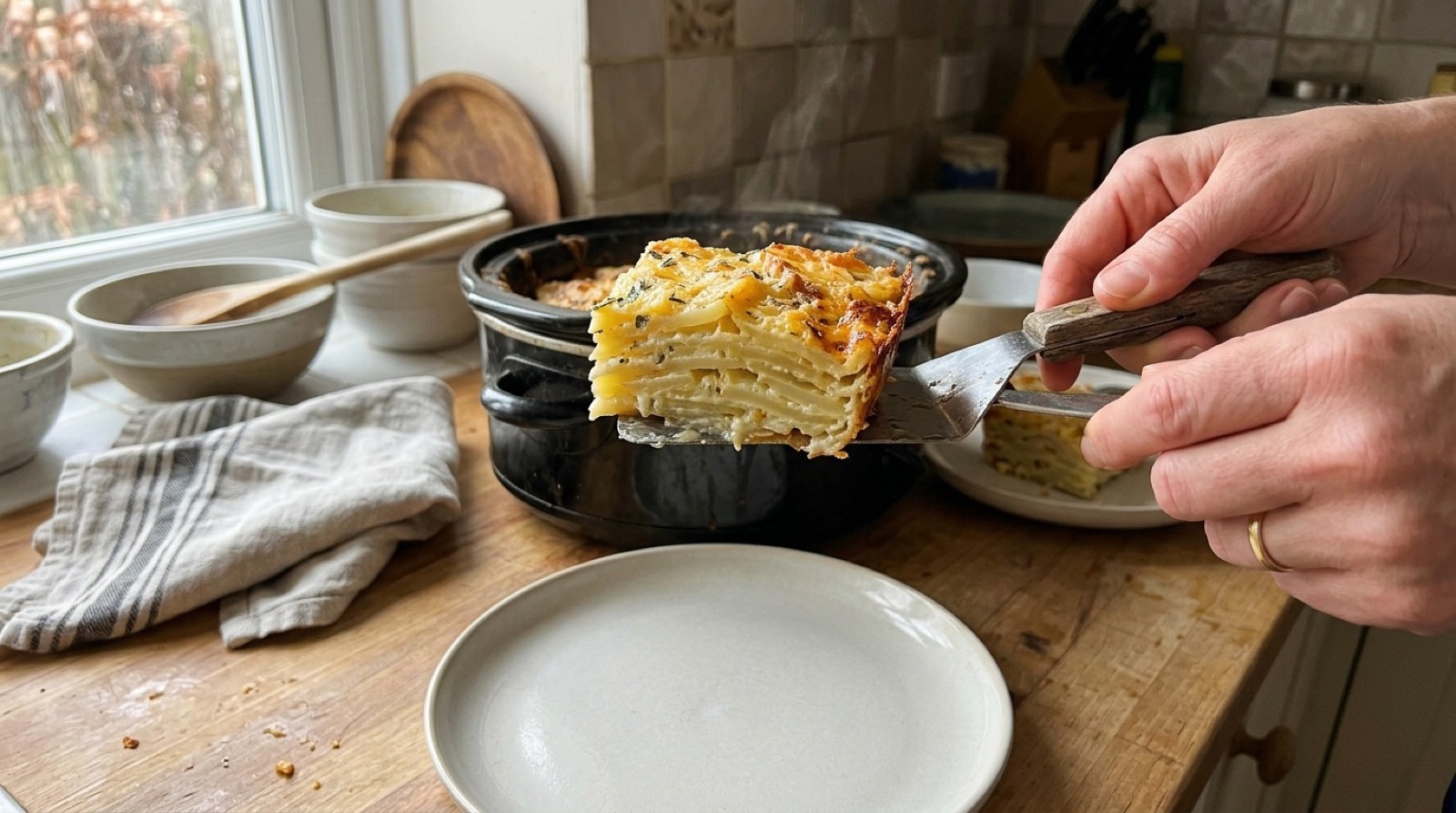
A casserole is an oven dish: dry heat from above, a crust on top, starch that sets. A slow cooker is a sealed wet box. Some casseroles cross over intact. Several are simply a different, worse dish once they do.
Quick answer: Casseroles built on meat, beans and hard vegetables work in a slow cooker at 5–6 hours on LOW. Anything whose point is a browned top, a set egg custard or al dente pasta does not — there is no dry heat and no evaporation. Cook the pasta separately, add the cheese in the last twenty minutes, and use the grill for the top if the recipe needs one.
We read the top-ranking pages for ten crockpot searches this month — 76 pages across 54 sites — and counted the two numbers that decide whether an instruction can be followed. The pot size is named on 24 of the 76. Both LOW and HIGH times appear on 20. Forty-two of the 76 pages give no explicit cooking time in the body text at all.
For casseroles that gap is worse than usual, because a casserole is defined by the dish it sits in. So this page starts by sorting which ones transfer.
6-quart programmable slow cooker
Every time below is written for a 6-quart pot filled two-thirds, because layered dishes are the most sensitive to that number — an overfilled pot has the bottom layer done long before the top one is warm. A programmable one that drops to warm on its own also stops the 6-hour casserole becoming a 9-hour one.
See 6-quart pots →What Crosses Over and What Does Not
 Pin it
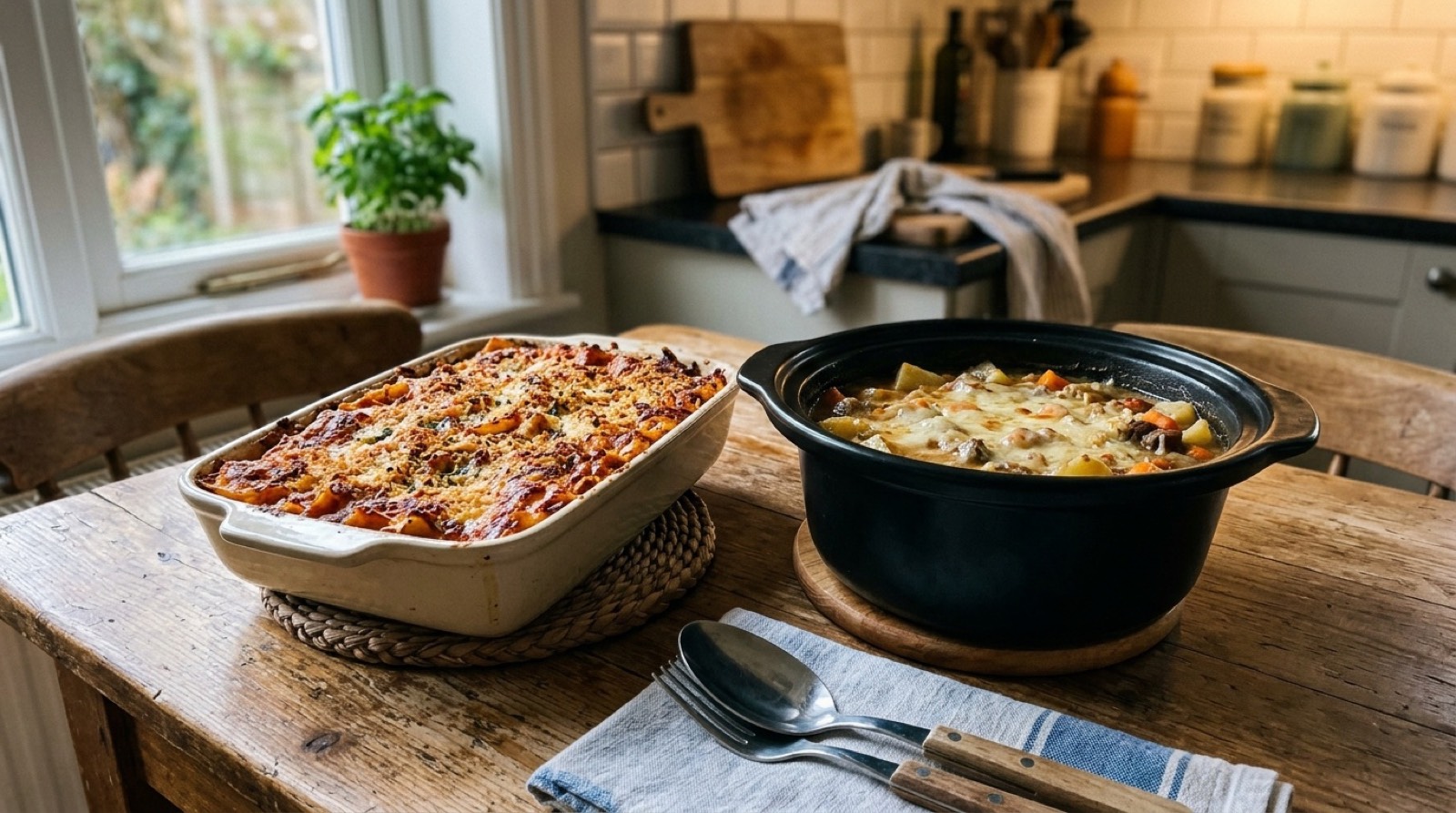
| Casserole | In a slow cooker | Why |
|---|---|---|
| Hamburger and potato | Works — LOW 6 h | Meat and root vegetables; nothing depends on a crust |
| Chicken and rice | Works with care — LOW 4 h | Rice needs a fixed liquid ratio and a shorter cook |
| King ranch chicken | Works — LOW 5 h | Wet by design; tortillas soften and that is correct |
| Green bean casserole | Works — LOW 3 h | Fried onions go on top at serving, not in the pot |
| Enchilada casserole | Works — LOW 4–5 h | Layered tortillas behave like lasagne sheets |
| Breakfast egg casserole | Works — LOW 3 h | Egg sets fine in gentle wet heat; do not run it long |
| Lasagne | Works — LOW 4 h | No-boil sheets only; regular sheets go to paste |
| Tuna noodle | Adapt — LOW 3 h | Noodles cooked separately, folded in at the end |
| Mac and cheese | Adapt — LOW 2 h | Cheese sauce splits over long heat; short cook only |
| Shepherd’s pie | Adapt | Filling in the pot, mash made separately and grilled |
| Anything with a breadcrumb top | No | Steam falls back onto it; it never crisps |
| Anything gratin | No | The browned top is the dish |
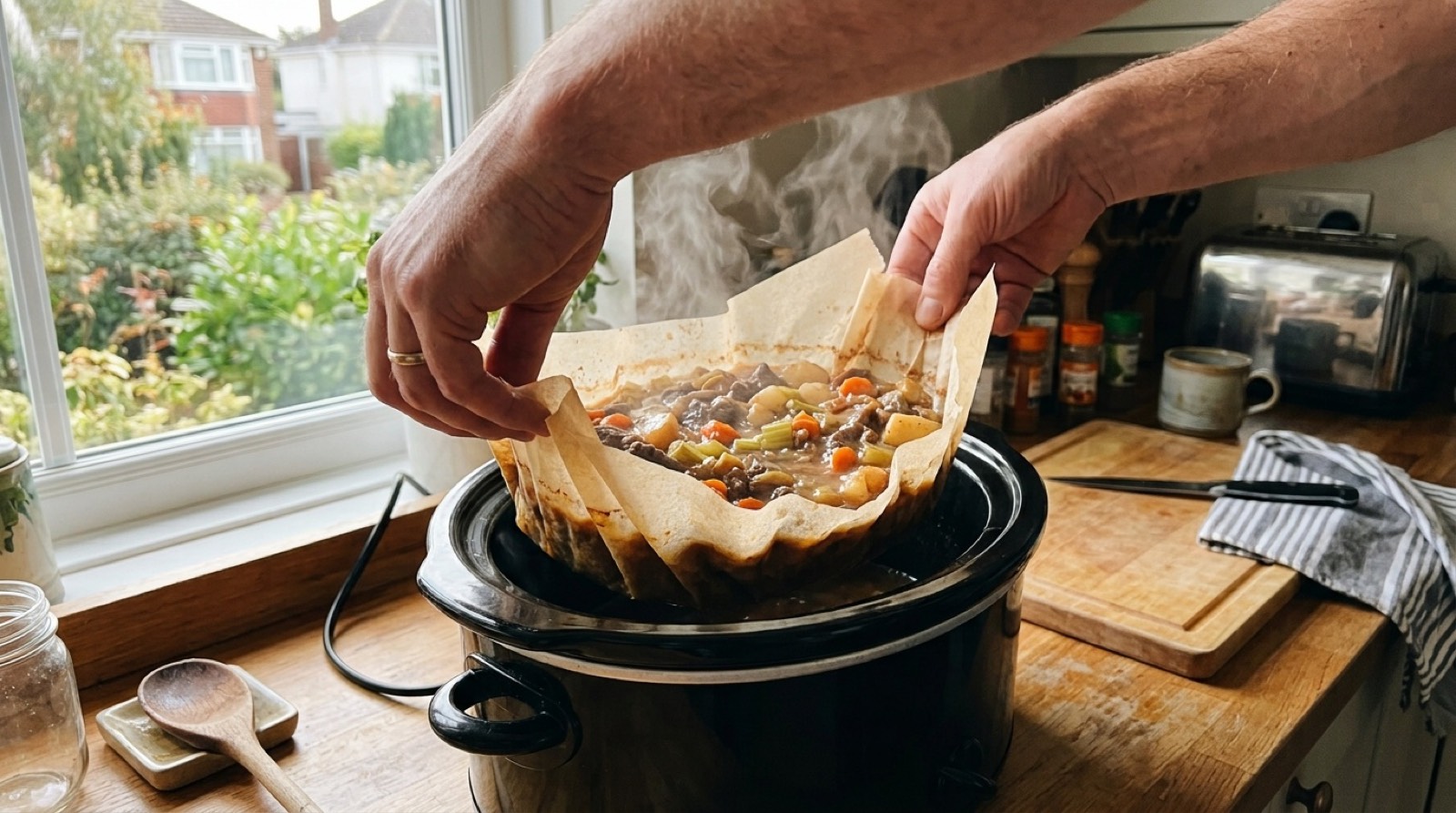
Seven of the twelve rows above are bound with cheese or egg, and both of them weld to ceramic over five hours. That is the one place in this niche where a liner pays for itself: the dish lifts out whole and the pot needs a rinse instead of a night of soaking.
The Three Rules That Make Any Casserole Work Here
The two No rows are not a failure of the pot, they are the absence of dry heat. If most of what you cook lives in those rows, the machine that covers both is a slow cooker with a crisping lid — slow underneath, grill on top, one pot.
 Pin it
Cut the liquid by a third
An oven casserole loses a lot of moisture to evaporation over an hour at high heat. A slow cooker loses almost none — the steam condenses on the lid and drips back. Recipes transferred without adjusting come out soupy every time. Take a third out and thicken at the end if needed.
Starch goes in late, or not at all
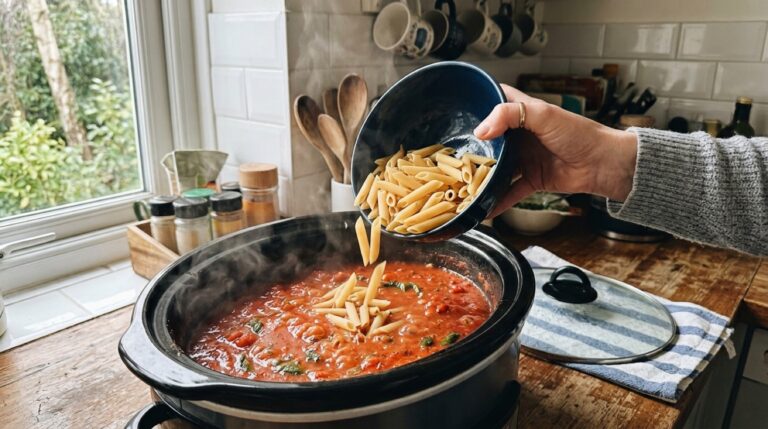
Pasta and rice keep absorbing liquid until they fall apart. Rice tolerates about four hours with a measured amount of stock; pasta rarely tolerates more than twenty minutes. Cooking either separately and folding it through at the end costs one pan and saves the dish. The shape-by-shape timings, if you would rather not dirty that pan, are in crockpot pasta recipes.
Cheese and cream in the last twenty minutes
Cheese cooked for six hours separates into oil and rubbery strands. Stirred in at the end it stays smooth, and you need less of it. If the recipe wants a browned cheese top, transfer the finished casserole to an oven dish and put it under the grill for five minutes — that is the only way to get a crust out of this method.
Layering: The Part That Actually Determines the Result
Heat comes from the walls and the base of the pot, not the top. That fixes the order:
- Bottom: hard vegetables and anything raw that needs the most heat — potato, carrot, onion.
- Middle: meat, so it cooks in steam rather than frying against the hot floor.
- Top: sauce, which drips down through everything.
- Last twenty minutes: cheese, cream, cooked pasta, anything green.
- At the table: the crunchy element — fried onions, breadcrumbs, tortilla chips, crumbled crackers.
A slow cooker will never crisp anything. Steam under a lid falls back onto the top, so the crunch has to be added at the table — that is not a workaround, it is the method.
That last line is the honest fix for the crust problem. A slow cooker will never crisp anything. Adding the crunch at serving gives you the texture contrast the oven version had, and it stays crunchy on the plate instead of going soft in the pot. The one thing that does change the slice is the shape of the pot: a rectangular casserole crock holds the layers in a 9×13 footprint, so a portion comes out square instead of scooped.
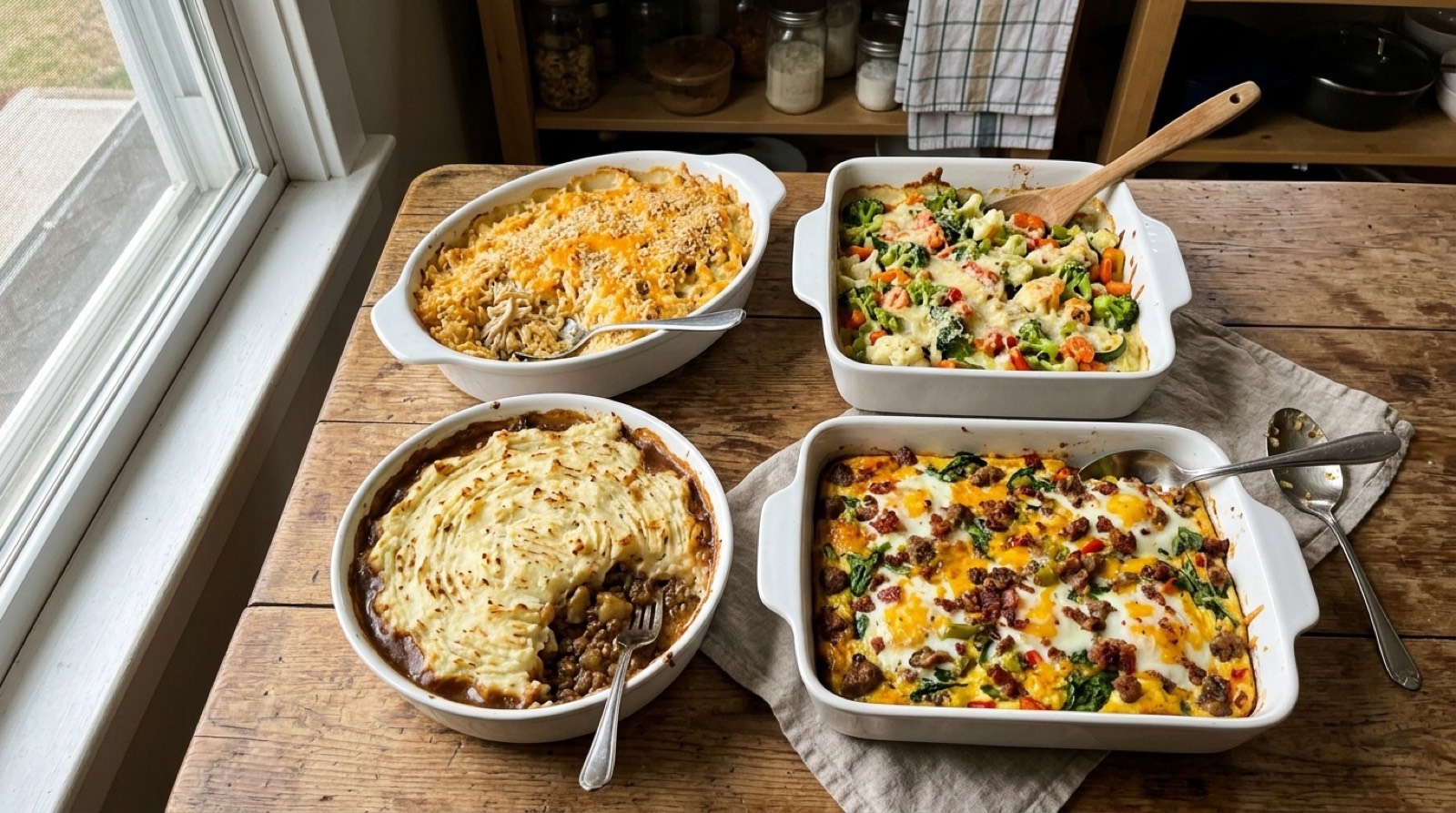
Four Casseroles, Fully Timed
 Pin it
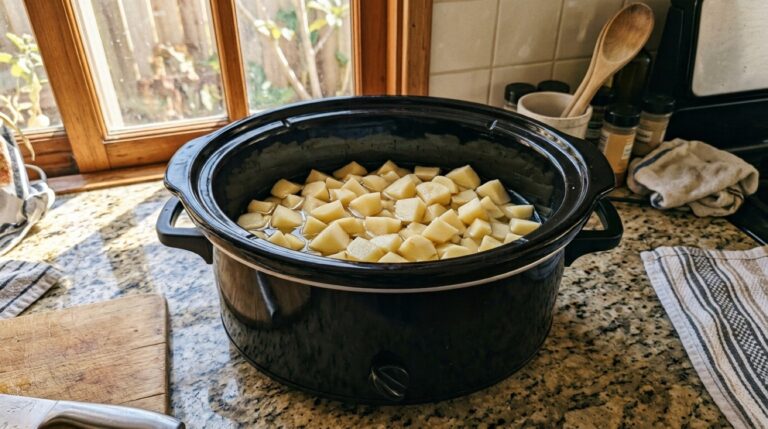
Hamburger and potato — LOW 6 h, 6 qt
Sliced waxy potatoes on the bottom, browned mince with onion above, a thin sauce of stock and tomato paste over the top. Cheese in the last twenty minutes. Feeds four with leftovers.
Chicken, rice and mushroom — LOW 4 h, 6 qt
Long-grain rice with exactly one and a half cups of stock per cup of rice, thighs on top, mushrooms added at the halfway mark. Do not open the lid before the three-hour mark or the rice loses the steam it needs.
Enchilada casserole — LOW 4–5 h, 6 qt
Corn tortillas layered with shredded chicken, beans and enchilada sauce. Cheese on top for the last twenty minutes; coriander and lime at the table.
Breakfast egg casserole — LOW 3 h, 6 qt
Eggs, milk, cubed bread, sausage, peppers. Three hours and no more — eggs held longer weep and go rubbery. This is the casserole most improved by a liner, because egg welds itself to ceramic.
Slow cooker liners
Casseroles are the category where clean-up gets genuinely unpleasant: cheese and egg bake onto the ceramic over five hours and need soaking overnight. A liner turns that into lifting it out.
See liners that fit a 6-quart pot →Crockpot Casserole FAQ
Can you cook a casserole in a slow cooker?
Yes, if the casserole does not depend on a browned top or on pasta staying firm. Meat, bean and root-vegetable casseroles transfer directly at 5–6 hours on LOW. Reduce the liquid by about a third from the oven version.
Why is my crockpot casserole watery?
Nothing evaporates under the lid, and the vegetables release their own liquid on top of what you added. Cut the liquid at the start, and run the last 30–45 minutes with the lid off on HIGH if it is still thin.
Can I put uncooked pasta in a slow cooker casserole?
Only for the last fifteen to twenty minutes on HIGH, and only with plenty of liquid. Anything longer and it turns to paste. No-boil lasagne sheets are the exception — they are designed to absorb liquid slowly and work over four hours.
How do I get a crispy top?
You cannot, in the pot. Transfer the finished casserole to an oven dish and grill it for five minutes, or add the crunchy topping at the table. Both work; steam under a lid means the third option does not exist.
How long does a casserole take in a crockpot?
Most are done in 5–6 hours on LOW, with egg-based ones at 3 and rice-based ones at 4. HIGH is roughly half, but layered dishes cook more evenly on LOW. In a pressure cooker the same 5–6 hours divides by about twelve, roughly 25–30 minutes at high pressure — the conversion table is in Instant Pot recipes.
If the casserole is really a soup with a lid on, the times are in crockpot soup recipes. For the chicken timings that decide the rice-and-chicken version, see crockpot chicken recipes.
See slow cooker liners →