Folk flower design has been around for centuries, but the digital craft market discovered it about five years ago and hasn’t stopped since. The reason is simple: these motifs are immediately recognisable, infinitely adaptable, and they look equally at home on a Cricut-cut birthday card and a POD tote bag.
The challenge is that “folk flower” covers a huge range of traditions — Eastern European, Scandinavian, Mexican, Pennsylvania Dutch — and their visual languages are genuinely different. Buying a pack without knowing which tradition it draws from often means getting designs that don’t work together.
This guide covers the key styles, which SVG bundles work best for Cricut cutting, and which printable patterns suit paper crafts and wrapping — plus how to choose matching fonts that don’t undermine the folk aesthetic.
What is folk flower design? A stylised floral motif tradition rooted in Eastern European, Scandinavian, and other folk art cultures. Characterised by simplified, symmetrical flowers with bold outlines, flat or limited-gradient colour fills, and decorative leaves. Available as SVG (for Cricut cutting), PNG clipart, seamless pattern tiles, and digital paper in craft-specific bundles.
What Is Folk Flower Design and Where Does It Come From?
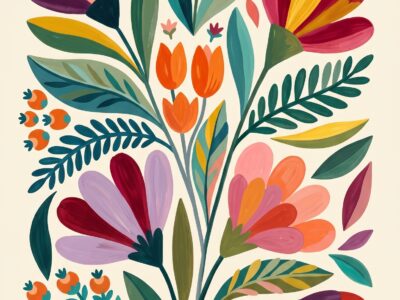
Folk flower design draws from several distinct traditions, each with a recognisable visual signature:
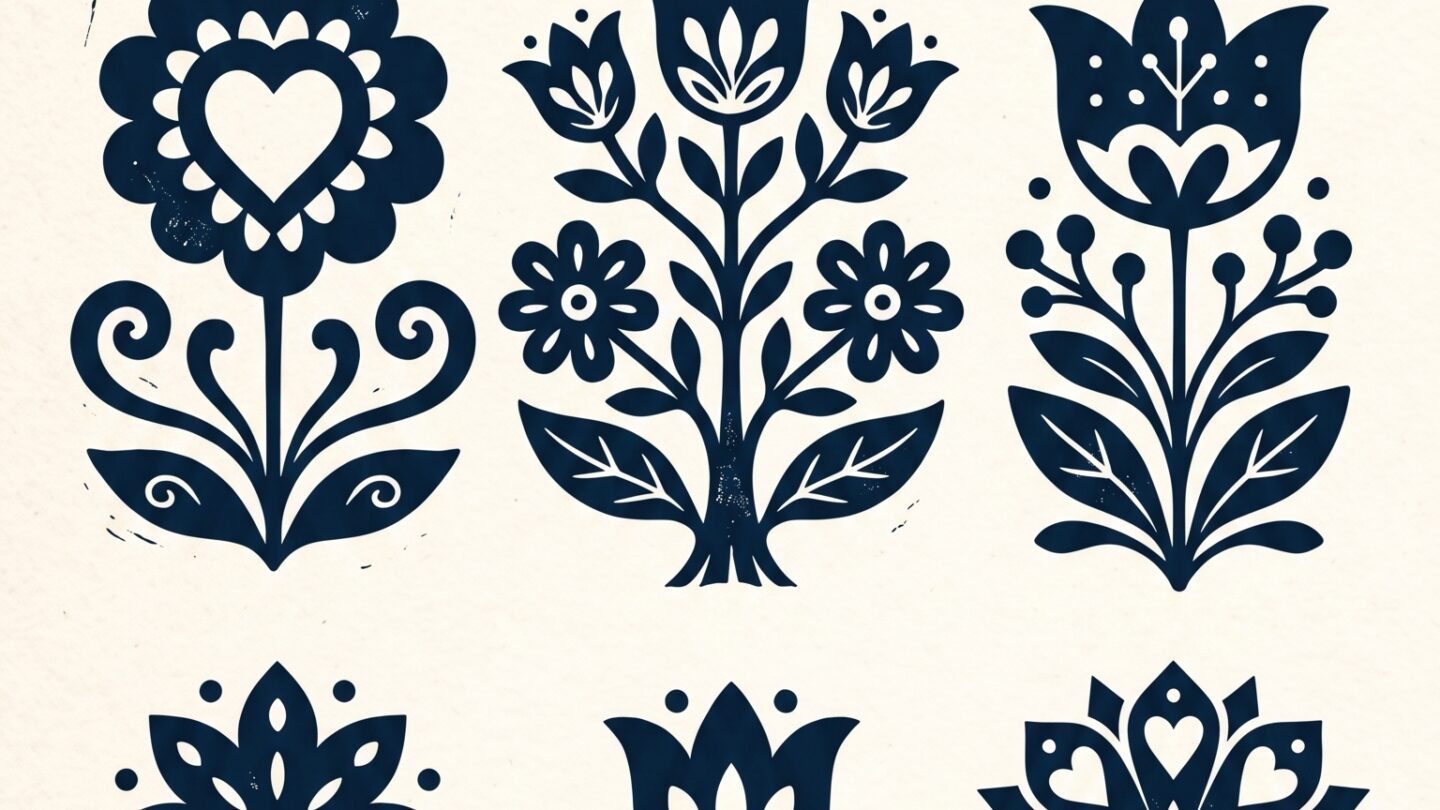
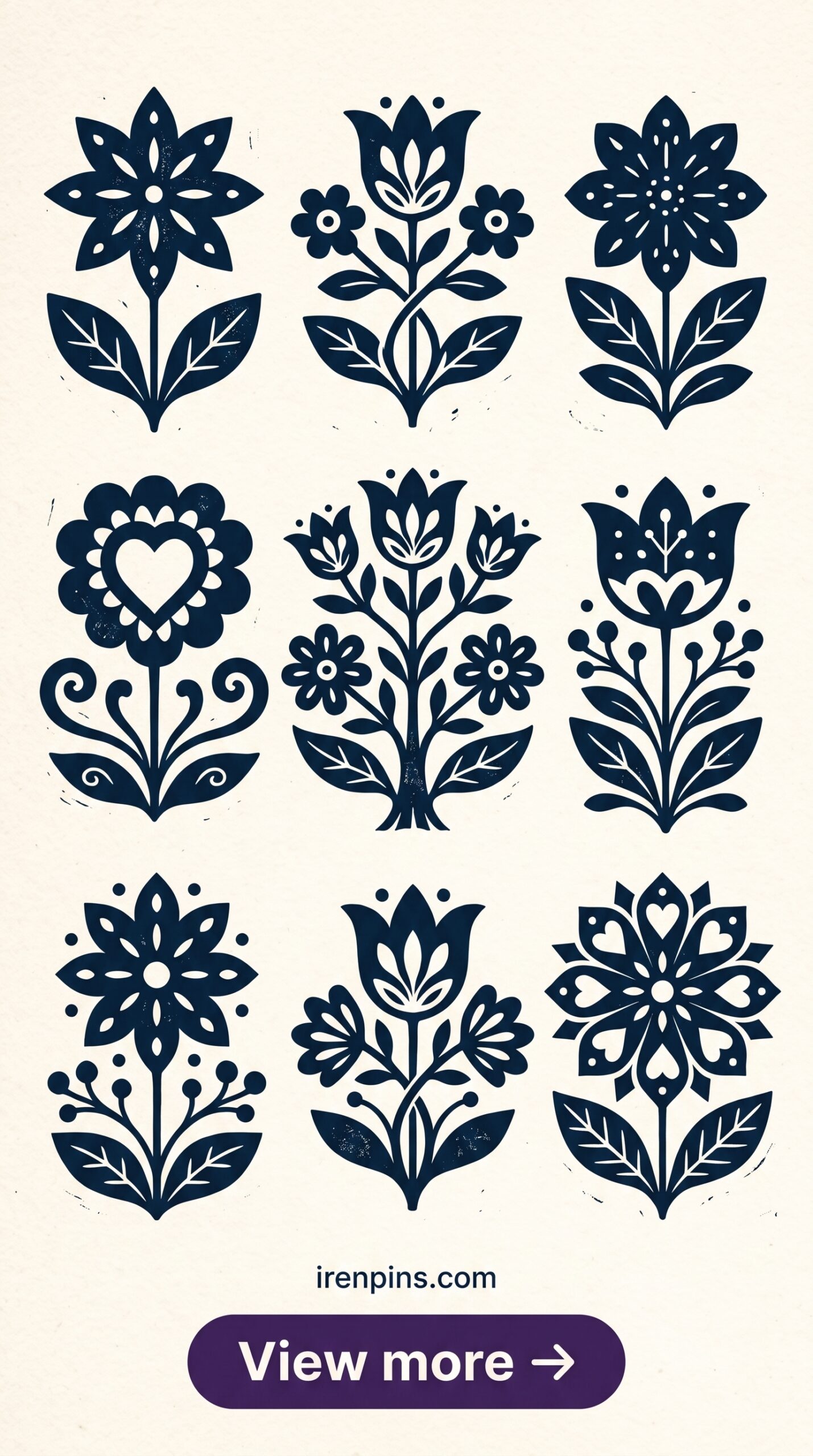
- Eastern European (Polish Wycinanki, Ukrainian folk art) — bold, graphic, often rotationally symmetric. Strong outlines, high-contrast colour combinations: red and black, cobalt and gold. Roosters, tulips, and stylised roses are common motifs alongside the flowers.
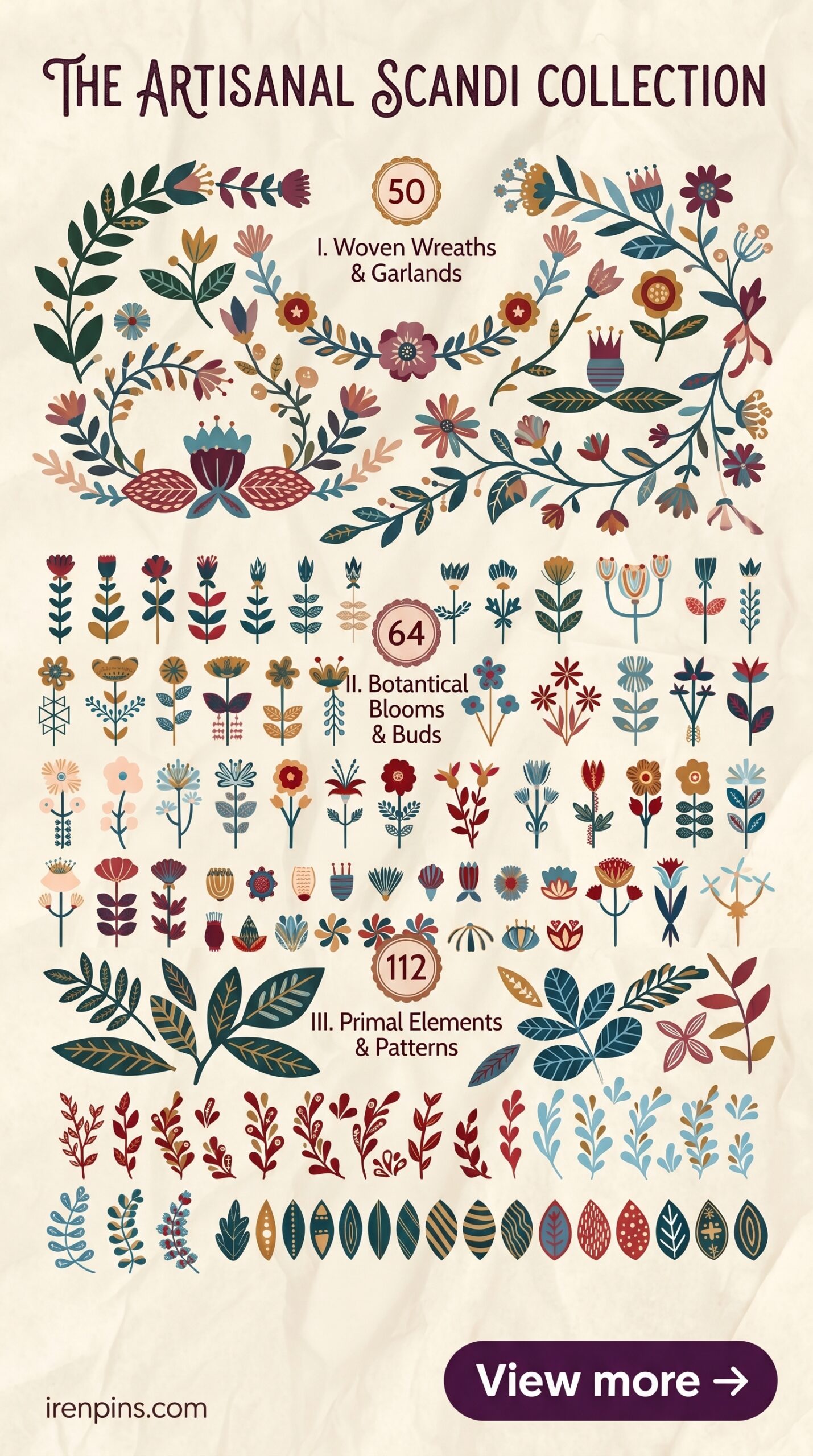
- Scandinavian (Norwegian Rosemaling, Swedish Dala) — more flowing, scroll-like. Roses with C-curve and S-curve brush strokes, softer colour transitions, often on painted wooden objects. The folk flower here is part of a larger decorative composition rather than a standalone motif.
- Pennsylvania Dutch — hex symbol-influenced, highly symmetric, with distelfink birds alongside floral elements. Tulips dominate. Colours are softer than Eastern European: dusty rose, sage green, cream.
Most commercial digital bundles mix these traditions without distinction. That’s fine for general craft use — but if you’re aiming for a specific regional look in your project, knowing the difference matters.
How Do Eastern European and Scandinavian Folk Florals Differ?
The visual difference comes down to line quality and colour approach:
- Eastern European — hard edges, flat fills, high-contrast. Scales well to SVG cutting because the shapes are clean and separate. Colours are saturated: cobalt, crimson, black, gold.
- Scandinavian — flowing lines, sometimes brush-textured, softer palette. Harder to cut cleanly on Cricut because the fine scroll strokes can be fragile at small sizes. Better as PNG clipart or digital paper.
For Cricut users specifically: Eastern European-style folk flower SVGs cut better. For scrapbooking and paper crafts where you’re printing rather than cutting: Scandinavian florals often produce more elegant results, especially for greeting cards and wrapping.
Which SVG Folk Flower Bundles Work Best for Cricut Cutting?
For Cricut cutting, four things matter beyond the design quality itself:
- Minimum stroke width — any element thinner than 1.5mm at your intended cut size will tear. Check that the SVG has no hairline details.
- Separated layers — each colour as a separate layer means you can do multi-layer cuts. A single-layer SVG limits you to monochrome cuts.
- White fill version included — for iron-on HTV, you need a reversed/white version. Quality bundles include both.
- Format compatibility — SVG opens directly in Cricut Design Space. DXF is the alternative. Avoid EPS-only bundles for Cricut work.
The files below are instant-download SVG and PNG bundles from Creative Fabrica — commercial licence included, Cricut-compatible, available on the free and All Access plans. Download, import to Design Space, and cut directly.
Folk Flower SVG Cut Bundle
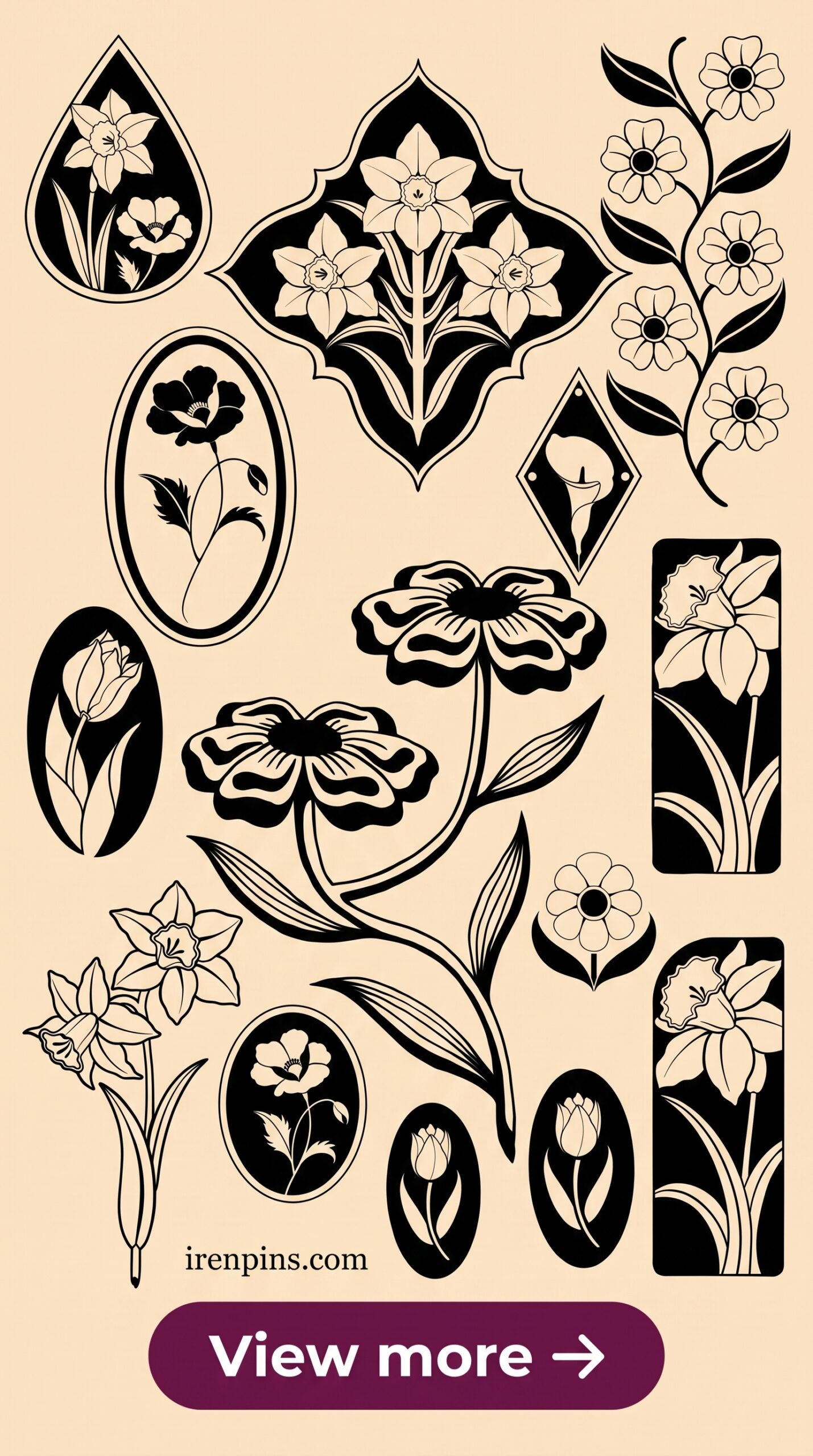
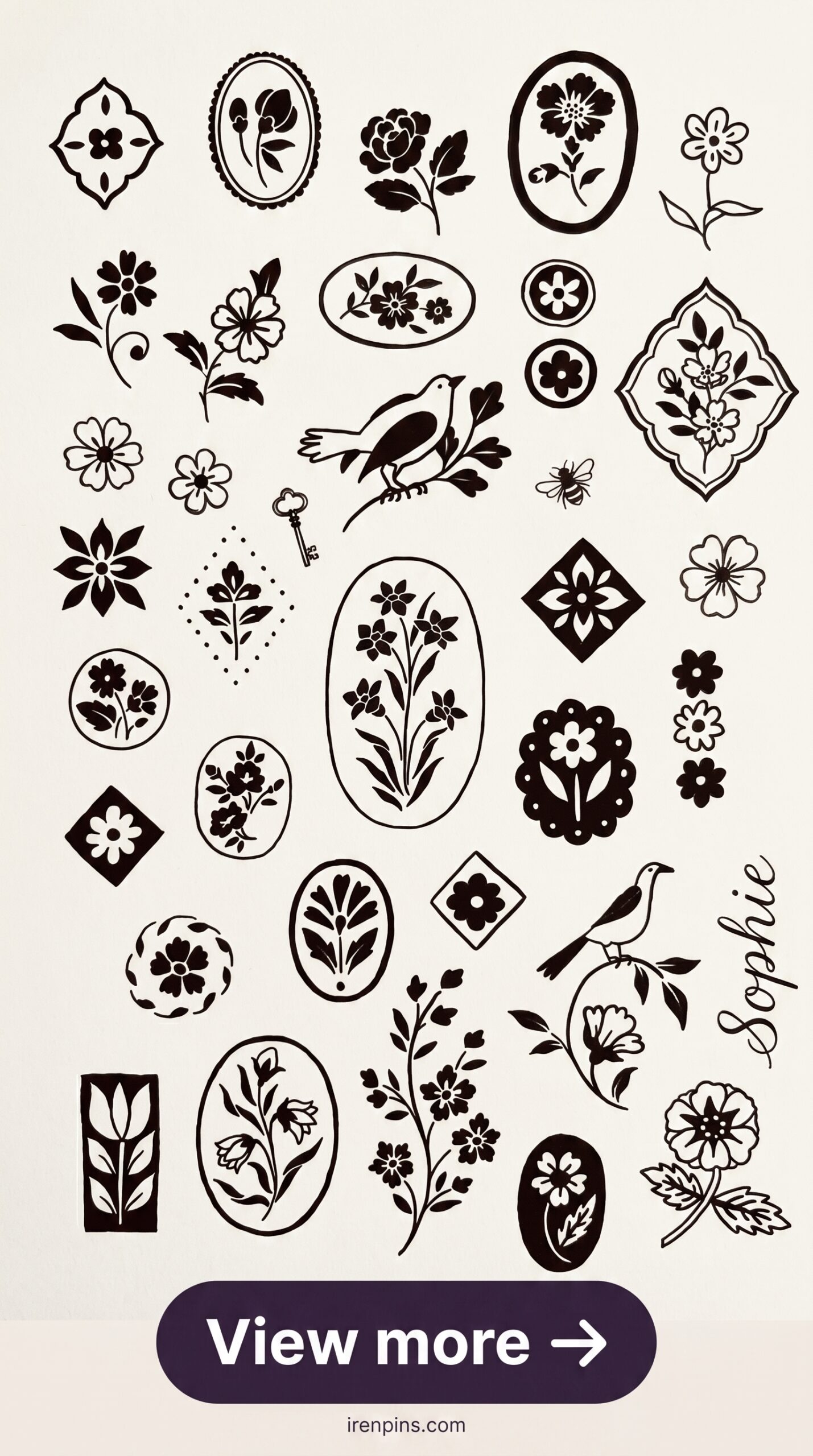
Clean-edge folk florals in black and white — the high-contrast design cuts without fine-line fragility issues at standard Cricut sizes.
Eastern European Folk Floral Pattern
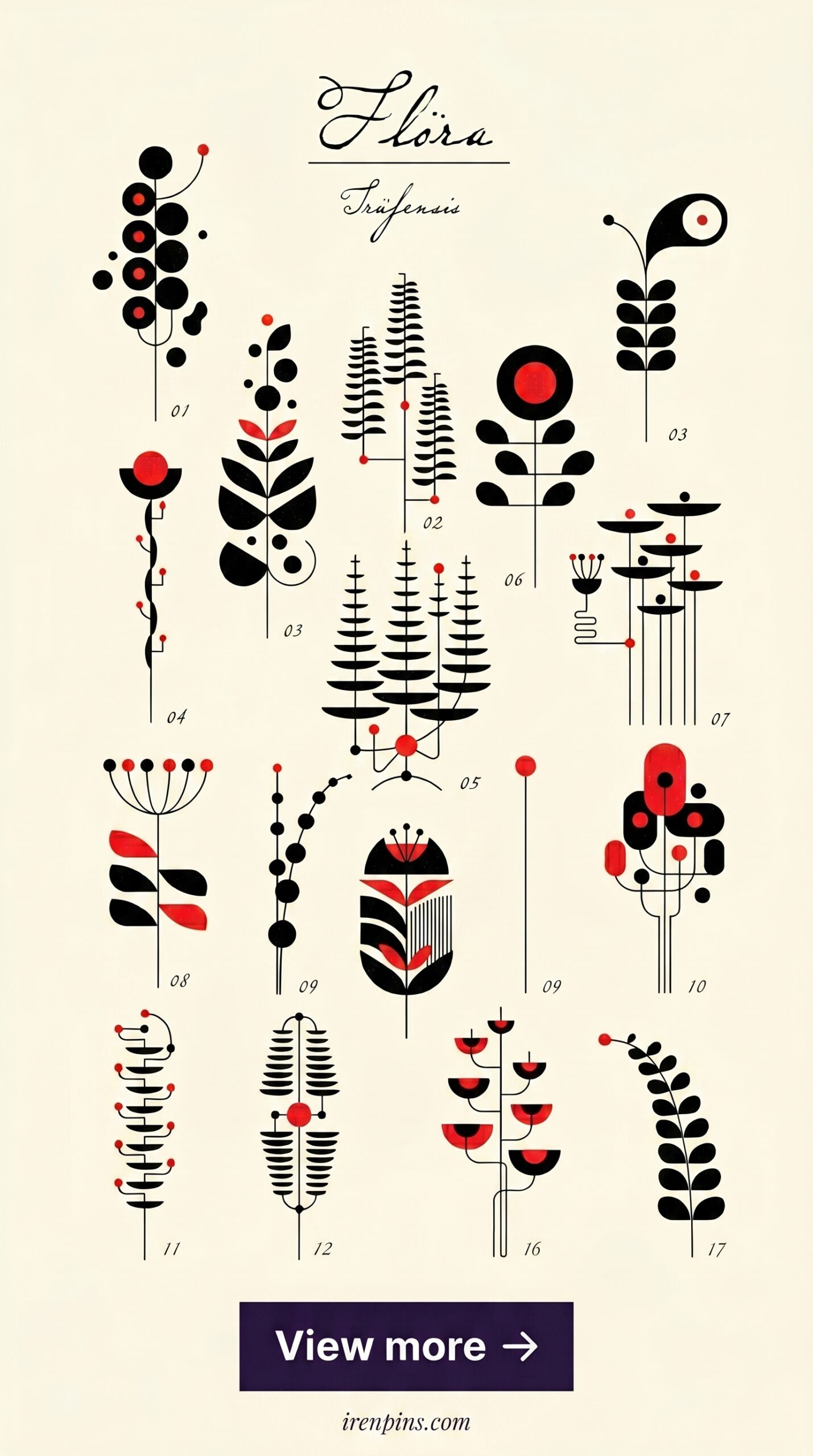
Cobalt and crimson palette on dark ground — the high-contrast Eastern European style that cuts cleanly and prints with visual weight.
Browse Folk Flower Designs on Creative Fabrica →
Which Printable Folk Floral Patterns Work Best for Cards and Wrapping?
For printing rather than cutting, the priorities shift: you want visual complexity and print resolution over cutting compatibility.
- Seamless repeat patterns — for wrapping paper and fabric, a seamless tile that tiles without visible seams at print size. Most commercial folk floral patterns are seamless by default.
- High-detail PNG clipart — for greeting cards, you want large individual folk flower elements with transparent backgrounds, so you can position them precisely over text.
- Digital paper sheets — pre-composed A4 or 12×12 backgrounds with folk floral motifs already placed. Print directly, no design work required.
Which Fonts Match Folk Art Designs?
Font choice can either reinforce the folk aesthetic or completely undermine it. The mismatch that happens most often: a beautiful Eastern European folk floral paired with a thin, neutral sans-serif. The contrast doesn’t feel intentional — it just feels unfinished.
What actually works:
- Hand-lettered scripts with slightly irregular letterforms — not polished calligraphy, but the kind of hand-painted signage that would appear on a market stall
- Display serifs with ink-trap or slab details — wood-type inspired, solid, bold
- Decorative fonts with embedded floral ornaments — available on Creative Fabrica as folk art font duos that include both a display face and a matching ornament set
What doesn’t work: thin modern sans-serifs, geometric type, script fonts that feel wedding-calligraphy (too refined). Folk art is handmade in spirit — the typography should echo that.
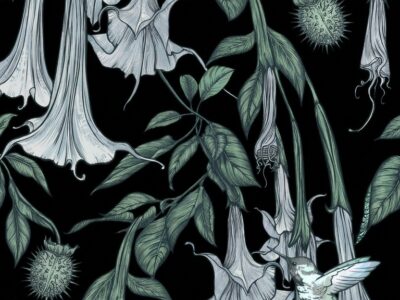
Looking for the broader folk art aesthetic? Our floral folk art style guide covers the full range of download types — digital paper, clipart, font duos — and our folklore botanical pattern article explores the darker, more mystical end of the folk botanical tradition.
Download Folk Flower Designs on Creative Fabrica →
Key Takeaways
- Folk flower SVGs and PNG bundles are available on Creative Fabrica’s free plan — no subscription needed to start downloading
- For Cricut cutting: Eastern European-style folk florals (clean edges, flat fills, minimum 1.5mm stroke width) cut more reliably than scroll-heavy Scandinavian styles
- For printing: seamless repeat patterns and high-detail PNG clipart on transparent backgrounds give the most flexibility for card and wrapping projects
- Font pairings matter: hand-lettered scripts or bold display serifs with folk detail reinforce the aesthetic — thin modern sans-serifs undermine it
Frequently Asked Questions
What is folk flower design?
A stylised floral tradition rooted in Eastern European, Scandinavian, and other folk art cultures. Characterised by simplified, symmetric flowers with bold outlines and flat colour fills. Available as SVG (Cricut-ready), PNG clipart, seamless patterns, and digital paper bundles for craft use.
Are folk flower SVGs compatible with Cricut?
Yes — SVG files open directly in Cricut Design Space. For best results, use Eastern European-style folk flower SVGs with clean edges and minimum 1.5mm stroke width at your intended cut size. Avoid designs with hairline decorative details, which tend to tear at smaller cut sizes.
What is the difference between Eastern European and Scandinavian folk floral styles?
Eastern European folk florals (Polish, Ukrainian) have hard edges, flat fills, and high-contrast saturated colours — cobalt, crimson, black. Scandinavian folk florals (Rosemaling, Dala) have flowing brush-stroke lines and softer palettes. Eastern European styles cut better for Cricut; Scandinavian styles print better for paper crafts.
Can I use folk flower designs for commercial Etsy products?
Creative Fabrica folk flower files include a commercial licence — yes, you can use them in Etsy products, POD listings, and client work. Check individual listings for any specific restrictions, but commercial use is the standard across the platform.
Which fonts work with folk flower designs?
Hand-lettered scripts with irregular letterforms, bold display serifs with slab or ink-trap details, or decorative fonts with embedded floral ornaments. Avoid thin modern sans-serifs and refined calligraphy scripts — they conflict with the handmade visual spirit of folk art.