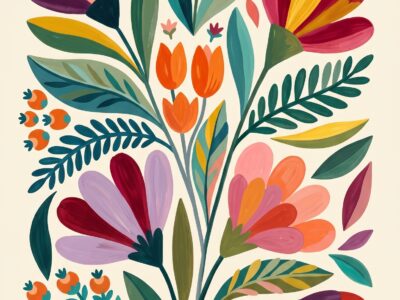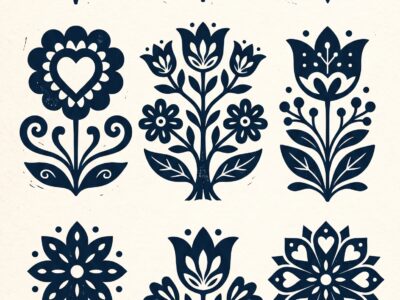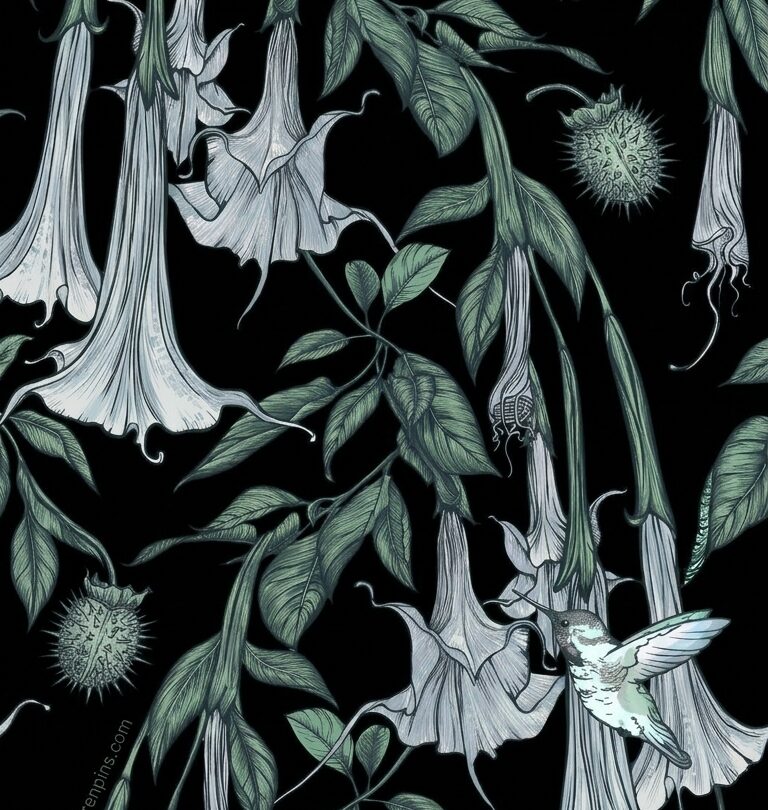
Folklore botanical pattern occupies the intersection of three aesthetics that don’t usually share shelf space: dark academia’s moody intellectual tone, folk art’s hand-painted vitality, and botanical illustration’s obsessive attention to plant structure. When it works, the result is genuinely unlike anything else in the digital craft market.
When it doesn’t work, it looks like someone dropped a gold-foil botanical overlay on top of a dark background and called it folklore. The difference is whether the plant motifs have cultural grounding — actual folk art influence — or are just dark-palette botanical prints with a folklore label.
What is a folklore botanical pattern? A seamless or compositional pattern combining folk art floral motifs with dark botanical illustration — herbs, mushrooms, mystical flora — on deep-toned backgrounds. Sits at the intersection of dark academia, folk art, and botanical illustration traditions. Available as seamless tiles, digital paper, and clipart bundles with commercial licence on Creative Fabrica.
What Is a Folklore Botanical Pattern?
The defining characteristics:
- Folk motif vocabulary — stylised flowers, birds, or creatures drawn in a folk tradition (not naturalistic botanical illustration), but placed alongside genuinely botanical elements: specific herbs, mushroom species, identified flora
- Dark or richly saturated background — midnight green, deep navy, near-black. The darkness is the palette, not an overlay effect.
- Gold or warm-metallic accent lines — the folk art gold tradition, applied to botanical subjects rather than decorative objects
- Cultural narrative layer — the plants chosen aren’t random. Chamomile, mugwort, belladonna, St John’s wort — herbs with folkloric significance, not just aesthetically appealing flowers
A dark botanical print without folk motifs isn’t folklore botanical — it’s dark botanical illustration. A folk floral pattern without the dark-palette, herb-specific vocabulary isn’t folklore botanical — it’s folk art. Both are adjacent, but neither is the same thing.

What Is the Difference Between Dark Floral and Folklore Botanical Patterns?
Dark floral: any floral pattern on a dark background. Could be a photographic rose print, a vector peony illustration, a watercolour arrangement. Dark background = dark floral.
Folklore botanical: a specific intersection. The flowers are stylised in a folk art manner. The subjects are botanically and culturally specific (herbs, mushrooms, plants with folk meaning). The palette draws from a cultural tradition (Eastern European, Celtic, or similar) rather than just being dark.
In practice: if you can describe the plants in the pattern by species name, and the motif style has folk art characteristics (symmetry, bold outline, decorative stylisation), it’s folklore botanical. If the pattern is just pretty dark flowers, it’s dark floral.

What Are the Best Uses for Folklore Botanical Patterns?
Four formats where this aesthetic works particularly well:
- Wallpaper and large-format print — the density of folklore botanical patterns rewards scale. Small, the detail gets lost. Large, the motif vocabulary reads clearly and the cultural references land.
- Wrapping paper and gift packaging — one of the stronger commercial applications because the aesthetic is distinctive enough to be gift-worthy while dark enough to work across genders and occasions.
- Journal and planner covers — folklore botanical paper as a cover for a hand-bound journal or Midori-style notebook. The dark palette contrasts well with light interior pages.
- Scrapbook accent papers — as a border or feature paper in dark-themed scrapbook layouts, not as a full-background tile (too busy).
All files below are instant-download seamless pattern and digital paper files from Creative Fabrica — commercial licence included, 300 DPI, compatible with Photoshop, Canva, and Illustrator.

Folk Botanical Seamless Pattern
Bird and botanical motifs in a folk art style — the bird-and-flower composition is a direct reference to Eastern European folk tradition applied to botanical subject matter.

Dark Folklore Botanical Clipart Set
Animals and botanical motifs in black outline — the folk art illustration approach applied to dark subject matter, transparent PNG for layering.
Browse Folklore Botanical Patterns →
How Do You Pair Folklore Botanical Patterns with Gothic Fonts?
Typography for folklore botanical work needs to sit within the same cultural register as the patterns — neither too refined (modern calligraphy undermines the folk roughness) nor too crude (distressed grunge fonts lose the botanical elegance).
What works best:
- Old-style serifs with organic quality — Cormorant Garamond, EB Garamond, or similar. The old-press character harmonises with the folk handmade quality.
- Display fonts with botanical ornament sets — font duos that pair a display face with a matching botanical dingbat or ornament font. Creative Fabrica carries several specifically designed for this aesthetic.
- Cinzel or similar Roman-inspired display — the classical letterform quality reads as antiquarian without being gothic-heavy.
What doesn’t work: modern calligraphy scripts (too wedding-adjacent), heavy blackletter (too metal-band), thin geometric sans-serifs (wrong register entirely).

Looking for adjacent aesthetics? Our floral folk art style guide covers the broader folk art palette and digital paper packs, and our mystical botanical illustration article focuses on the illustration style itself — inked, watercolour, linework — rather than pattern format.
Download Folklore Botanical Patterns on Creative Fabrica →
Key Takeaways
- Folklore botanical patterns combine folk art motif vocabulary with dark-palette botanical illustration — distinct from both dark floral prints and standard folk art
- Creative Fabrica free plan includes rotating folklore botanical and dark botanical downloads with commercial licence
- Works best at scale — wallpaper, gift wrap, journal covers — rather than as small-format background tiles
- Font pairings: old-style serifs or display fonts with botanical ornament sets; avoid modern calligraphy and heavy blackletter
Frequently Asked Questions
What is a folklore botanical pattern?
A seamless or compositional pattern combining folk art floral motifs with botanical illustration elements — specific herbs, mushrooms, and culturally significant plants — on dark or richly saturated backgrounds. Sits at the intersection of dark academia, folk art, and botanical illustration traditions.
What is the difference between dark floral and folklore botanical?
Dark floral is any floral pattern on a dark background. Folklore botanical is specific: folk art-stylised motifs, botanically identified plants, and cultural narrative in the motif selection (herbs with folklore significance). The folk motif vocabulary and cultural grounding are what distinguish it.
What projects work best with folklore botanical patterns?
Large-format applications: wallpaper, gift wrap, journal covers. The density rewards scale. As scrapbook backgrounds the detail competes with content — use as feature or border paper instead. Planner covers and notebooks in the Midori/traveller’s notebook format also work well.
Where can I download folklore botanical patterns with commercial licence?
Creative Fabrica is the best source. Search “dark botanical pattern,” “folk botanical seamless,” or “botanical folk art” — the term “folklore botanical” is newer and not yet consistently used as a product tag. Commercial licence is included on all CF files.