The fey realm aesthetic isn’t just a visual style — it’s a whole worldbuilding approach. Where dark fairycore focuses on the creatures and motifs of fae folklore, fey realm takes you deeper: into the geography, architecture, and logic of a world where the rules are different. If your moodboard involves ancient forests that shouldn’t exist, impossible starlight, and the sense of a civilization older than human memory, this is the aesthetic.
Fey realm sits at the more immersive, world-building end of the fae aesthetic spectrum. It borrows heavily from high fantasy art direction — think Tolkien’s Lothlórien crossed with Celtic heritage imagery and bioluminescent forest photography. It’s popular with readers of fantasy fiction, TTRPG players building fae courts, and artists creating digital work that captures a sense of genuine otherworldliness.
Below: what defines the fey realm aesthetic visually, its key design elements, and where to find digital assets that capture that sense of ancient, beautiful strangeness.
The Fey Realm Aesthetic Explained
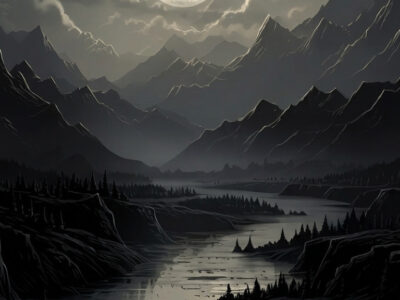
The fey realm aesthetic visualises the otherworld of Celtic and British folklore — a parallel world overlapping our own, characterized by impossible beauty, ancient timelessness, and an unsettling sense of rules that don’t match human logic. Key visual elements: ancient forest architecture, bioluminescent or moonlit foliage, Celtic geometric patterns, mist and starlight, and a palette of deep green, silver, and deep purple against near-black backgrounds. It’s used in fantasy art, TTRPG worldbuilding, digital craft, and atmospheric photography.
Visual Hallmarks of the Fey Realm
Six visual elements appear consistently across fey realm art and define it as distinct from other dark fantasy aesthetics:
- Ancient light: Starlight, moonlight, bioluminescence, and will-o’-wisps — the fey realm is never lit by sunlight; its illumination is older and stranger
- Celtic geometric patterns: Knotwork, spirals, and interlace — these signal an ancient, non-human civilization with its own mathematics
- Impossible flora: Trees too large, too old, or the wrong colour; flowers that glow; moss that moves; fungal networks that pulse with light
- Architecture without builders: Archways of living trees, stairs that spiral into fog, stone circles that predate memory — structures that grew rather than were built
- Temporal displacement: A visual sense that time runs differently — clocks without hands, hourglasses with reversed flow, eternally autumnal leaves
- The veil: Mist, translucent layers, and in-between spaces — the fey realm is never fully visible; it’s always glimpsed through something
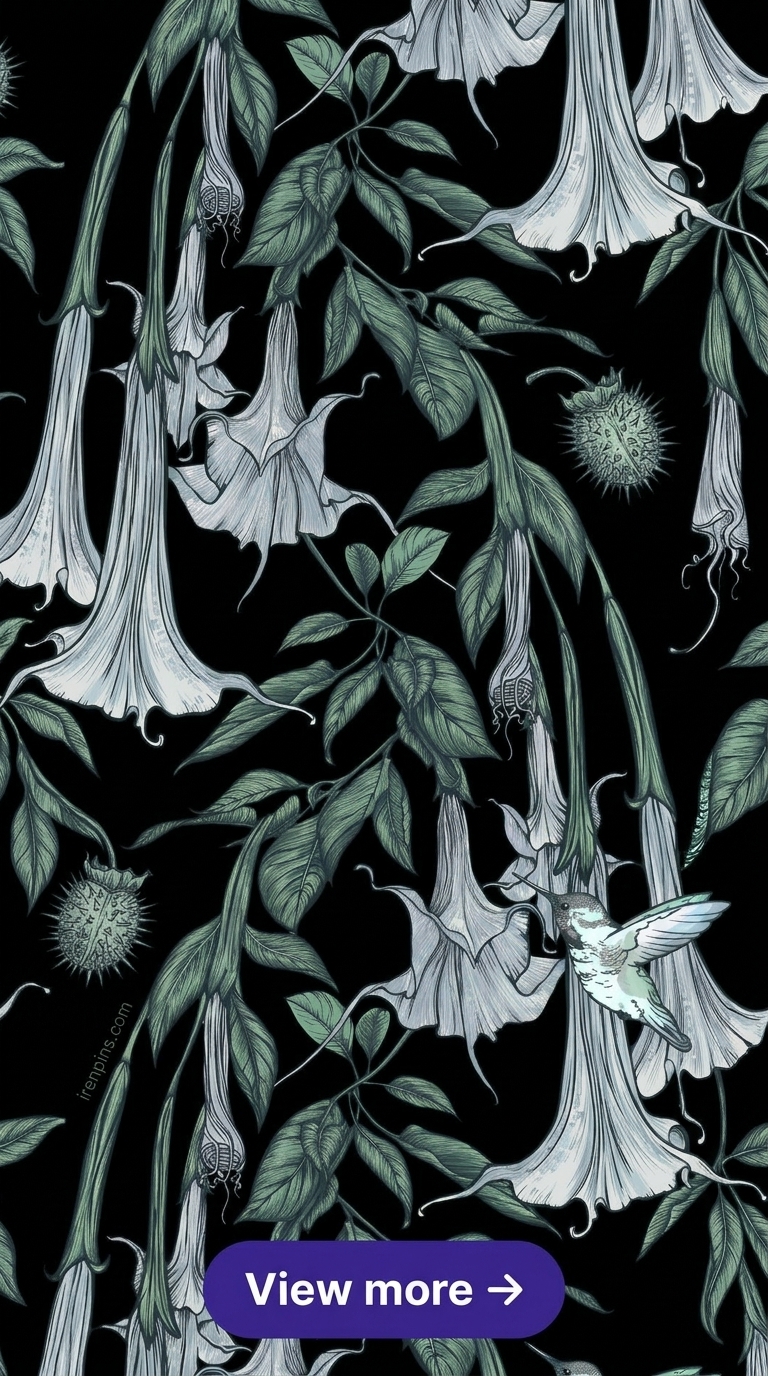
Digital Paper Bundles for Fey Realm Projects
Digital papers are particularly well-suited to fey realm projects because the aesthetic is fundamentally about atmosphere and texture. The most useful types:
- Misty forest textures: Deep greens with atmospheric haze — work as journal backgrounds, planner covers, and layering elements in digital art
- Celtic interlace patterns: Repeating geometric knotwork on dark backgrounds — excellent for book covers, game materials, and packaging
- Starlit backgrounds: Deep night sky with unusual star formations or impossible constellations — used for art prints and digital scrapbooking
- Bioluminescent patterns: Glowing spots, trailing light paths, mushroom-glow — technically complex to illustrate well; good pre-made options save enormous time
On Creative Fabrica, searching for “dark forest digital paper” or “Celtic digital paper” surfaces the most relevant results. The misty purples and moonlit greens of fey realm are less common than standard botanical dark, so filtering by colour helps. See our dark forest aesthetic wallpaper guide for more background options in this palette.
Best for layering & digital art
Otherworldly Botanical Clipart
Bioluminescent flowers, glowing fungi, and impossible plant specimens — PNG clipart for layering in digital art, journaling, and game design. Deep jewel tones and light-emission effects.

Best for titles & art prints
Fey Display Fonts
Celtic letterforms, uncial scripts, and ancient-feeling display fonts — for TTRPG materials, book covers, art print quotes, and any project that needs to look genuinely otherworldly.
SVG & Clipart for Fae DIY Projects
The fey realm aesthetic has a strong DIY craft following — particularly in TTRPG prop-making, bookbinding, and handmade journal communities. SVG files for cutting machines and PNG bundles for paper craft:
- Celtic knotwork SVGs: For laser cutting, vinyl cutting, and embossing — look for files with separated knot paths that can be layered for depth effects
- Rune and sigil sets: Both historically-based (Elder Futhark, Ogham) and invented fae scripts — popular for TTRPG handout props and journal decoration
- Forest gate / arch shapes: Stylised archway silhouettes formed by tree branches — classic fey realm portal imagery, works beautifully as a Cricut cut
- Moon phase collections: Full moon through crescent in decorative frames — the moon governs fey time, so this motif appears constantly
For the broadest access to fey-adjacent SVG bundles, Creative Fabrica’s “fantasy” and “Celtic” categories are the most productive search areas. Their cutting machine filter removes any non-SVG results from the view. For more inspiration on the fae visual world, our dark fairycore guide covers the creature and motif side of this aesthetic.
Fey Fonts: Typography for the Otherworld
Typography is what makes fey realm materials feel genuinely different from generic fantasy. The right font suggests a civilization with its own writing traditions:
- Uncial scripts: Medieval Irish letterforms — the actual writing system associated with Celtic culture. Instantly recognisable but not overused outside Celtic-specific design
- Celtic display: Modern fonts that abstract Celtic knotwork into letterforms — more readable than strict historical uncial while keeping the cultural reference
- Spaced, fine-lined serifs: Not explicitly Celtic but with an ancient quality — often used for body text in fantasy publishing where full uncial would reduce readability
- Invented scripts: Constructed writing systems that look like they have their own grammar — popular in TTRPG materials for in-world documents and maps
Key Takeaways
- Fey realm is a worldbuilding aesthetic, not just a visual style — it visualises a parallel world with its own geography, architecture, and logic
- Key visual hallmarks: ancient light sources (no sunlight), Celtic knotwork, impossible flora, architecture grown not built, temporal displacement, perpetual mist
- Core palette: deep green, silver, misty purple, near-black, with bioluminescent accent glow
- Best digital asset types: misty forest digital papers, Celtic interlace patterns, otherworldly botanical clipart, Celtic display fonts
- Strong craft community: TTRPG props, bookbinding, handmade journals — SVG bundles especially valuable here
- Typography matters: uncial scripts and Celtic display fonts signal genuine otherworldliness; avoid geometric sans-serif
Frequently Asked Questions
What’s the difference between fey realm and dark fairycore?
Dark fairycore focuses on the creatures, motifs, and mood of fae mythology — mushrooms, moths, crystals, folk warnings about the fae. Fey realm is more immersive and worldbuilding-focused: it visualises the place itself, its geography, architecture, and logic. Fey realm often appears in TTRPG and fantasy fiction contexts; dark fairycore is more prevalent in personal aesthetics and craft communities.
Is fey realm aesthetic the same as Celtic aesthetic?
They overlap substantially. Celtic aesthetic draws directly on historical Celtic art traditions — knotwork, spirals, specific colour palettes. Fey realm uses Celtic visual language as one of its primary sources but adds fantasy and folklore elements that aren’t historically Celtic (bioluminescence, invented scripts, impossible flora). Think of Celtic as the historical source and fey realm as what fantasy has made with it.
What colours define fey realm?
Deep forest green, silver (not gold — silver is moonlit, not sunny), misty blue-grey, deep purple, and near-black form the core. Accent glow colours: bioluminescent teal, amber from will-o’-wisps, and cold white starlight. Warm golds are less common than in, say, dark academia; when they appear they tend toward antique bronze rather than bright gold.
Can I use fey realm assets for TTRPG commercial products?
Check each asset’s licence individually. Creative Fabrica’s standard commercial licence covers most digital and print-on-demand uses. For TTRPG PDFs sold on platforms like DriveThruRPG or Itch.io, this typically falls under “digital products” — but read the specific licence on any asset you plan to use commercially, as terms vary between creators.
What makes fey realm different from general dark fantasy?
General dark fantasy encompasses a huge range — grimdark, gothic horror, sword-and-sorcery, dark epic. Fey realm is specifically defined by its fae, Celtic, and otherworld sources. It’s not scary in the horror sense; it’s uncanny and beautiful. The visual vocabulary (knotwork, misty forests, impossible light) is quite specific. Dark fantasy can be urban and industrial; fey realm is always ancient and natural.