Dark academia found the library first. Then it found the herbarium.
The crossover between dark academia and nature aesthetics produces something specific: the sensibility of scholarly observation applied to the natural world. Pressed botanical specimens as artefacts. Field notes as design elements. The forest as a subject of study rather than a backdrop for atmosphere.
Dark academia nature aesthetic combines the scholarly, book-and-library visual language of dark academia with botanical observation — pressed specimens, field notes, aged parchment, botanical illustration in sepia and deep moss tones. The palette runs sepia (#7A5A2E), aged parchment (#D4C4A0), deep moss (#3A4A2A), and deep brown (#4A3020). Best applied in journaling spreads, flat lay photography, and scrapbooking. Digital resources available on Creative Fabrica.
How Do Dark Academia and Nature Intersect?
Classic dark academia is interior — libraries, lecture halls, candlelit studies, stone corridors. The palette is sepia, charcoal, aged cream, deep burgundy. The references are books, ink, maps, architectural detail.
When it meets nature, the interior sensibility moves outside — but it takes its tools. The herbarium is a library. The field notebook is the journal. The pressed botanical specimen is the artefact. The forest is studied, not merely experienced.
This produces a distinct visual combination: aged paper and careful handwriting alongside organic specimens and natural textures. The sepia tones of the academic world and the deep greens of the forest coexist because they share the same quality of patient, careful observation.
Dark academia nature aesthetic is what happens when someone who loves old books also loves old forests. Both are archives. Both require patience.
What Is the Dark Academia Nature Colour Palette?
The palette bridges two existing systems — dark academia’s sepia-and-charcoal and forest aesthetic’s deep greens.
- Sepia (#7A5A2E): The academic anchor. Appears in aged paper, in the tone of old botanical illustrations, in dried plant material. Warm, brown, slightly orange — the colour of knowledge that has aged well.
- Aged parchment (#D4C4A0): The light value. Background paper, negative space, text areas. Warmer than cream — it has been handled.
- Deep moss (#3A4A2A): The nature anchor. Appears in plant material, in pressed specimens, in botanical illustration details. Cooler and more restrained than forest greens — it has been studied, not celebrated.
- Deep brown (#4A3020): The darkest value. Ink lines, shadow in illustrations, dried stems and bark. The darkest point in a palette that avoids pure black.
What the palette avoids: pure black (too harsh for this aesthetic’s scholarly warmth), bright greens (too alive — this aesthetic favours things that have been preserved), cool greys (belonging to architecture dark academia, not nature dark academia).
Browse Dark Academia Nature Papers →
How to Create Dark Academia Nature Journaling Spreads?
The aesthetic suits structured, information-dense spreads — the kind that look like they were made for a purpose, not just for looking at.
Spread types that work well:
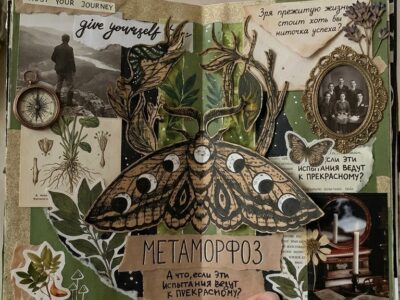
- Botanical specimen pages: A large botanical illustration centred, with hand-annotated labels, pressed botanical elements (physical or digital), and a date or location note in fine serif font. This is the quintessential dark academia nature spread.
- Observation logs: Dated entries with small botanical or nature sketches in the margin. The handwritten-within-printed aesthetic is key — some elements should look typed or printed, others hand-drawn.
- Flat lay photography: Books, pressed botanicals, old magnifying glasses, aged paper, botanical illustration prints. Photograph on dark wood or aged stone surface. The sepia tones in the physical objects and the digital paper backgrounds can coordinate closely.
What Digital Resources Work Best for Dark Academia Nature Style?
The most useful resources, in order of impact:
- Aged parchment digital papers: The base layer for almost every dark academia nature spread. Sepia-toned, with visible age marks and texture grain.
- Botanical illustration clipart (engraving/etching style): The key foreground elements. Must be in sepia or deep brown ink — not watercolour, not modern vector.
- Dark academia pattern bundles: Seamless patterns that combine leaves, books, and botanical motifs. Works for POD and for large-area journal backgrounds.
For the pattern-focused application, our dark forest aesthetic guide covers additional green-dominant resources that can be mixed into the dark academia nature palette. For the comparison between dark academia nature and dark cottagecore, see our dark cottagecore aesthetic guide.
Browse All Dark Academia Nature Resources →
Frequently Asked Questions
What is dark academia nature aesthetic?
Dark academia nature aesthetic combines the scholarly, book-and-study visual language of dark academia with botanical observation — pressed specimens, field notes, botanical illustration in sepia and aged parchment tones alongside deep moss greens. It reads as the aesthetic of someone who studies the natural world with the same seriousness they bring to old books.
What are the best journaling applications for this aesthetic?
Botanical specimen pages (large illustration, annotated labels, date and location notes), observation logs with marginal sketches, and flat lay photography on aged paper backgrounds. The aesthetic suits information-dense, structured spreads rather than loose collage styles.
What digital papers work best for dark academia nature journaling?
Aged parchment papers in sepia tones, botanical parchment papers combining aged texture with botanical illustration overlay, and dark academia digital paper sets that include manuscript page and old map textures. Search Creative Fabrica for “botanical parchment paper”, “aged paper texture sepia”, and “dark academia digital paper”.
Can dark academia nature patterns be used for POD products?
Yes — the sepia and deep moss palette holds well on notebook covers, tote bags, and phone cases. Dark academia nature patterns that combine botanical and book motifs in one seamless repeat are particularly useful for POD because they carry the full aesthetic without requiring layering. Most Creative Fabrica files include commercial POD licence.
Key Takeaways
- Dark academia nature aesthetic is the scholarly observation approach to the natural world — herbarium aesthetics, field notes, botanical illustration in sepia tones rather than colourful displays
- The bridging colour is sepia (#7A5A2E) — it belongs to both the academic (aged paper, old ink) and nature (dried plant material, bark) registers simultaneously
- Structured, information-dense journaling spreads suit this aesthetic better than loose collage layouts — specimen pages with annotations are the most authentic application
- Aged parchment digital papers with botanical overlay are the fastest single-file route to this aesthetic — they combine both registers without requiring separate layering