Forest witch aesthetic is not a costume. It is a sensibility that sits at the intersection of the natural world and old knowledge — the part of the forest where the herbalist has been working for thirty years.
The visual language is specific: dark botanicals, runic or symbolic mark-making, the tools of practice (mortar and pestle, ceramic vessels, drying herb bundles), and always the forest as backdrop or context. This is not gothic. It is green and earthy and purposeful.
Forest witch aesthetic is a dark, nature-rooted visual style combining deep botanical illustration, runic or folk symbol elements, and the tools of an earth-based practice — herbs, moon phases, berries, roots. The palette is deep green, near-black, and aged gold. For digital creatives, the most useful resources are folklore botanical pattern bundles, dark forest digital papers, and witch botanical clipart sets on Creative Fabrica.
What Defines the Forest Witch Aesthetic?
Four elements in combination identify this aesthetic:
- Botanical precision: The plants are specific and identifiable, not generic florals. Mugwort, elderberry, rowan, hawthorn — plants with histories of use. The illustration style tends toward botanical study rather than decorative floral.
- Symbolic mark-making: Runes, sigils, moon phases, star charts, alchemical symbols. These appear as secondary elements — as border detail, as background marks — not as the primary motif. The forest witch aesthetic is not about symbols. It uses them as part of a larger visual language.
- Practice tools: Mortar and pestle, ceramic vessels (dark, unglazed or simple), bundles of dried herbs, small bottles, candles. The tools are functional, not decorative — they have been used.
- Forest as presence: The forest is always there, even when not explicitly illustrated. The palette, the botanical elements, and the general tone locate everything in woodland — not in a shop, not in a garden.
Forest witch aesthetic has a botanical precision that most other witchy aesthetics lack. The plants are identifiable. That specificity is what gives it authority.
What Are the Core Visual Elements — Botanicals, Runes, and Dark Nature?
The visual hierarchy in this aesthetic:
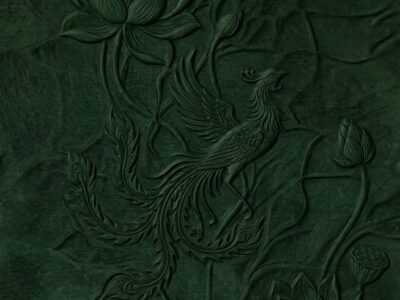
Primary: Botanical illustration — specific, detailed, slightly aged in style (engraving or ink study rather than watercolour wash). Berries, roots, leaves with visible veining, seed pods. The detail level matters. A generic leaf silhouette reads as decoration; a detailed illustration of rowan berries reads as knowledge.
Secondary: Symbolic elements — moon phases, runes, small geometric sigils, simple alchemical marks. These appear at smaller scale than the botanical elements. They are annotations, not statements.
Tertiary: Tools and objects — ceramic vessels, bundles, candles, small bottles. These appear in flat lay or still life arrangements. They are physical evidence of practice.
Colour palette: deep forest green (#2A4A2A), near-black (#1A1A18), aged gold (#B8973A), dark burgundy (#5C1A2A) as an occasional accent, aged cream (#E8DFC8) for text and negative space.
Browse Forest Witch Patterns on Creative Fabrica →
How Does Forest Witch Aesthetic Apply to Journaling and Altar Aesthetics?
For journaling: the aesthetic suits structured layouts more than most dark styles — botanical study spreads, herb identification pages, moon phase trackers, and intentional practice journals. The precision of the botanical illustration encourages more structured, labelled page layouts.
For altar or practice space aesthetics: the visual elements (ceramic vessels, dried herb bundles, dark botanicals) translate directly into physical styling. Dark surfaces (aged wood, slate, dark stone), ceramic objects in earth tones, bundles of dried specific herbs (not generic dried flower bouquets), and small candles are the physical equivalents of the digital design elements.
What Botanical Pattern Styles Best Capture the Forest Witch Vibe?
Three pattern styles work for this aesthetic:
- Ink engraving style: Fine-line botanical illustration that references 18th-century herbarium prints. High detail, monochromatic or limited two-colour, very specific plant identification. The most authentic to the aesthetic. The hardest to find at commercial licence quality.
- Folk art botanical: Slightly naive, slightly stylised plant illustration with a hand-made quality. Less precise than engraving style but more accessible as a background pattern at repeat. Works well for journal covers and scrapbook pages.
- Dark watercolour botanical: Soft-edged, layered botanical illustration in the deep green and near-black range. More accessible than the engraving style, more sophisticated than the folk art style. The compromise option for broader use.
For the folklore botanical connection, our folklore botanical pattern guide covers the folk art botanical style in depth. For the purely dark botanical range, the dark botanical seamless pattern guide has additional resources.
Browse Forest Witch Botanical Designs on Creative Fabrica →
Frequently Asked Questions
What is forest witch aesthetic?
Forest witch aesthetic is a dark, nature-rooted visual style at the intersection of deep botanical illustration, runic/folk symbolism, and the tools of an earth-based practice — herbs, moon phases, ceramic vessels, dark botanicals. It is distinct from general witchy aesthetics by its botanical precision and forest-rooted palette (deep green, near-black, aged gold).
What patterns are best for forest witch journaling?
Ink engraving-style botanical patterns (fine-line herbarium aesthetic), folk art botanical patterns, and dark watercolour botanical patterns. The first is most authentic; the folk art version is most accessible; the watercolour is the compromise. All three are available on Creative Fabrica — search “folklore botanical pattern”, “botanical engraving pattern”, and “dark botanical seamless”.
What is the colour palette for forest witch aesthetic?
Deep forest green (#2A4A2A), near-black (#1A1A18), aged gold (#B8973A), and aged cream (#E8DFC8) for text. Dark burgundy (#5C1A2A) as an occasional accent. The palette avoids bright or saturated colours — everything should feel like it has been in a dark workshop for some time.
Where can I find forest witch digital patterns and clipart?
Creative Fabrica — search “folklore botanical pattern”, “witch botanical clipart”, “dark botanical seamless”, and “botanical engraving pattern”. The free plan covers the basics; All Access opens the full range. Files download instantly with commercial licence.
Key Takeaways
- Forest witch aesthetic is defined by botanical precision — specific, identifiable plants rather than generic florals; this specificity is what distinguishes it from other witchy aesthetics
- The visual hierarchy: botanical illustration primary, symbolic marks secondary, practice tools tertiary — follow this order to avoid the aesthetic feeling too symbol-heavy or generic
- For journaling, structured layouts (botanical study spreads, moon phase trackers, herb identification pages) suit this aesthetic better than loose collage-style compositions
- Folk art botanical patterns from Creative Fabrica are the most accessible starting point; ink engraving-style patterns are the most authentic but harder to find at commercial licence quality